
When “Natural Deaths” Aren’t Natural in Africa
A sweeping investigation into how fragile policing systems, scarce forensic resources, and institutional blind spots across many African countries allow suspicious deaths to be quietly labeled as “natural.” This article exposes the structural failures that hide possible homicides in plain sight, and the human cost of a system unable to tell the difference between tragedy and crime.
enoma ojo (2023)
2/7/202613 min read
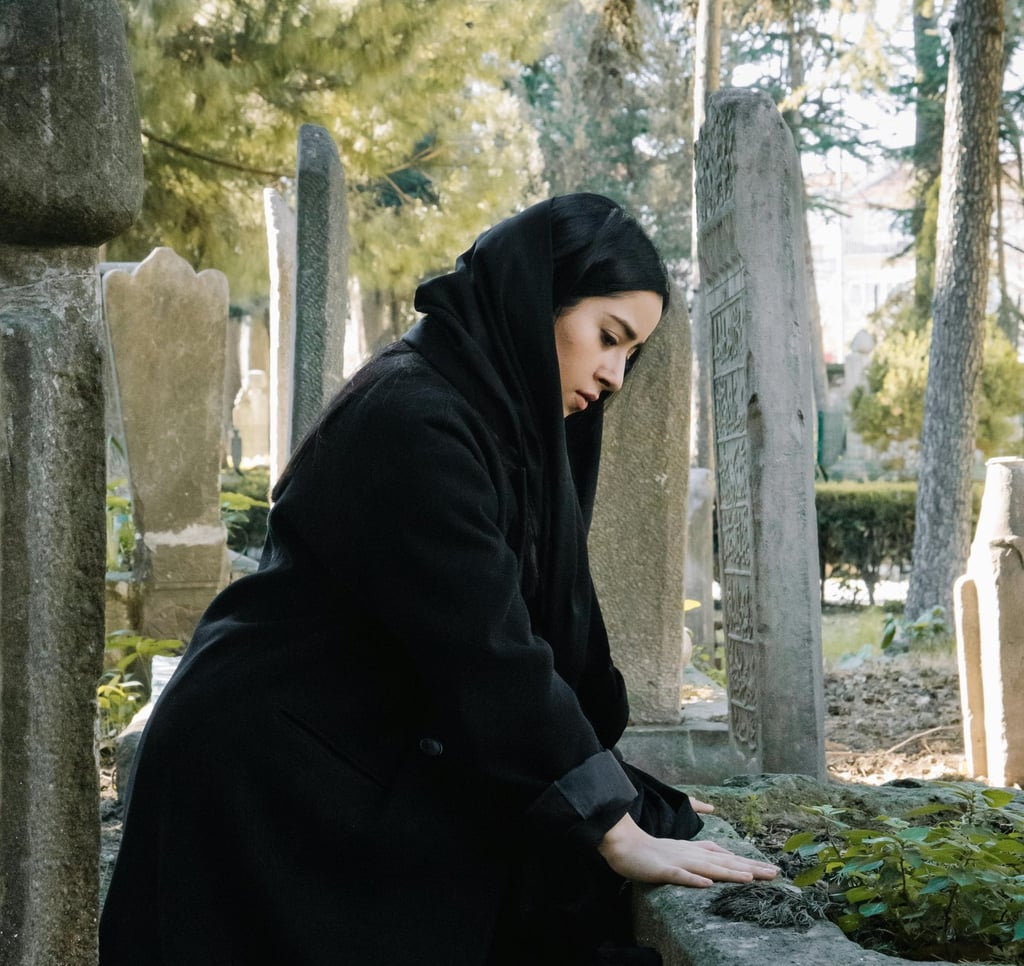
"The Quiet Funeral" - This is a true story.
Osayuki Omorogbe was just forty‑five, but he carried the energy of a much younger man, the kind of father whose laughter filled a room before he even stepped into it. A devoted husband to Adesuwa for more than fifteen years and a proud father of four, he was the steady center of his family’s world. With one of the best‑paying jobs at a major telecommunications company in Benin City, Osayuki was the kind of man people pointed to as proof that hard work could still open doors in Nigeria. He was healthy, disciplined, and full of plans, the kind of man no one expected to die suddenly.
That morning at work, he mentioned a mild headache to a colleague, nothing dramatic, nothing alarming. “Maybe I didn’t sleep well,” he joked, brushing it off the way busy professionals often do. He drank some water, stretched his neck, and returned to his tasks. But within an hour, the headache sharpened. His vision blurred. His speech faltered. Before anyone could fully understand what was happening, Osayuki collapsed beside his desk, sending his coworkers into a frantic scramble.
They rushed him toward the nearest hospital, navigating Benin City’s traffic with the urgency of people fighting against time. But before they arrived, before a doctor could examine him, before his wife could even be notified, Osayuki took his last breath in the back seat of the car.
By the time Adesuwa reached the hospital, her husband, the man who had kissed her goodbye that morning, was already gone.
Two weeks later, as it was Catholic tradition, the funeral of Osayuki was completed, and mourners gathered quietly under the old mango tree in the family compound as the late‑afternoon heat softened into evening. Women tied their wrappers tighter, fanning themselves with church programs. Men stood in small clusters, speaking in low tones. A few neighbors brought plastic chairs; others leaned against the wall, watching with the solemn resignation that accompanies too many sudden deaths in the community.
No police officer came. No medical examiner, no doctor examined the body. No one asked a single question.
By dusk, the local government health worker had already filled out the death certificate, “natural causes,” written in quick, practiced handwriting by someone who had never laid eyes on Osayuki. The form was stamped, folded, and handed to the family as though it were a routine administrative task.
Adesuwa kept repeating that something felt wrong: the sudden collapse, the strange discoloration around his lips, the way he struggled to breathe. But in a community where autopsies are rare, investigators are few, and suspicion has no institutional home, her concern had nowhere to go. The burial happened quickly, within two weeks, as is customary, the red earth covering him before the truth ever had a chance to surface.
Across Nigeria, and in many sub-Saharan African countries, this scene unfolds millions of times a year. Sudden deaths are explained away. Questions left hanging in the air. Families are forced to accept official conclusions that feel too convenient, too quick, too detached from the reality they witnessed. Not every “natural death” is natural. Some are simply uninvestigated, casualties of systems too weak, too underfunded, or too overwhelmed to tell the difference. Across many African countries, thousands of deaths are recorded each year as “natural causes.” On paper, the classification appears straightforward, a peaceful passing, an expected medical event, a life ending without violence. But beneath this simple label lies a more troubling truth: in environments where policing, forensic science, and medical examination are severely under-resourced, “natural death” often becomes a default category rather than a scientifically verified conclusion. The result is a silent crisis. Potential homicides go undetected. Families are denied answers. Violence hides in plain sight. And entire nations operate with crime statistics that do not reflect reality. This is not merely a technical failure. It is a profound justice gap.
In many African countries, law enforcement agencies operate under conditions that would make thorough death investigations nearly impossible, even for the most skilled officers. These structural constraints don’t just limit the quality of investigations; they shape the very definition of what counts as a suspicious death. In practice, they determine which deaths receive scrutiny and which are quietly filed away as “natural causes.” Most police departments are chronically understaffed, with officers juggling everything from petty theft to violent crime to community disputes. A single investigator may be responsible for hundreds of cases at a time, leaving little room for the slow, meticulous work that death investigations require. When an officer arrives at a scene, they are often forced to make quick judgments based on limited information, because the system simply cannot support anything more. The lack of forensic infrastructure compounds the problem. Many regions have no functioning crime labs, no toxicology services, and no access to modern investigative tools. Even basic equipment, such as fingerprint kits, evidence bags, and digital cameras, may be in short supply. Without these tools, officers rely heavily on visual assessments and witness statements, both of which are unreliable indicators of the cause of death. Budget constraints further narrow the investigative lens. Autopsies are expensive, and in many jurisdictions, the police must justify the cost before one can be authorized. With limited funds and overwhelming caseloads, the threshold for approving an autopsy becomes extremely high. Unless there are obvious signs of violence, the default decision is to skip the examination altogether.
Training gaps also play a significant role. Many officers receive little to no specialized training in death-scene management, forensic awareness, or evidence preservation. Scenes are often contaminated unintentionally by family members, neighbors, or even officers themselves, making later investigation impossible. In some cases, bodies are moved or washed before authorities arrive, not out of malice but out of cultural norms or lack of guidance. All of these pressures converge in a single outcome: the path of least resistance becomes the path most frequently taken. A sudden death with no visible wounds, natural causes. An elderly person was found alone due to natural causes. A young adult who collapses unexpectedly due to natural causes. The classification becomes less about medical certainty and more about institutional survival. This is not a failure of individual officers. It is the predictable result of systems stretched far beyond their capacity, systems that were never designed, funded, or equipped to uncover the truth behind every unexplained death.
Modern death investigation depends on science, toxicology, DNA analysis, histology, ballistics, and chemical testing. Yet in large parts of Africa, these services are either unavailable or accessible only in major cities. Rural areas may be hundreds of kilometers away from the nearest lab, and transporting samples is costly, slow, and often unreliable. In some countries, there are only one or two functioning forensic labs serving tens of millions of people. This means that even when officers want to investigate properly, the infrastructure simply does not exist to support them. Autopsies are expensive, and many police departments operate on budgets that barely cover fuel, uniforms, and basic supplies. In some regions, families must pay for autopsies themselves, a cost that can exceed several months’ income. As a result, autopsies are reserved for only the most obvious or politically sensitive cases. Sudden deaths, unexplained collapses, and suspicious circumstances are routinely dismissed because the system cannot afford to look deeper.
When an officer is juggling dozens of open cases, the incentive is to close files quickly. A death scene that would require hours of careful documentation in a well‑resourced country may receive only minutes of attention. The pressure to “clear” cases, even administratively, means that ambiguous deaths are often resolved with the simplest explanation available. “Natural causes” becomes a bureaucratic shortcut, not a medical conclusion. With few tools and even fewer specialists, officers often rely on surface‑level observations or statements from family members. If a body shows no obvious external injuries, no stab wounds, no gunshot wounds, no visible bruising, the assumption leans toward natural death. But many homicides leave no external marks at all. Poisoning, suffocation, smothering, internal bleeding, and certain forms of blunt force trauma can be invisible to the naked eye.
A death that would trigger a full forensic investigation in Europe or North America, complete with autopsy, toxicology, scene reconstruction, and witness interviews, may receive only a cursory visual inspection in parts of Africa. Sometimes the officer never even touches the body. Sometimes the decision is made from the doorway. The result is a quiet epidemic of misclassified deaths, not because officers do not care, but because the system gives them no other option. Across Africa, a significant portion of deaths occur without any medical or forensic investigation. Public health experts estimate that 300,000 to 500,000 deaths each year go uninvestigated, largely because most countries lack the systems, personnel, and infrastructure required to determine true causes of death.
In many nations, over 60% of deaths happen outside hospitals, meaning they are recorded based solely on family accounts rather than scientific evidence. As a result, up to 70% of deaths in some countries are classified without any medical verification, leaving thousands of potential homicides, poisonings, or preventable medical events undetected.
The continent’s forensic capacity is extremely limited. Fewer than 15 African countries have functional forensic pathology systems, and even those are concentrated in major cities. With fewer than 500 forensic pathologists serving more than 1.4 billion people, many countries rely on one or two specialists, or none at all. This shortage means that suspicious deaths, especially those involving poisoning, domestic violence, or internal trauma, are routinely labeled “natural” simply because no one is trained or equipped to look deeper.
Autopsies are the backbone of modern death investigation. They uncover what the eye cannot see: internal bleeding, subtle fractures, toxic substances, signs of suffocation, and other indicators of foul play that leave no external trace. In countries with strong forensic systems, an unexplained or sudden death automatically triggers a medical examination. But across much of Africa, autopsies are the exception, not the rule.
This absence is not accidental. It is the predictable outcome of structural, cultural, and financial barriers that make post‑mortem examinations inaccessible to most families and impossible for many institutions.
Autopsies require trained personnel, specialized equipment, and laboratory analysis, all of which come at a cost. In many African countries, police departments operate on budgets that barely cover fuel and basic supplies. Allocating funds for routine autopsies is not feasible. As a result, only the most high‑profile or politically sensitive cases receive full forensic attention. For ordinary citizens, the financial burden is even heavier. In some regions, families must pay for autopsies themselves, a cost that can exceed several months’ income. Faced with grief and economic hardship, most families have no choice but to accept the default classification of “natural causes,” even when the circumstances raise questions.
Cultural or religious resistance to post‑mortem examinations
In many communities, the idea of cutting open a body is deeply uncomfortable or even taboo. Religious beliefs, cultural norms, and long‑standing traditions often prioritize quick burial and minimal disturbance of the deceased. These beliefs are powerful, and in the absence of strong public education or institutional guidance, they shape how deaths are handled. Families may decline autopsies not because they trust the official explanation, but because they fear violating cultural expectations or angering community elders. Without sustained public engagement, the stigma around autopsies remains a major barrier to truth‑seeking.
Even when families want answers, the system may not have anyone qualified to provide them. In some countries, a single pathologist serves millions of people. In others, there are no forensic pathologists at all, only general medical officers with limited training in post‑mortem examination.
This shortage creates a bottleneck that slows investigations to a crawl. Bodies may wait days or weeks for examination, by which time decomposition has erased critical evidence. In rural areas, the nearest pathologist may be hundreds of kilometers away, making transport costly and logistically difficult. Even when a pathologist is available, the supporting infrastructure often is not. Many hospitals lack basic autopsy suites, refrigeration units, or secure storage for bodies. Forensic laboratories, essential for toxicology, histology, and DNA analysis, are scarce, underfunded, or limited to major cities.
Without these facilities, even a well‑conducted autopsy cannot answer key questions. Suspicious substances cannot be tested. Tissue samples cannot be analyzed. Internal injuries cannot be documented with scientific precision. The investigation stops where the infrastructure ends.
Without medical examination, the truth remains buried. Poisoning goes undetected because no toxicology test is performed. Domestic violence deaths are misclassified because internal injuries are never seen. Elder abuse is overlooked because fractures and bruising beneath the skin are missed. Homicides slip through the cracks because the system lacks the capacity to recognize them. A death that would trigger a full forensic investigation in countries with strong systems, complete with autopsy, toxicology, and scene reconstruction, may receive only a brief visual inspection in parts of Africa. Sometimes the decision is made in minutes. Sometimes the officer never even enters the room.
The absence of routine autopsies is not just a technical gap. It is a structural blind spot that allows violence to hide in plain sight.
For many families, the pain is not just the loss itself, but the haunting uncertainty that follows. A sudden collapse. A spouse with a history of violence. A relative who died under unusual or inconsistent circumstances. These moments raise questions that the system is not equipped to answer. When families seek clarity, they often encounter a wall of silence: no autopsy, no investigation, no explanation. In countless cases, relatives are left to piece together their own theories, relying on rumors, intuition, or fragments of information. This emotional burden can last for years. Grief becomes tangled with suspicion. Mourning becomes intertwined with doubt. The inability to know, truly know, what happened becomes its own form of trauma. The institutional barriers only deepen the wound. There is rarely a clear pathway to request a second opinion, demand an autopsy, or challenge an official classification. Families who push for answers may be dismissed as troublesome or told that nothing more can be done. In rural areas, the idea of questioning a police report can even be seen as disrespectful or futile.
Over time, this erodes trust in public institutions. When people believe the system cannot or will not uncover the truth, they stop reporting suspicious deaths altogether. Communities learn to bury their doubts along with their loved ones. Violence becomes easier to hide, and perpetrators learn that the system will not follow them. The result is a dangerous cycle: weak investigations lead to unanswered questions, unanswered questions lead to distrust, and distrust leads to even fewer investigations. Families are left with grief that never settles, and societies are left with violence that remains invisible. A society cannot solve a problem it cannot measure. When homicides are misclassified as natural deaths, governments underestimate the scale of violence. Police departments appear more effective than they are. Policymakers operate with incomplete information. Communities lose trust. And the true extent of harm remains hidden beneath paperwork. The failure to measure violence accurately is not a statistical issue; it is a governance issue, a justice issue, and a public safety issue. Without reliable data, nations cannot protect their citizens, allocate resources wisely, or confront the forces that threaten their stability. A society that cannot count its dead cannot protect its living.
Accurate death investigation is not a luxury. It is one of the most fundamental responsibilities of a functioning justice system, a safeguard that protects the living by honoring the truth about the dead. When a society cannot determine how its people die, it loses the ability to protect those who remain. Every person, regardless of wealth, geography, gender, age, or social status, deserves to have their death understood, documented, and treated with seriousness. This is not simply a procedural expectation; it is a matter of dignity. It is a recognition that every life has value, and that every unexplained death deserves scrutiny rather than assumption.
When systems fail to investigate deaths properly, they create space for violence to flourish unchecked. The absence of forensic capacity becomes an invitation for impunity. People who commit harm learn that the system will not follow them. Families learn that the truth is out of reach. Communities learn that justice is selective, fragile, or nonexistent.
Strong laws create strong expectations, and strong expectations create systems that cannot ignore suspicious deaths. These reforms are not simple. But they are essential. Without them, countless deaths will continue to be misclassified, and the truth behind them will remain hidden. Violence will remain invisible. Families will continue to bury their questions alongside their loved ones. And nations will operate with blind spots that weaken justice, governance, and public safety. Building systems that can see the truth is not just a technical project; it is a moral commitment. It is a declaration that every life matters and that every death deserves the dignity of being understood.
Osayuki’s story is not an anomaly; it is a mirror held up to a system that has lost its ability to see. When a society cannot determine how its people die, it cannot protect the living. The misclassification of suspicious deaths as “natural” is not just a bureaucratic failure; it is a moral one. It signals a state that has surrendered its responsibility to bear witness, to investigate, and to tell the truth. Every misclassified death is a story interrupted, a life whose final chapter is written not by evidence but by institutional limitations. Every unanswered question becomes a wound carried by families for years. Every uninvestigated death becomes a quiet permission slip for future violence. Strengthening forensic and investigative capacity is not merely a technical upgrade. It is a commitment to dignity, accountability, and the belief that every life, and every death, deserves the truth. It is a recognition that justice begins not in the courtroom, but at the moment a life ends, and the state is called to bear witness.
Ultimately, this work is about more than science or procedure. It is about affirming a simple, universal principle: that every human being matters enough for their death to be understood. That no one’s final moments should be dismissed, rushed, or ignored. That dignity does not end at the grave. A society that seeks the truth about its dead is a society that protects its living. And a society that protects its living honors the value of every life, not in words, but in action. When a society cannot determine how its people die, it cannot protect the living. The misclassification of suspicious deaths as “natural” is not just a bureaucratic failure; it is a moral one. It signals a system that has lost its ability to see harm, name it, or confront it. It allows violence to hide behind paperwork. It denies families the truth. It weakens justice systems. And it obscures the real scale of harm within communities.
Every misclassified death is a story interrupted, a life whose final chapter is written not by evidence but by institutional limitations. Every unanswered question becomes a wound carried by families for years. Every uninvestigated death becomes a quiet permission slip for future violence. Strengthening forensic and investigative capacity is not merely a technical upgrade. It is a commitment to dignity, accountability, and the belief that every life, and every death. deserves the truth. It is a recognition that justice begins not in the courtroom, but at the moment a life ends, and the state is called to bear witness. Restoring truth to death investigations means restoring trust in public institutions. It means giving families the answers they deserve. It means ensuring that perpetrators cannot hide behind the system’s blind spots. It means building a society where violence cannot slip through the cracks unnoticed.
Ultimately, this work is about more than science or procedure. It is about affirming a simple, universal principle: that every human being matters enough for their death to be understood. That no one’s final moments should be dismissed, rushed, or ignored. That dignity does not end at the grave. A society that seeks the truth about its dead is a society that protects its living. And a society that protects its living honors the value of every life, not in words, but in action.
The individual referenced in this article is identified by a pseudonym to maintain confidentiality and to honor the individual’s privacy and preserve the integrity of the tragic event.
© 2026 Enoma Ojo. All Rights Reserved.
No part of this article may be reproduced, distributed, or transmitted in any form or by any means without prior written permission from the author.