
What Actually Works? Evidence-Based Solutions To Global Poverty
This piece explores the story behind one of the most important truths of our time: poverty is not an unsolvable mystery. Through global data and evidence from more than 100 studies, it reveals how simple, human‑centered interventions, direct support, productive assets, and strong systems, have already reshaped millions of lives. It invites readers to rethink what’s possible when we choose solutions rooted in dignity and evidence.
Enoma Ojo (2024)
2/12/20268 min read
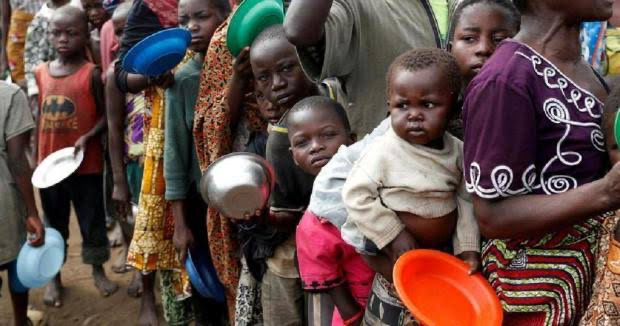
Global poverty has long been framed as an overwhelming, almost mythical challenge, but two decades of rigorous research have transformed the landscape. We now have a clearer understanding of what reliably reduces poverty, what fails, and why implementation, not knowledge, is the real bottleneck. The rise of randomized controlled trials (RCTs) in development economics has been central to this shift. Researchers like Abhijit Banerjee and Esther Duflo helped move the field away from ideology and toward empirical testing, allowing policymakers to see which interventions produce measurable improvements in people’s lives.
A major insight from this body of work is that poverty is not a single condition but a complex system of constraints. Effective solutions must therefore address multiple dimensions, including income, assets, health, education, and psychological well‑being, rather than focusing on one narrow metric. Social protection programs emerge as one of the most consistently effective tools. Cash transfers, pensions, and safety nets stabilize households, reduce hunger, and create the breathing room necessary for people to make better long‑term decisions. Contrary to persistent stereotypes, evidence shows that poor households do not waste cash transfers. Instead, they invest in food, healthcare, school fees, and small income‑generating activities. This finding has reshaped global debates about dignity, trust, and autonomy.
Asset transfers represent another powerful intervention. Providing livestock, equipment, or tools gives households a productive base from which to generate income. When paired with training, these programs create durable pathways out of poverty. Interventions that increase returns on assets, such as improved seeds, irrigation, or market access, also show strong results. The key is ensuring that productivity gains translate into higher incomes and better living standards, not just higher yields. Universal Basic Income (UBI) experiments add a new dimension to the evidence. Studies in Kenya demonstrate that unconditional, long‑term cash transfers can improve well‑being, reduce stress, and enable people to pursue meaningful goals beyond survival. These findings challenge the assumption that poverty is primarily a behavioral problem. Instead, they reveal that people living in poverty make rational decisions within the constraints they face, and that removing those constraints unlocks human potential. The evidence also highlights what does not work. Programs built on paternalistic assumptions, those that attempt to “fix” the poor rather than the systems around them, tend to underperform or fail outright.
Agricultural interventions that focus solely on increasing yields without measuring poverty outcomes often miss the mark. If higher production does not translate into higher incomes or consumption, the intervention cannot be considered successful. Another major barrier is the gap between research and policy. Banerjee argues that evidence alone is insufficient; researchers must persuade journalists, politicians, and the public. Without political will, even the most effective interventions remain underfunded or poorly implemented. The global financial system also plays a decisive role. Tax havens and weak fiscal capacity undermine governments’ ability to fund social protection and public services. Banerjee is clear: meaningful poverty reduction requires confronting global inequality and strengthening state capacity.
Despite these challenges, the early 21st century offers proof that progress is possible. Between 2000 and 2019, global poverty fell dramatically, and major improvements occurred in infant mortality, maternal health, and disease reduction. These gains were not accidental. They were the result of deliberate investments in health systems, education, infrastructure, and targeted poverty programs, evidence that when the world commits to proven solutions, outcomes improve. The COVID‑19 pandemic temporarily reversed some of this progress, but it also underscored the importance of resilient social protection systems. Countries with strong safety nets were better able to protect vulnerable populations. The research consensus is clear: poverty is not an inevitable feature of human society. It is a design problem, shaped by policies, institutions, and global economic structures, that can be redesigned.
Global poverty is no longer an unsolved mystery; two decades of rigorous research have revealed clear, repeatable patterns about what actually reduces deprivation. Randomized controlled trials and large‑scale evaluations show that poverty is a system of constraints, financial, structural, and psychological, rather than a moral failing or a lack of effort. This shift toward evidence‑based development has allowed policymakers to distinguish between interventions that merely sound compassionate and those that measurably improve people’s lives.
Across hundreds of studies, social protection programs emerge as the most consistently effective tool. Cash transfers, pensions, and safety nets stabilize households, reduce hunger, and create the breathing room necessary for better long‑term decisions. Evidence repeatedly shows that poor households use cash responsibly, investing in food, healthcare, school fees, and small enterprises. Asset transfers, such as livestock, tools, or equipment, also demonstrate strong long‑term effects by giving families a productive base from which to generate income and build resilience.
Interventions that increase returns on assets, such as improved seeds, irrigation, and market access, further strengthen household income when designed with poverty outcomes in mind. Universal Basic Income experiments, particularly in Kenya, add a new dimension by showing that long‑term, unconditional cash improves well‑being, reduces stress, and enables people to pursue meaningful goals beyond survival. These findings collectively challenge the stereotype that poverty persists because of poor decision‑making; instead, they reveal that people make rational choices within the constraints they face.
The evidence also clarifies what does not work. Programs built on paternalistic assumptions, those that attempt to “fix” the poor rather than fix the systems around them, tend to fail. Agricultural programs that measure yields but not income often miss the mark, and evidence alone is insufficient without political will. Researchers like Banerjee emphasize that translating evidence into policy requires persuasion, institutional capacity, and a willingness to confront global financial structures that protect wealth, including tax havens that drain hundreds of billions from developing countries.
Despite these challenges, the early 21st century proves that progress is possible. Between 2000 and 2019, global poverty, infant mortality, maternal mortality, and malaria deaths all fell dramatically due to targeted investments and evidence‑based programs. The central lesson is clear: the world knows what works. The remaining challenge is scaling these solutions with the political courage, institutional strength, and moral clarity required to make poverty reduction not just a possibility, but a global priority. Effective poverty reduction requires a combination of direct support, asset‑building, productivity enhancements, and systemic reforms. No single intervention is a silver bullet, but together they form a powerful toolkit. The challenge now is not discovering new solutions but scaling the ones we already know work. This requires political courage, institutional capacity, and a willingness to confront entrenched interests that benefit from the status quo.
Over the last two decades, the world has witnessed one of the most significant periods of human progress ever recorded. Extreme poverty fell from 28% to 9%, a transformation driven not by chance but by deliberate investments in health systems, education, infrastructure, and evidence‑based social programs. These gains were mirrored in human survival itself: infant mortality dropped by 49%, maternal mortality declined by 38%, and malaria deaths fell by 60%. These are not abstract percentages, they represent millions of lives saved, millions of futures restored, and millions of families lifted into stability. They demonstrate that when societies commit to proven interventions, the results are profound and measurable.
The DEEP Review (2024), one of the most comprehensive syntheses of poverty research to date, reinforces this story of progress. Analyzing 111 studies across five countries, the review found consistent improvements in consumption, food security, and household resilience when families received direct support or productive assets. This consistency matters: it shows that effective poverty reduction is not context‑dependent or culturally fragile. When people are given resources and autonomy, they use them to stabilize their lives and invest in their futures. The pattern repeats across geography, culture, and economic structure.
Productive asset programs add another layer of evidence. Banerjee et al. (2015) demonstrated that providing households with livestock, tools, or equipment, paired with training, can increase earnings by 15–30% over time. This is not a temporary boost; it is a structural shift in a family’s economic trajectory. Assets create the foundation for income generation, and income generation creates the foundation for long‑term resilience. These findings dismantle the myth that poverty persists because people lack motivation or discipline. What they lack are assets, opportunities, and systems that allow their effort to translate into progress.
Taken together, these data points form a coherent narrative: poverty declines when people receive the resources, stability, and structural support necessary to make rational long‑term decisions. The world’s most successful interventions, cash transfers, asset programs, health investments, and productivity enhancements, work because they expand human capability. They give people the room to breathe, plan, and build. They treat poverty not as a moral failing but as a solvable constraint. The numbers are not just encouraging; they are directive. They show that the world has already developed a toolkit capable of reducing poverty at scale. The challenge now is not discovering new solutions but committing to the ones that work, funding them at the level required, and embedding them into national and global systems. The data is clear. The outcomes are proven. The question that remains is whether we will act with the urgency and moral clarity that this evidence demands.
Ultimately, the evidence points to a simple but profound truth: the world already knows how to reduce poverty. The last two decades have produced a body of research so consistent, so cross‑validated, and so globally replicated that the debate is no longer about what works. It is about whether we are willing to act on what we know. Poverty is not an intellectual puzzle waiting for a clever breakthrough; it is a political and moral challenge that demands courage, coordination, and a willingness to confront entrenched interests. The most effective solutions, direct support, asset‑building, productivity enhancements, and strong public systems, are not mysteries. They are proven, scalable, and cost‑effective. They have lifted millions out of deprivation, stabilized entire regions, and demonstrated that human potential expands rapidly when people are given the freedom and resources to make their own choices. The barrier is not evidence; it is the global architecture of power, wealth, and attention that determines which policies are funded, which are ignored, and which are distorted beyond recognition.
This moment demands a shift from charity to justice. It requires governments willing to strengthen fiscal capacity, regulate capital flight, and invest in social protection, not as temporary relief but as national infrastructure. It requires researchers and practitioners who understand that evidence alone cannot move policy without public persuasion and political will. And it requires citizens who refuse to accept a world where preventable suffering is normalized simply because it is familiar. The choice before us is stark but not complicated. We can continue to treat poverty as an inevitable feature of human society, or we can recognize it for what it is: a design problem, engineered through systems that can be redesigned. The tools exist. The knowledge exists. The success stories exist. What remains is the collective decision to scale what works with the urgency and moral clarity the moment demands. If we choose that path, the next generation will not inherit a world defined by scarcity and exclusion. They will inherit a world that finally acted on its own evidence, a world that decided, at last, to make dignity universal.
The path forward demands more than admiration for the evidence; it demands action anchored in courage. Policymakers must commit to scaling the interventions that have already proven their worth, direct support, asset‑building, and systems that expand human capability. Philanthropic institutions must shift from funding what is fashionable to funding what is effective. Researchers must continue to translate complex findings into narratives that move public opinion. And global citizens must insist that their governments confront the financial structures that allow wealth to escape while human potential is left to wither. The tools to end poverty exist. The responsibility to use them belongs to all of us.
We began with a simple question: What works? After decades of experimentation, evaluation, and lived experience, the answer is no longer elusive. What works is clear, measurable, and within reach. The real test is whether we will honor the evidence with the scale and seriousness it deserves. If we choose to act boldly, coherently, and without delay, we can transform the question from an inquiry into a historical footnote. The world knows what works. Now it must decide to do it.
Poverty is not a mystery; it is a choice we make when we ignore what works. We know the way forward; now we must decide to walk it.
Referrences
1. Banerjee, A., Duflo, E., et al. The Economic Lives of the Poor. MIT/JPAL Research Papers.
2. Banerjee, A., Duflo, E., Goldberg, N., et al. (2015). “A multifaceted program causes lasting progress for the very poor.” Science.
3. DEEP Working Paper Series (2024). What Works to Reduce Poverty? Evidence From 111 Studies Across Five Countries.
4. GiveDirectly & Innovations for Poverty Action (2023). Universal Basic Income Kenya Study.
5. World Bank (2020). Poverty and Shared Prosperity Report.
6. UNICEF (2019). State of the World’s Children.
7. World Health Organization (2019). Trends in Maternal Mortality.
8. OECD (2021). Illicit Financial Flows and Tax Havens Report.
9. World Bank (2018). Cash Transfers: Evide
© 2024 Enoma Ojo. All rights reserved. No part of this publication may be reproduced, distributed, or transmitted without prior written permission.