
Two Nations, One Gap: What Finland and Nigeria Reveal About Structural Poverty
This topic examines how poverty is shaped not by individual choices but by the design of national systems, comparing how structural factors in Finland and Nigeria create vastly different outcomes for their citizens.
INSIGHTS
Enoma Ojo (2024)
1/20/20267 min read
Why Two Children Born Minutes Apart Can Live in Different Centuries
A Tale of Two Births: Why Minutes Can Become Centuries
Lagos, Nigeria 6:03 AM
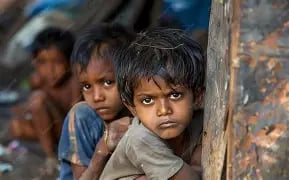
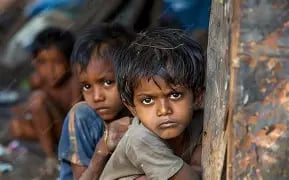
At 6:03 AM, in a crowded maternity ward in Mushin, Lagos, a boy named Tunde enters the world. The electricity flickers as he cries for the first time. His mother, a market trader, has been awake for 36 hours. The hospital has one nurse for every twenty patients. The fan above them turns slowly, powered by a generator that may or may not last the morning. Outside, the streets are already alive, not with opportunity, but with survival. The nearest public school is overcrowded. The nearest clinic is understaffed. The closest job that pays a living wage is miles away, across traffic that eats hours of the day. Tunde is born into a system where infrastructure is fragile, institutions are stretched, and opportunity is rationed. He is brilliant, but brilliance is not enough. His life will be shaped by the distance between what he needs and what the system can provide.
Helsinki, Finland 6:04 AM
One minute later, at 6:04 AM, Aksel is born in a quiet, sun‑lit hospital room in Helsinki. His mother is surrounded by a team of nurses. The room is calm. The equipment is modern. The cost of childbirth is fully covered. Outside, the city is designed for childhood. Safe sidewalks. Clean parks. Public libraries are within walking distance. Universal healthcare. A school system that guarantees small class sizes, trained teachers, and free meals. A society where institutions are strong, infrastructure is reliable, and opportunity is a public good. Aksel is not more intelligent than Tunde. He is simply born into a system that multiplies his potential instead of taxing it.
Two Childhoods, Two Realities
By age 5:
Tunde has attended three different preschools because his family moves often due to rising rent. He has had malaria twice. His mother spends hours each day commuting to work.
Aksel attends a publicly funded early childhood center with trained educators. He has never missed a medical appointment. His parents spend evenings reading to him because they are not exhausted by survival.
By age 10:
Tunde walks 45 minutes to school. His classroom has 60 students. His teacher is dedicated but overwhelmed.
Aksel bikes to school on protected lanes. His classroom has 18 students. His teacher has a master’s degree — a national requirement.
By age 15:
Tunde is brilliant in mathematics, but must help his mother at the market after school. His study time is limited by electricity outages.
Aksel spends afternoons in the robotics club, funded by the municipality. He has access to high‑speed internet, mentors, and summer programs.
Two Adulthoods, Two Centuries
By age 25:
Tunde is navigating a labor market where opportunities are scarce, and connections matter more than competence. He is talented, disciplined, and hungry for more, but the system around him is slow, unpredictable, and under‑resourced.
Aksel enters a job market supported by strong institutions, predictable policies, and a social safety net that allows him to take risks without fear of collapse.
Both young men are hardworking. Both are intelligent. Both are ambitious.
But one is living in a world where systems accelerate potential.
The other is living in a world where systems drain it.
They were born one minute apart.
But they were born into different centuries.
This story is not about Finland versus Nigeria; it is about structure versus struggle. It is about how infrastructure becomes destiny, institutions become opportunity, geography becomes possibility, and systems become ceilings or springboards. The structural poverty gap becomes unmistakable when we compare a developed nation like Finland with a developing one like Nigeria. According to World Bank data, only 0.5% of Finns live below the global extreme‑poverty line, compared to 30.9% of Nigerians. Finland’s Human Capital Index is twice as high, its life expectancy is 30 years longer, and its GDP per capita is nearly 30 times greater. These are not differences in individual effort or cultural values; they are differences in institutional design, infrastructure, and national capacity. Poverty is not a mystery. It is the predictable outcome of the systems that surround people.
Tunde and Aksel are not symbols of personal failure or personal success. They are symbols of structural design. Poverty is often described as a lack of income, but income is only the surface. Beneath it lies a deeper, more enduring reality: the structural poverty gap. This gap represents the distance between what a society expects from its citizens and what it structurally provides. It is the quiet architecture of inequality, built into roads, schools, housing, healthcare, and political access. Poverty, in this sense, is not a personal condition. It is a location within a system. Two children can be born in the same city, under the same flag, yet inherit two entirely different worlds. One grows up surrounded by safe streets, strong schools, and networks that open doors. The other grows up navigating broken infrastructure, underfunded institutions, and a constant sense of precarity. Their outcomes diverge not because of talent or effort, but because of the structural environments that shape their lives long before they make their first decision.
The structural poverty gap begins with the physical layout of opportunity. Neighborhoods with reliable transportation, stable housing, and accessible services create pathways to mobility. Neighborhoods without these essentials create barriers that compound over time. Zoning laws, land use decisions, and infrastructure investments determine who lives near opportunity and who lives far from it. Geography becomes destiny. Institutions deepen this divide. Schools in affluent areas benefit from stronger tax bases, better resources, and more stable staffing. Schools in low‑income areas struggle with overcrowding, outdated materials, and high teacher turnover. Healthcare access follows the same pattern: clinics and hospitals cluster where wealth resides, leaving poorer communities with long waits, long distances, and limited options. Even digital connectivity, the new oxygen of modern life, is unevenly distributed. These structural disparities do more than limit access; they shape the mind. Chronic scarcity drains cognitive bandwidth. When families must constantly navigate unstable housing, unreliable transportation, or inconsistent childcare, their mental energy is consumed by survival. This is not a reflection of intelligence but of mental load. The structural poverty gap becomes a psychological gap, narrowing the space for long‑term planning, risk‑taking, and aspiration.
The emotional consequences are equally profound. Children raised in structurally deprived environments often internalize the instability around them. They learn to anticipate disruption rather than opportunity. They become experts in adaptation rather than exploration. Meanwhile, children in structurally advantaged environments grow up with the confidence that systems will work for them. They inherit not only resources but a sense of entitlement to possibility. The roots of this gap run deep. Colonial land patterns, segregation, discriminatory housing policies, and political exclusion have shaped the distribution of opportunity for generations. These historical decisions hardened into physical infrastructure, roads, neighborhoods, and school districts that still determine life chances today. History becomes concrete, and concrete becomes inequality. Economic growth alone cannot close this gap. A rising GDP does not automatically translate into rising opportunity. When the cost of living outpaces wages, when transportation consumes hours, when childcare is unaffordable, when healthcare is inaccessible, growth becomes irrelevant to those structurally locked out. The economy rewards proximity to networks, not just skill. Those born far from opportunity must work twice as hard to travel half as far.
Cultural narratives often obscure these realities. Society praises hard work and personal responsibility, yet ignores the structural scaffolding that makes success possible. We celebrate individual achievement while overlooking the institutional advantages that quietly support it. Conversely, we blame individuals for outcomes shaped by forces far beyond their control. The structural poverty gap becomes a moral gap, a failure of collective honesty. The most troubling aspect of the structural poverty gap is its ability to reproduce itself. Children who grow up in unstable housing often attend multiple schools, disrupting learning. Limited access to healthcare leads to untreated conditions that affect development. Lack of exposure to networks restricts future opportunities. Poverty becomes intergenerational not because families fail, but because systems do. Closing the structural poverty gap requires structural repair. This means investing in early childhood development, equalizing school funding, redesigning neighborhoods for safety and mobility, expanding public transit, ensuring healthcare access, and building digital infrastructure that reaches every household. It also means expanding political participation so that communities historically excluded from decision‑making can shape the systems that shape their lives.
Poverty is not a mystery. It is a design problem. And design problems require courage—the courage to confront the history that produced them, the courage to redesign institutions that have normalized inequity, and the courage to build systems that finally match the dignity of the people they claim to serve. Structural poverty does not persist because people are broken. It persists because our frameworks are. And frameworks can be rebuilt. Closing the structural poverty gap is not an act of charity. It is an act of justice. Charity soothes the conscience; justice repairs the foundation. Charity treats symptoms; justice rewrites the architecture. When a society chooses justice, it is choosing to take responsibility for the systems it inherited and the systems it will pass on. It is choosing to stop managing poverty and start dismantling the conditions that produce it.
This work demands more than policy tweaks or temporary relief. It requires a redesign of how opportunity is distributed, how institutions are held accountable, and how communities are resourced to thrive rather than merely survive. It requires leaders who understand that the measure of a society is not the wealth of its winners but the well‑being of its most vulnerable. It requires citizens who refuse to accept inequality as inevitable. And it requires a collective imagination bold enough to envision structures that honor human potential rather than constrain it.
The truth is simple: when a society repairs its structures, it repairs its future. Every investment in equity strengthens the social fabric. Every barrier removed expands the horizon of possibility. Every system redesigned in the direction of dignity becomes a declaration of who we believe ourselves to be. We are not powerless. We are designers. And the future we build will reflect the courage we bring to the work. The question is not whether structural poverty can be solved. The question is whether we are willing to redesign the systems that keep it in place. Justice begins the moment we decide that the answer is yes.
All names referenced in this article have been altered to preserve the confidentiality of the families and individuals described.
© 2026 Enoma Ojo. All rights reserved. This work reflects original analysis, narrative framing, and conceptual design by the author.