The Stress Response: How Our Body Reacts to Conflict, Fear, and Emotional Pain
This article is a deep, human‑centered exploration of what happens inside us when life becomes overwhelming. This article breaks down the biology of stress in clear, accessible language, showing how the brain and body react to conflict, fear, and emotional wounds long before we consciously understand what we’re feeling. It explains the roles of the amygdala, cortisol, and the autonomic nervous system, and reveals why everyday experiences, a tense conversation, a raised voice, a moment of rejection, can trigger the same survival mechanisms designed for life‑or‑death danger.
ARTICLES & ESSAYS
enoma ojo (2025)
1/27/20266 min read


Sometimes my body reacts before I even understand what’s happening. A tone shifts, a face tightens, a memory surfaces, and suddenly my chest feels heavy, my breath shortens, and my mind begins to race. I tell myself to stay calm, to be rational, not to take it personally, but my body doesn’t listen. It moves faster than my thoughts, preparing for a danger I can’t see but can somehow feel.
In those moments, it’s as if something ancient wakes up inside me. My shoulders tense, my jaw locks, and my heart beats with a quiet urgency, as though it’s trying to warn me of something I can’t name. I try to speak, but the words don’t come out right. I try to think, but my thoughts scatter. I try to stay present, but part of me is already retreating.
It’s strange how conflict, fear, or even a small emotional wound can make the body react as if the world is collapsing. A simple disagreement can feel like an attack. A moment of silence can feel like rejection. A raised eyebrow can feel like a threat. And even when I know I’m safe, my body behaves as if I’m not.
I used to think something was wrong with me, that I was too sensitive, too reactive, too emotional. But now I understand: my body is not betraying me. It is protecting me. It is responding to pain, uncertainty, and fear, the only way it knows how. This is the stress response, the silent alarm that shapes so much of our behavior, our relationships, and our sense of safety. And once you understand it, you begin to see your reactions not as weaknesses, but as the body’s attempt to keep you alive.
The stress response is the body’s built‑in survival system, designed to protect us from danger. It activates automatically when we encounter conflict, fear, or emotional pain. Although stress feels psychological, it begins as a biological chain reaction. The body interprets a threat long before the conscious mind understands what is happening. The amygdala, the brain’s emotional alarm center, is the first to react. It scans for danger and signals the hypothalamus when something feels unsafe. The hypothalamus then activates the autonomic nervous system, preparing the body for immediate action. This is the beginning of the fight‑or‑flight response. In seconds, the adrenal glands release epinephrine and norepinephrine, hormones that heighten alertness and sharpen focus. The body shifts into survival mode. Heart rate increases, breathing accelerates, and muscles tighten. These changes help us respond quickly to perceived threats, even if the threat is emotional rather than physical. Cortisol, the body’s primary stress hormone, enters the bloodstream shortly after. It keeps the body on high alert and ensures energy is available for rapid response. While these reactions are helpful in emergencies, they become harmful when triggered repeatedly by everyday stressors such as workplace conflict or unresolved emotional wounds.
Emotional pain triggers the same biological pathways as physical danger. The body does not distinguish between a predator and a painful conversation. This is why arguments, rejection, shame, or fear can cause physical symptoms such as headaches, stomach discomfort, or muscle tension. The stress response manifests as four primary behaviors: fight, flight, freeze, and fawn. Each reflects a different survival strategy. Fight involves confronting the threat directly, often through anger or assertiveness. The body attempts to regain control. Flight is the instinct to escape, withdrawing, avoiding, or distancing oneself from the source of stress. Freeze occurs when the body becomes immobilized. People may feel stuck, numb, or unable to speak or act. Fawn is the instinct to appease. Individuals may over‑accommodate or people‑please to reduce conflict and stay safe. These patterns are shaped by past experiences, trauma history, and learned responses. They are not conscious choices but automatic survival behaviors.
Workplaces are among the most common environments in which the stress response is activated. Not because employees are in physical danger, but because the brain interprets conflict, uncertainty, pressure, and emotional discomfort as threats. The body reacts the same way it would in a crisis, even when the “danger” is a meeting, a deadline, or a difficult conversation. When an employee feels criticized, dismissed, or misunderstood, the amygdala interprets this as a threat to safety and belonging, and the result is a racing heart, a defensive tone, withdrawal, and irritability. Performance reviews, public speaking, or high‑stakes tasks can activate the same stress pathways as physical danger. The body prepares for survival, not collaboration. When employees experience constant pressure, unclear expectations, or toxic dynamics, the stress response becomes chronic. This often leads to burnout, emotional exhaustion, reduced creativity, impaired decision-making, and increased mistakes. The body cannot stay in survival mode and still perform at its best.
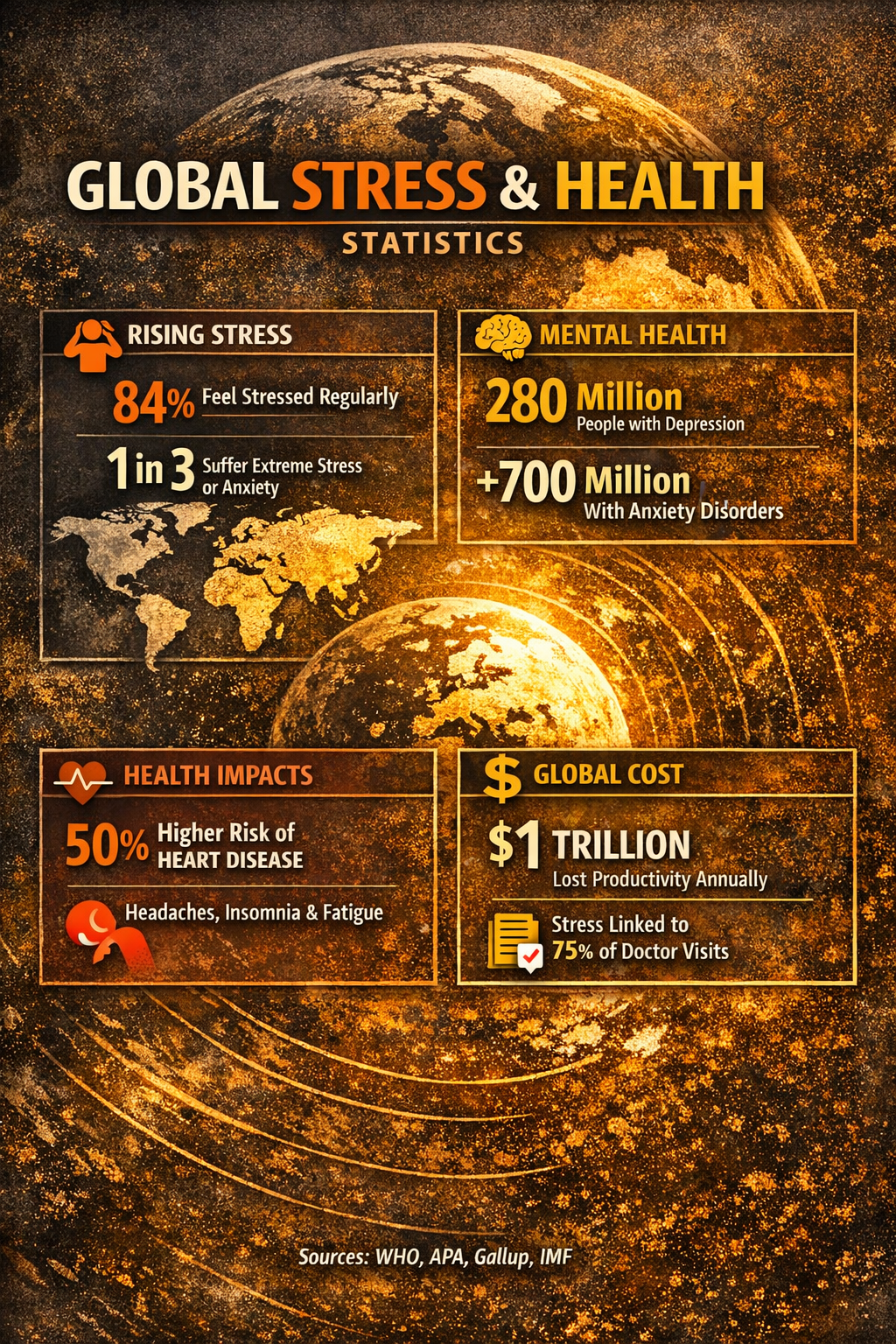
When stress becomes chronic, the body remains in a heightened state of vigilance. This constant activation strains the cardiovascular, digestive, and immune systems. Long-term stress contributes to anxiety, depression, sleep disruption, inflammation, and difficulty concentrating. The body pays a high price for prolonged survival mode. Understanding the stress response helps us recognize our own patterns with compassion. It allows us to respond intentionally rather than react instinctively. Workplaces often punish stress behaviors instead of understanding them. But when organizations recognize that employees are not “overreacting”, they are responding biologically, and everything changes. Compassion becomes strategy, clarity becomes prevention, and understanding becomes leadership.
Leaders and organizations cannot afford to treat stress as a private, individual issue. The biology of stress makes one truth unmistakable: people cannot think clearly, collaborate effectively, or innovate boldly when their nervous system is in survival mode. The workplace you create either calms the alarm or intensifies it. Create environments where clarity replaces confusion, communication replaces fear, and psychological safety replaces silent tension. Build systems that honor the human body, its limits, its signals, and its need for dignity and respect. Train managers to recognize stress responses not as defiance or disengagement, but as biology asking for safety. Invest in cultures where people feel seen, supported, and valued. Establish norms that reduce ambiguity, encourage honest dialogue, and reward emotional intelligence as much as technical skill. When conflict arises, respond with curiosity rather than punishment. When fear shows up, lead with steadiness rather than pressure. When emotional pain surfaces, offer compassion instead of critique.
The future of work belongs to organizations that understand the human nervous system and lead accordingly. The workplaces that will thrive are not the ones with the most perks or the most polished mission statements, but the ones that recognize a simple biological truth: people cannot perform at their best when their bodies are in survival mode. When the nervous system is overwhelmed, creativity shuts down, collaboration fractures, and decision‑making becomes reactive instead of strategic. If you want stronger teams, healthier workplaces, and more resilient people, start by creating conditions where the body can breathe, the mind can think, and the human spirit can rise. This means building environments where clarity replaces confusion, where communication is steady rather than sharp, and where expectations are grounded in respect for human limits. It means designing systems that reduce unnecessary stress rather than amplify it.
Lead in a way that lowers the alarm. Your tone, your presence, your policies, and your culture all send signals to the nervous system. Leaders who understand this communicate with intention. They slow down when tension rises. They create psychological safety not as a buzzword, but as a biological necessity. They recognize that emotional regulation is not just a personal skill but an organizational responsibility. Build in a way that honors humanity. Structure your teams, workflows, and expectations around how people actually function, not how you wish they would. Honor the rhythms of focus and rest. Normalize boundaries. Encourage recovery. Create space for honest dialogue without fear of punishment. When people feel safe, their bodies relax, their thinking expands, and their capacity for innovation grows. The health of your organization depends on it. Chronic stress erodes trust, weakens morale, and quietly drains your workforce's energy. But when you build a culture that supports the nervous system, you unlock the full potential of your people, not through pressure, but through presence; not through fear, but through clarity; not through force, but through understanding.
Ultimately, the stress response is a protective mechanism. It is the body’s way of saying, “I am trying to keep you safe.” Healing begins when we learn to regulate it, soothe the alarm, and remind the body that safety is possible again. When leaders create environments that support this healing, they don’t just improve performance — they transform the workplace into a space where people can think deeply, work boldly, and show up as their fullest selves. The future of work is human. And the organizations that embrace this truth will be the ones that lead with wisdom, compassion, and lasting impact.
1. McEwen, B. S. (2007). Physiology and neurobiology of stress and adaptation: Central role of the brain. Physiological Reviews, 87(3), 873–904.
2. Sapolsky, R. M. (2004). Why zebras don’t get ulcers: The acclaimed guide to stress, stress-related diseases, and coping (3rd ed.). Henry Holt.
3. Porges, S. W. (2011). The polyvagal theory: Neurophysiological foundations of emotions, attachment, communication, and self-regulation. W. W. Norton.
4. van der Kolk, B. A. (2014). The body keeps the score: Brain, mind, and body in the healing of trauma. Viking.
5. American Psychological Association. (2023). Stress in America: A nation recovering from collective trauma. APA Stress in America Survey Report.
6. LeDoux, J. (2012). Rethinking the emotional brain. Neuron, 73(4), 653–676.
© 2026 Enoma Ojo. All Rights Reserved.
This article and its contents may not be reproduced, distributed, or transmitted in any form without prior written permission from the author