Inquiry & Insight
The Social Brian: Why We Think In Groups
In part 4 of our Human Mind Series, we identified Cognitive biases as the invicible force behind our choices. In this Part Series, we observed that humans evolved in groups long before we built cities, nations, or institutions. Because survival depended on cooperation, shared attention, and collective intelligence, the brain developed specialized systems for reading others, mirroring emotions, and synchronizing behavior. These systems still govern how we think today. Your readers will see that the “social brain” is not a metaphor, it is a biological reality that shapes everything from belonging and loyalty to conformity and conflict. Readers will see how mirror neurons, emotional contagion, and reward circuits create a mind that is constantly responding to the presence, and expectations, of others.
HUMAN MIND SERIES
enoma ojo (2026)
2/28/20264 min read
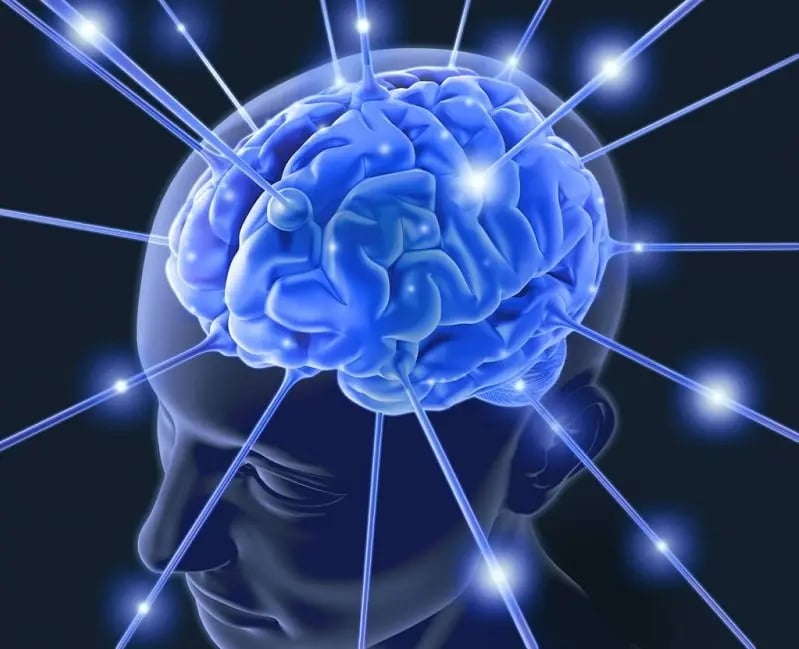
Part 4, Cognitive Biases: The Invisible Forces Behind Our Choices, revealed that much of what we call “thinking” is shaped by hidden mental shortcuts. It showed how the brain, under pressure to conserve energy and make rapid judgments, relies on patterns that distort perception, filter information, and guide decisions long before we become aware of them. These biases operate quietly, shaping our beliefs, our fears, and even our sense of truth.
But cognitive biases do not arise in a vacuum. They are not purely individual flaws or private mental habits. They are amplified, reinforced, and often created by the social environments we inhabit. The groups we belong to, families, communities, cultures, political identities, online networks, become the ecosystems where biases grow, spread, and solidify. In other words, the mind’s invisible forces are deeply connected to the social worlds that surround it.
If Part 4 exposed the internal architecture of bias, Part 5 explores the external architecture of belonging, the collective forces that shape how we think, feel, and behave. Before the brain learned to reason, it learned to belong. Before it developed logic, it developed loyalty. And long before cognitive biases existed, evolution built something even more fundamental: the social brain, a neural system designed for group living, shared identity, and collective survival.
Part 5, traces the evolutionary origins of this wiring. It shows how millions of years of living in tribes shaped neural circuits for imitation, cooperation, emotional contagion, and group cohesion. Through scientific insight and narrative storytelling, this chapter reveals that our thoughts are never fully our own; they are shaped by the tribes we join, the identities we defend, and the social worlds that define us.
In moving from the biased mind to the social mind, the series shifts from the internal forces that shape choice to the collective forces that shape identity. To understand why we think the way we do, we must now understand the groups that think with us, through us, and sometimes for us. The human brain is fundamentally a social organ, shaped not in isolation but within the collective environments where early humans lived, survived, and evolved. Our deepest instinct is not independence—it is connection.
For millions of years, survival depended on cooperation, shared attention, and coordinated action. Individuals who could read others, synchronize behavior, and maintain group cohesion were more likely to live long enough to pass on their genes. This evolutionary pressure sculpted neural systems specifically designed for social life. The brain developed circuits that reward belonging, detect social cues, and respond to the emotions and intentions of others. Mirror neurons emerged as part of this architecture, allowing humans to imitate, empathize, and learn by observing. These neurons made group learning faster and more efficient, strengthening collective intelligence. The default mode network, active when the mind wanders, became a space for social simulation—imagining others’ thoughts, predicting reactions, and rehearsing social interactions. Even in solitude, the brain remains socially engaged.
Hormonal systems such as oxytocin pathways evolved to reinforce trust, bonding, and cooperation. These biochemical rewards made group cohesion feel emotionally satisfying and biologically safe. Because belonging was essential for survival, the brain treats social acceptance as a form of security. Inclusion feels like safety, while exclusion triggers the same neural alarms associated with physical danger. This survival logic explains why humans conform to group norms, even when those norms conflict with personal beliefs. The brain prioritizes group harmony over individual accuracy because the cost of rejection is neurologically high.
Emotional contagion, our tendency to absorb the feelings of others, also emerged from this wiring. Shared emotions helped groups coordinate responses to threats, opportunities, and collective challenges. Identity itself became a social construct shaped by group membership. Who we are is deeply intertwined with who we stand with, and the brain uses group identity as a shortcut for understanding the world. These ancient systems still govern modern behavior, even though our groups have changed. Families, nations, religions, political movements, and online communities all activate the same neural circuits that once governed tribal life.
Modern environments amplify these instincts. Social media, for example, exploits the brain’s craving for belonging and validation, creating digital tribes that shape beliefs, emotions, and behaviors at unprecedented speed. The same wiring that enables empathy and cooperation can also fuel polarization and conflict. The instinct to protect “us” and distrust “them” is a relic of ancient survival strategies that now play out in modern society. Understanding the social brain reveals that our thoughts are never fully our own. They are shaped by the networks, norms, and narratives of the groups we inhabit, often without our conscious awareness.
Ultimately, the social brain explains why humans think in groups: because our minds were never designed to stand alone. Evolution built us to survive together, to read one another’s intentions, to synchronize our actions, and to anchor our identities in the safety of the collective. The individual mind is powerful, but it is also porous, shaped, influenced, and continually rewritten by the people and groups around it. Every belief we hold, every fear we inherit, every value we defend carries the imprint of a social world that existed long before we were born.
To understand ourselves, we must understand the collective forces that shape our inner world. The groups we belong to are not just communities; they are cognitive environments. They determine what feels true, what feels dangerous, and what feels possible. They teach us how to interpret the world and how to interpret ourselves. And whether we realize it or not, they guide our choices, our loyalties, and our sense of meaning. This is the paradox of the human mind: we are individuals who think collectively. Our independence is built on interdependence. Our personal identity is constructed from shared narratives. Our private thoughts are influenced by public emotions. The social brain is both our greatest strength and our greatest vulnerability—capable of extraordinary cooperation, but also susceptible to conformity, division, and tribal conflict.
In the end, understanding the social brain is not just an academic exercise. It is a way of understanding why societies rise and fall, why cultures unite and fracture, and why human beings can be both compassionate and cruel depending on the groups they serve. It is a reminder that the mind is not an isolated engine of reason but a living, evolving part of a larger human network. And as we move deeper into a world shaped by digital tribes, global identities, and algorithmic influence, the question becomes unavoidable: Who are we becoming when the groups that shape us are no longer physical, ancestral, or local, but engineered, curated, and constantly shifting?
Join the conversation @ enomaojo.substack.com
© 2026 Enoma Ojo. All rights reserved. No part of this publication may be reproduced, distributed, or transmitted in any form or by any means without prior written permission from the author.