The Rise of Estonia: How a Digital Identity Transformed a Post‑Soviet Nation Into a Global Innovation Hub
This case study examines how Estonia used digital identity to rebuild its institutions, accelerate human development, and become one of the world’s most advanced digital societies. It offers a data‑driven blueprint for nations seeking to modernize governance and unlock innovation at scale.
CASE STUDY
enoma ojo (2026)
3/8/20269 min read


Not metaphorically, literally. The newly independent Estonian government had no heating, no computers, and barely any electricity. Ministers wore coats indoors. Files were stacked in cardboard boxes because there were no cabinets. The country had just broken free from the Soviet Union, but freedom came with a brutal inventory: empty banks, outdated infrastructure, and a public administration still running on paper, stamps, and Soviet‑era bureaucracy. In one meeting, a young official looked around the dimly lit room and said quietly, “We cannot rebuild this country the old way. We don’t have the money, the people, or the time.” Another replied, “Then we must build it a new way.” That sentence became the spark.
Estonia did not have oil. It did not have a large population. It did not have global influence. But it had something far more powerful: the freedom to imagine a different system. While other post‑Soviet states tried to modernize their old structures, Estonia made a radical decision — it would leapfrog the 20th century entirely and build a nation for the 21st. It would digitize everything. It would give every citizen a secure digital identity. It would create a government that lived online, not in buildings. It would turn bureaucracy into software, trust into encryption, and national identity into a digital asset. This was not a technology project. It was a psychological project, a national decision to rewrite the country’s self‑story. And it began with a simple, almost unbelievable idea: What if a country could function like a startup?
In the years that followed, Estonia built X‑Road, the backbone of its digital society. It launched e‑ID, giving every citizen a secure digital identity. It digitized voting, healthcare, taxes, business registration, and public records. It created e‑Residency, allowing anyone in the world to become a digital citizen and start a business in Estonia without ever setting foot there. By 2025, Estonia had become one of the most digitally advanced nations on Earth, a global innovation hub where 99% of public services were online, where citizens voted from their laptops, and where starting a company took 15 minutes. But the real story is deeper. Estonia did not rise because of technology. It rose because it rewired its national identity. It taught its people to see themselves not as victims of history, but as architects of the future. It built systems that made trust scalable, innovation safe, and ambition biologically rewarding. It created a culture where the government was not a barrier, but a platform.
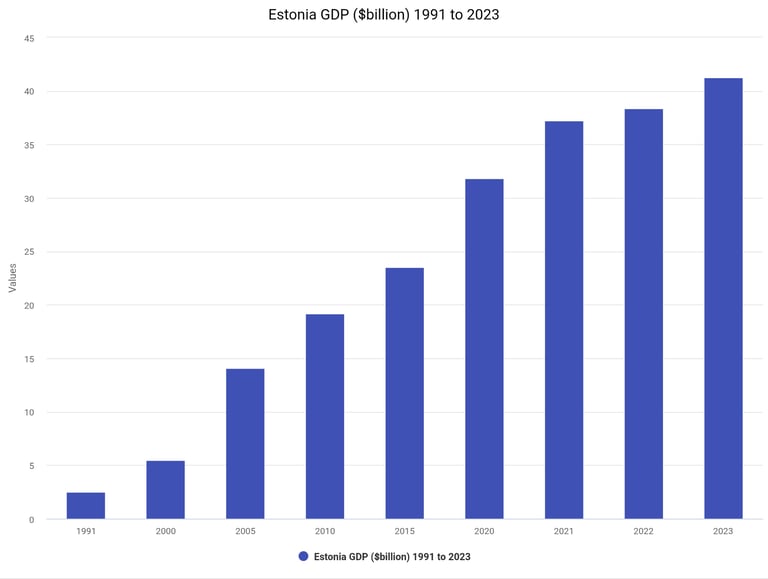
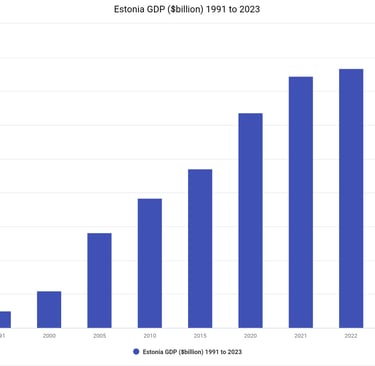
Figure 1, Estonia GDP 1991 to 2023
This case study is the story of how a small, cold, newly independent nation used digital identity to transform itself — not just economically, but psychologically. It is the story of how systems shape motivation, how identity shapes possibility, and how a nation with almost nothing built one of the most advanced societies in the world. When Estonia regained independence in 1991, it inherited a state that barely functioned. Government offices had no heating, no computers, and no modern administrative systems. The country was free, but it was also fragile, a nation with limited resources, a small population, and a bureaucracy still shaped by Soviet inefficiency.
In those early years, Estonian leaders faced a brutal reality: they could not rebuild the country using traditional methods. They lacked the money to modernize infrastructure, the workforce to expand government institutions, and the time to catch up with Western Europe through incremental reforms. Instead of trying to repair the old system, Estonia made a radical choice: it would build a new one. It would leapfrog the 20th century entirely and design a state for the digital age. This decision was not technological bravado; it was a strategic necessity. The first step was identity. Estonia recognized that a modern state cannot function without a reliable way to verify who people are. But instead of issuing more paper documents, Estonia created something unprecedented: a secure, universal digital identity for every citizen.
This digital identity, the e‑ID, became the cornerstone of the nation’s transformation. It allowed citizens to authenticate themselves online with cryptographic security, enabling everything from banking to voting to medical access. It was not just a tool; it was a new social contract. With e‑ID in place, Estonia built X‑Road, a decentralized data exchange layer that allowed government agencies and private companies to share information securely. This eliminated paperwork, reduced corruption, and made public services dramatically more efficient. The impact was immediate. Processes that once took days or weeks could now be completed in minutes. Citizens could file taxes online, access health records, register businesses, and sign legal documents digitally. Estonia became the first country where bureaucracy moved at the speed of software.
Notably, the deeper transformation was psychological. Digital identity reshaped how Estonians saw themselves, not as subjects of a slow, opaque state, but as participants in a transparent, efficient, and modern society. Trust in government increased because the system itself was trustworthy. Estonia’s leaders understood that technology alone does not create progress. Systems must be designed to reinforce motivation, reward initiative, and make innovation feel safe. By reducing friction and uncertainty, Estonia activated the motivational circuits of its citizens. This environment produced a generation of entrepreneurs who grew up believing that the state was a platform, not a barrier. Companies like Skype, Wise, and Bolt emerged not by accident, but because the system made experimentation low‑risk and high‑reward.
Estonia’s digital identity also transformed governance. Public officials could no longer hide behind paperwork or bureaucratic delays. Every action left a digital trace, reducing corruption and increasing accountability. Transparency became a structural feature, not a moral aspiration. The country’s education system adapted as well. Digital literacy became a national priority. Children learned coding early. Schools integrated technology into daily learning. Estonia was not just using digital tools; it was cultivating a digital mindset. As the system matured, Estonia launched e‑Residency, a groundbreaking program that allowed anyone in the world to obtain a digital identity and start a business in Estonia without being physically present. This turned the country into a global entrepreneurial hub.
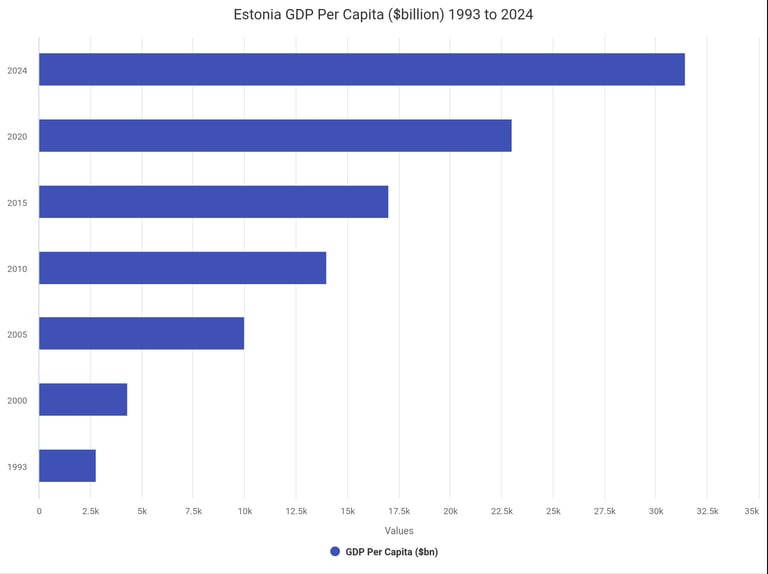
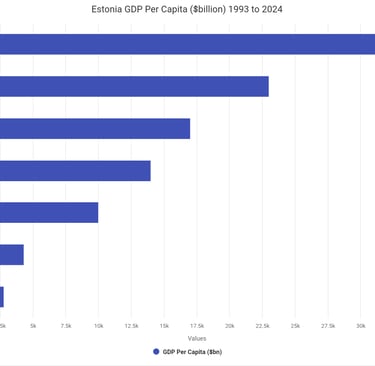
Figure 2. Estonia GDP Per Capita 1993 - 2024
E‑Residency reframed the idea of citizenship. It showed that identity could be portable, borderless, and economically generative. Estonia became the first nation to export its governance model as a digital service. The success of Estonia’s digital identity system attracted global attention. Governments, researchers, and technologists studied the model, trying to understand how a small nation had achieved what larger, wealthier countries could not. The answer was simple but profound: Estonia built systems that aligned with human psychology. It reduced uncertainty, increased predictability, and made progress visible. These conditions strengthened the brain’s motivation circuits at scale.
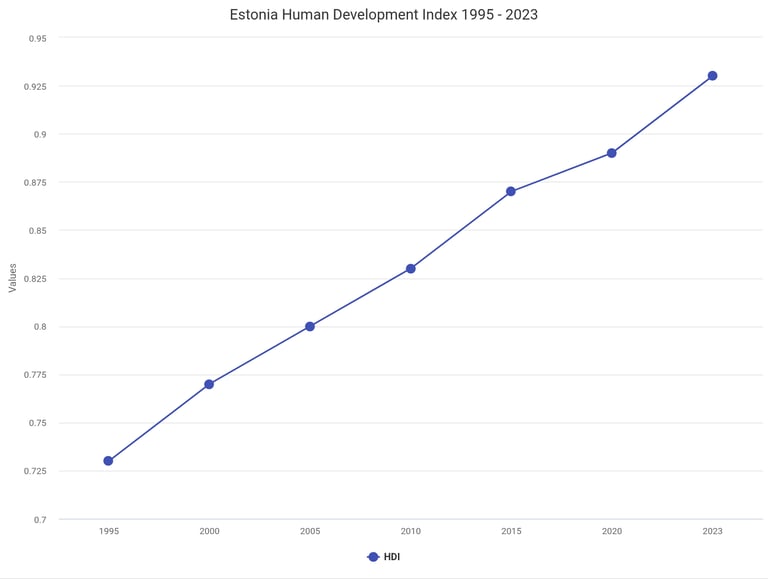
When viewed against its regional peers, Estonia’s transformation becomes even more striking. All three Baltic states, Estonia, Latvia, and Lithuania, have achieved “Very High” HDI status, but Estonia consistently leads the group, reflecting the compounded impact of its early digital reforms and governance redesign. Latvia and Lithuania made strong gains through economic liberalization and EU integration, yet neither matched Estonia’s systemic leap into digital identity and platform‑based governance. Georgia, while showing impressive progress and now also classified as “Very High” HDI, still trails behind the Baltics due to slower institutional modernization and greater political volatility. The regional comparison makes one truth unmistakable: Estonia did not simply grow; it accelerated. It built systems that reduced friction, increased trust, and activated the motivational architecture of its citizens at scale. In a region where many nations shared similar starting conditions, Estonia’s trajectory stands out as the clearest evidence that systems, not history, determine national outcomes.
In contrast, many post‑Soviet states struggled because their systems remained unpredictable, corrupt, or inefficient. Their citizens learned that effort did not lead to reward, and motivation collapsed. Estonia’s rise was not just technological; it was psychological. The Estonian model demonstrates that national identity is not fixed. It can be rewritten through systems that reinforce trust, competence, and possibility. Digital identity became the narrative backbone of a new Estonia, one defined by innovation rather than occupation.
Today, Estonia stands as one of the most digitally advanced societies in the world. Ninety‑nine percent of public services are online. Citizens vote electronically. Businesses operate with minimal friction. The country functions like a well‑designed platform. The lesson is clear: nations do not rise because of size, wealth, or history. They rise because they build systems that make ambition safe, innovation possible, and identity expansive. Estonia transformed itself not by copying the world, but by reimagining what a country could be, and in doing so, it reshaped the global conversation about governance, technology, and the future of national identity.
Estonia proves that digital identity is not a technical upgrade but a governance revolution. It redefines how states interact with citizens, how trust is built, and how public services function. Countries that treat digital identity as a software project will fail. Countries that treat it as a new social contract will transform. Trust can be engineered. Most nations assume trust is cultural or historical. Estonia shows it can be designed. By making government actions transparent, predictable, and auditable, Estonia created a system where trust is not requested; it is earned.
Figure 3. Estonia Human Development Index 1995 - 2023
This Case Study challenges the fatalistic belief that corruption is cultural. It is often structural. Small nations can lead global innovation. Estonia’s rise dismantles the myth that only large, wealthy nations can shape the future. Its success demonstrates that clarity of vision can outperform size, and systemic coherence can outperform wealth. In a world dominated by geopolitical giants, Estonia shows that agility is a form of power. Estonia reframed national identity from a historical burden to a strategic advantage. Giving citizens a digital identity, it gave them a future‑oriented identity, one tied to possibility, not trauma. This is a profound lesson: nations rise when they rewrite the stories their people believe about themselves.
Estonia eliminated bureaucratic friction at scale. This did more than improve efficiency; it activated the motivational circuits of an entire population. When systems reduce uncertainty and reward initiative, innovation becomes a natural outcome, not a heroic act. Estonia’s digital infrastructure made corruption difficult, traceable, and socially unacceptable. This insight is global in its implications. Transparency is not a moral stance; it is an economic strategy. Estonia’s story is not just a national success; it is a global signal. It shows that transformation is not reserved for the wealthy, the large, or the historically privileged. It belongs to those who redesign their systems, rewire their identity, and align governance with human psychology. Estonia did not rise because of luck or legacy. It rose because it built a platform where trust was scalable, effort was rewarded, and innovation was safe.
In a world where most nations inherit broken systems and outdated assumptions, Estonia chose to start over. It treated identity not as a relic of history, but as a tool for the future. It built a government that lived online, a society that trusted code, and a culture that believed progress was possible. It did not wait for permission from history; it rewrote its own. This is the architecture that matters: systems that reduce friction, identities that expand possibility, and governance that reinforces motivation. Estonia’s rise is not a miracle. It is a blueprint. It shows that when a nation aligns its infrastructure with the human mind, when it makes ambition safe and innovation predictable, transformation becomes inevitable.
And so the cold room in 1991 becomes more than a memory. It becomes a metaphor. A nation with no heat, no computers, and no legacy chose to build something new. And in doing so, it became one of the most advanced societies on Earth. Estonia’s lesson is clear: the future does not belong to those who wait. It belongs to those who redesign.
References
Bitton, M. (2025). The Estonian Miracle: E-Estonia and the Future of Digital Infrastructure. NYU School of Professional Studies.
e-Estonia. (2024). e-Estonia Briefing Centre: Digital Society Showcase. https://e-estonia.co
Estonian Ministry of Economic Affairs and Communications. (2023). Digital Agenda 2030. https://www.mkm.ee
European Commission. (2015). eGovernment Benchmark Report.
Freedom House. (2023). Freedom on the Net: Estonia Country Report. https://freedomhouse.org
Ilves, T. H. (2014). Estonia’s digital transformation. Foreign Affairs, 93(3), 28–35.
Kalvet, T. (2012). Innovation: A factor explaining e-government success in Estonia. Electronic Government, 9(2), 142–157.
Martens, B. (2017). An economic perspective on digital identity. JRC Digital Economy Working Paper Series.
OECD. (2015). Digital government strategies for transforming public services in the welfare areas. OECD Publishing.
Roonemaa, M. (2017). Global lessons from Estonia’s tech-savvy government. UNESCO Courier.
Sullivan, C. (2016). Digital identity: An emergent legal concept. Computer Law & Security Review, 32(4), 553–565.
Tammpuu, P., & Masso, A. (2019). Transnational digital identity as an instrument for global digital citizenship: The case of Estonia’s e-residency. Information Systems Frontiers, 21, 621–634.
UNDP. (2022). Digital governance and inclusion: Lessons from Estonia. https://www.undp.org
World Bank Group. (2016). Identification for Development (ID4D) Global Dataset. https://id4d.worldbank.org
© 2026 Enoma Ojo. All rights reserved. No part of this publication may be reproduced or distributed without written permission from the author