
The Psychology of Change ( Human Mind Series Part 11)
“The Psychology of Change” explores the hidden mental processes that shape how and why people transform. Change is often described as a decision or a moment of courage, but in reality, it is a slow psychological unfolding — a negotiation between the mind’s desire for safety and its longing for growth. This article examines why the mind resists change even when life demands it, how identity and memory anchor us to familiar patterns, and what finally allows a person to step into a new version of themselves. Drawing from behavioral science, emotional resilience, and narrative identity, the piece reveals that change is not triggered by opportunity alone, but by shifts in meaning, belief, and internal readiness. It shows how fear, uncertainty, and attachment shape the pace of transformation, and why true change requires more than intention; it requires a reorganization of the self. Ultimately, this article invites readers to see change not as a disruption, but as a psychological evolution. It offers a deeper understanding of what it takes to move from who we have been to who we are becoming, and prepares the ground for the final part of the series, where we explore the future of the human mind.
enoma ojo (2026)
4/3/20267 min read
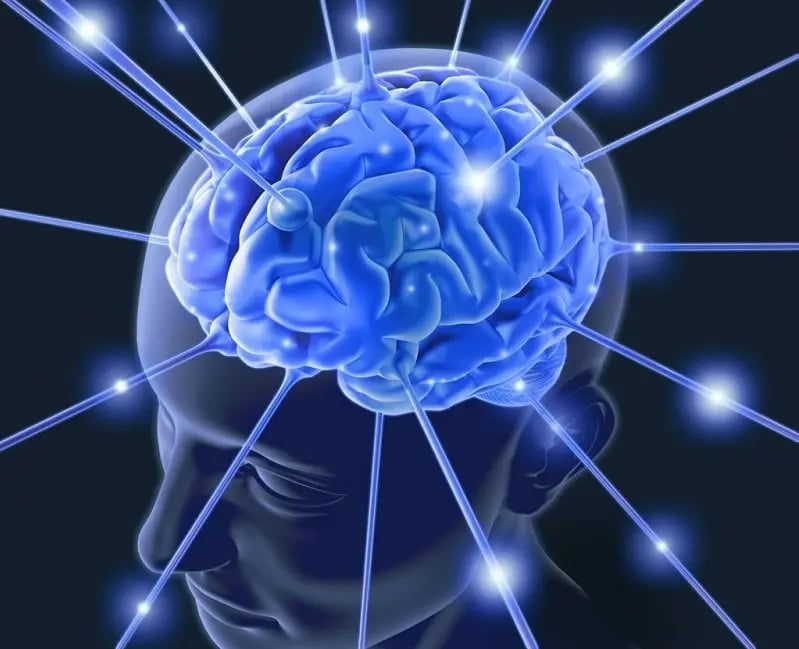
Change is not a moment; it is a psychological event. It begins long before behavior shifts and long after circumstances demand it. In Part 11 of the Human Mind Series, The Psychology of Change, we explore the hidden architecture behind transformation: why the mind resists it, what finally opens the door to it, and how individuals move from intention to action, from possibility to embodiment.
Where Part 10 examined power, the forces that shape what we reach for and how we influence the world, Part 11 turns inward to the quieter, more fragile process of becoming someone new. Change asks different questions than power. Power asks, “What can I do?” Change asks, “Who am I willing to stop being?” Power expands our reach; change rewrites our internal map. This article reveals that change is rarely blocked by a lack of opportunity. It is blocked by the mind’s attachment to familiarity, its fear of uncertainty, and its instinct to protect the self-story it has already built. We explore how people can desire change yet sabotage it, how the brain negotiates risk and reward, and why transformation often requires a psychological “break” before it becomes a conscious choice.
Through the lenses of behavioral science, emotional resilience, and narrative identity, this part uncovers the stages of internal transition, from the first quiet discomfort to the moment a person finally steps across the threshold. It shows how belief, expectation, memory, and meaning shape the pace and depth of change, and why some shifts feel effortless while others feel impossible.
It is an invitation to understand change not as a disruption, but as a psychological reorganization, a restructuring of identity, perception, and possibility. It prepares the reader to see transformation not as an external event, but as an internal negotiation between who they have been and who they are becoming. Change is often described as a decision, a moment, a turning point, but psychologically, it is far more complex. It is not a switch that the mind flips; it is a negotiation between competing internal forces, each with its own fears, loyalties, and memories. Before a person changes their life, they must first confront the architecture of their inner world.
In Part 10, we explored power, the forces that shape what we reach for, how we assert ourselves, and how we influence our environment. But power alone does not guarantee transformation. Many people possess power yet remain unchanged. Others lack power yet evolve profoundly. This reveals a deeper truth: change is not driven by capacity, but by psychology. At its core, change challenges the mind’s most fundamental instinct: the desire for familiarity. The brain is wired to prefer what it knows, even when what it knows is painful. Familiarity feels safe because it is predictable. Change feels dangerous because it introduces uncertainty, and uncertainty threatens the mind’s sense of control. This is why people can desire change yet resist it with equal intensity. They want the outcome but fear the process. They want a new life but cling to the old identity. They want transformation but dread the temporary chaos that transformation requires. The mind is not resisting growth; it is resisting the loss of stability.
Every change begins with discomfort, a quiet internal signal that something no longer fits. This discomfort is not the change itself; it is the invitation. It is the mind whispering that the current pattern has reached its limit. But discomfort alone is not enough. Many people live in discomfort for years without moving. What moves people is not discomfort, but meaning. When the meaning of staying the same becomes heavier than the meaning of changing, the mind begins to shift. This is the psychological tipping point: when the cost of the old self outweighs the fear of the new one. Yet even at this tipping point, the mind does not leap. It hesitates. It evaluates. It negotiates. It asks: What will I lose? What will I gain? Who will I become? Who will I disappoint? What if I fail? These questions are not signs of weakness; they are signs that the mind is reorganizing itself. Prochaska and DiClemente (1983) explain that self‑change occurs through identifiable stages that unfold over time.
Change requires a re‑authoring of identity. A person must let go of the story they have told themselves, sometimes for years, about who they are, what they deserve, and what is possible. Identity is not just a narrative; it is a psychological anchor. To change it is to lift the anchor and drift into open water. This is why change often feels like grief. The mind is mourning the version of itself it must leave behind. Even when the old self was limiting, it was familiar. Even when the old patterns were harmful, they were known. The mind grieves not because the new self is undesirable, but because the old self was home. But grief is not the enemy of change; it is the doorway. When a person allows themselves to mourn the old identity, they create space for a new one. Suppressed grief leads to suppressed transformation. Acknowledged grief leads to psychological expansion. Kahneman (2011) explains that the mind relies on fast, intuitive judgments that often resist new information.
The next stage of change is experimentation. The mind begins to test new behaviors, new thoughts, new boundaries. These experiments are fragile. They require emotional energy, cognitive effort, and a willingness to tolerate uncertainty. This is where many people retreat, not because they lack desire, but because they lack psychological stamina. Stamina is built through small wins. Each successful experiment strengthens the mind’s belief that change is possible. Each moment of courage rewires the brain’s relationship with fear. Change is not a single act of bravery; it is a series of micro‑acts that accumulate into a new identity. But change is rarely linear. The mind cycles through progress and regression, clarity and confusion, confidence and doubt. Regression is not failure; it is integration. The mind is testing the durability of the new pattern. It is asking: Is this safe? Is this sustainable? Is this truly who I am becoming?
The psychology of change also involves the environment. People do not transform in isolation. They change in response to relationships, pressures, opportunities, and mirrors. Sometimes the environment supports the new identity. Sometimes it reinforces the old one. The mind must navigate these external forces while protecting its internal evolution. This is why some changes require distance, emotional, psychological, or physical. Not because the person is running away, but because the new identity needs space to grow without being pulled back into old patterns. Distance is not abandonment; it is protection. As the new identity strengthens, the mind begins to reinterpret the past. What once felt like failure becomes preparation. What once felt like loss becomes clarity. What once felt like chaos becomes the necessary disruption that made transformation possible. This reinterpretation is a sign that change has moved from behavior to belief.
Eventually, the new identity becomes familiar. What was once terrifying becomes natural. What was once uncertain becomes stable. The mind no longer feels like it is performing the new self; it feels like it is the new self. This is the moment when change becomes permanent. But even permanent change is not final. The mind continues to evolve, adapt, and reorganize. Each transformation becomes the foundation for the next. Change is not a destination; it is a psychological rhythm, a cycle of expansion, contraction, integration, and renewal.
Ultimately, change is the mind’s most courageous act. It is the quiet decision to step beyond the borders of what is known, to loosen the grip of old identities, and to trust that the future can hold something better than the past. Change asks a person to walk into uncertainty without a guarantee, to release the familiar without a map, and to believe in a version of themselves they have not yet met. It is not loud. It is not dramatic. It is the slow, steady willingness to let the old self dissolve so a new one can take shape. Change requires a kind of bravery that is rarely celebrated, the bravery of internal reorganization. It demands that the mind confront its own fears, its own patterns, its own loyalties to outdated narratives. It asks us to question the stories we inherited, the beliefs we absorbed, and the identities we once clung to for safety. And in doing so, it reveals that transformation is not an external event but an internal evolution: a shift in perception, a recalibration of meaning, a reorientation of the self toward possibility. To honor change is to honor the human capacity for renewal. It is to recognize that every step forward, no matter how small, is an act of defiance against stagnation. It is to understand that growth is not a betrayal of who we were, but a continuation of who we are becoming. Change is the mind’s way of saying, “I am not finished.”
As we close Part 11, we recognize that the psychology of change is not merely about shifting behavior; it is about expanding the mind’s capacity to imagine, to adapt, and to evolve. Every transformation, no matter how small, widens the internal landscape and alters what becomes possible next. And it is here, at the edge of this expanded horizon, that the final chapter of this series begins. Part 12, The Future of the Human Mind, looks beyond individual change and asks a larger question: What does the mind become when it is no longer confined by its past, its patterns, or its inherited limitations? It is an exploration of potential, not just who we are, but who we can become as our inner architecture continues to unfold.
References:
1. Prochaska, J. O., & DiClemente, C. C. (1983). Stages and processes of self‑change of smoking: Toward an integrative model of change. Journal of Consulting and Clinical Psychology, 51(3), 390–395.
2. Lewin, K. (1947). Frontiers in group dynamics: Concept, method, and reality in social science; social equilibria and social change. Human Relations, 1(1), 5–41.
3. Mezirow, J. (1997). Transformative learning: Theory to practice. New Directions for Adult and Continuing Education, 1997(74), 5–12.
4. Sheeran, P. (2002). Intention–behavior relations: A conceptual and empirical review. European Review of Social Psychology, 12(1), 1–36.
5. Oreg, S. (2003). Resistance to change: Developing an individual differences measure. Journal of Applied Psychology, 88(4), 680–693.
6. Armenakis, A. A., & Bedeian, A. G. (1999). Organizational change: A review of theory and research in the 1990s. Journal of Management, 25(3), 293–315.
7. Heath, C., & Heath, D. (2010). Switch: How to change things when change is hard. New York, NY: Broadway Books.
8. Kahneman, D. (2011). Thinking, fast and slow. New York, NY: Farrar, Straus and Giroux.
© 2026 Enoma Ojo. All rights reserved.