
The Neuroscience of Motivation
Part 7, The Neuroscience of Motivation, takes readers beneath culture and behavior into the biological machinery that powers human effort. It explains how dopamine, reward prediction, threat perception, and neural circuitry shape ambition, persistence, and the willingness to try. This chapter reveals why motivation rises in strong systems and collapses in weak ones, not because people change, but because their brains are responding to the signals their environment sends.
HUMAN MIND SERIES
3/8/20268 min read
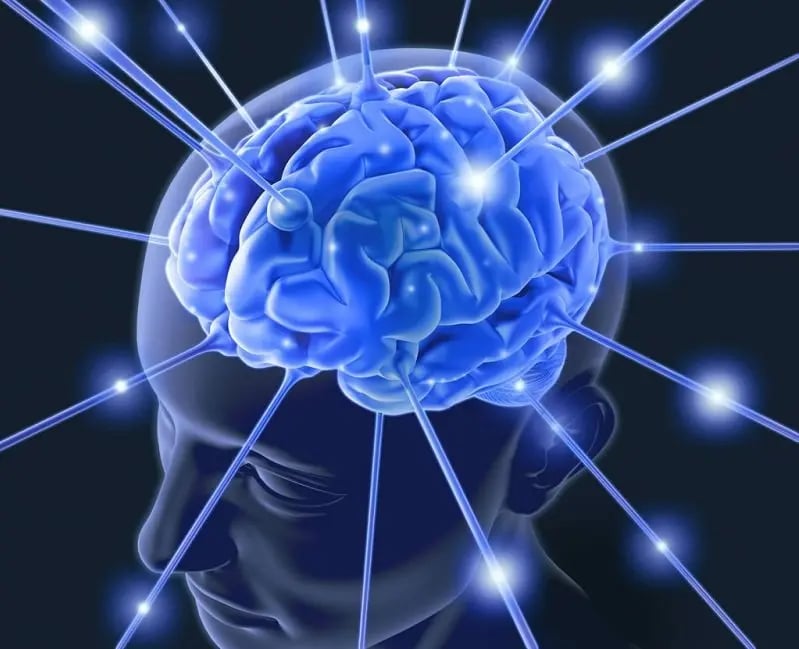
Nathan sat on the edge of his bed long before the sun rose, staring at the ceiling as if the answers to his life were hidden in the shadows. His alarm had rung three times, but he hadn’t moved. Not because he was tired, he had slept eight hours. Not because he was lazy, he hated laziness. But because something inside him felt heavy, like his body had quietly decided that today was not worth the effort. He couldn’t explain it. Yesterday he had been full of plans. Today, even lifting his arm felt like a negotiation.
Across the city, Anthony woke up before his alarm. He swung his legs out of bed with a kind of quiet urgency, mind already racing with ideas. He wasn’t richer. He wasn’t smarter. He wasn’t more disciplined. But something in him felt alive, pulled forward by a sense of possibility he couldn’t fully articulate. He moved through his morning with momentum, not because life was easy, but because his brain was telling him that effort mattered.
Two men. Same city. Same age. Same responsibilities. Yet one felt paralyzed while the other felt propelled.
We often explain this difference with moral language: one is “driven,” the other is “unmotivated.” One “wants it more,” the other “lacks discipline.” But these explanations are shallow. They ignore the deeper truth: motivation is not a character trait. It is not a virtue. It is not a choice you simply wake up and make. Motivation is a neural event.
It is the rise and fall of dopamine in the brain’s reward pathways. It is the prefrontal cortex imagining a future worth pursuing. It is the limbic system deciding whether the world is safe enough to try. It is the brain’s internal prediction engine, calculating whether effort will lead to progress or pain. And this is where the story becomes uncomfortable. Because the first man wasn’t weak. His brain had simply learned, through years of instability and disappointment, that effort rarely produced reward. His motivational circuits had been shaped by unpredictability, scarcity, and systems that punished initiative. His biology was protecting him, not failing him.
Anthony was not extraordinary. His brain had been trained by consistent reinforcement, stable systems, and environments where effort reliably produced progress. His motivational circuits were not stronger; they were safer.
This Part begins here, in the quiet space between intention and action, where biology decides whether a human being moves or stays still. It is the space where ambition is born, where persistence is shaped, and where entire societies rise or collapse based on the signals their systems send to the human brain. Because motivation is not magic. It is machinery, and the systems we build determine whether that machinery fires or shuts down.
In Part 6, we uncovered a truth most people never stop to examine: human beings do not think in a vacuum. We think inside cultural operating systems, inherited codes that shape how we interpret risk, opportunity, responsibility, and even possibility itself. We saw how two people can stand at the same crossroads and see two different worlds, not because their eyes are different, but because their internal software is.
But beneath culture lies something even more fundamental, the biological machinery that powers human effort. Culture may tell us what to pursue, why to pursue it, and whether it is safe to try, but the actual energy that moves a human being from intention to action comes from deeper inside the brain. It comes from the neural circuits that generate desire, sustain ambition, and fuel persistence. It comes from the chemistry that makes effort feel meaningful or meaningless, possible or impossible.
If Part 6 explained why societies interpret opportunity differently, Part 7 explains why individuals move, or fail to move, at all. Because motivation is not a personality trait. It is not a moral virtue. It is not a cultural preference. Motivation is a neuroscientific process, a biological negotiation between the brain’s reward systems, threat systems, and predictive systems. It is the internal calculus that determines whether effort is worth the cost, and this is where the story becomes uncomfortable.
Just as cultures can strengthen or distort the mental operating system, environments can strengthen or collapse the brain’s motivational architecture. Weak systems, unstable institutions, unpredictable rewards, scarcity, corruption, fear do not merely frustrate people. They biologically shut down the circuits that make ambition possible. They drain dopamine, amplify threat responses, and teach the brain that persistence is dangerous. In other words, people do not lose motivation because they are weak. They lose motivation because their systems are weak.
This Part takes us into the neural engine room of human effort. It shows how dopamine drives pursuit, how the prefrontal cortex sustains long‑term goals, how fear and scarcity hijack ambition, and why some environments naturally produce innovators while others produce survivors. Part 6 revealed the cultural code. Part 7 reveals the biological fuel. Together, they explain why human beings rise, stall, or collapse, not as isolated individuals, but as minds shaped by the systems around them.
Motivation begins not as a feeling but as a biological signal, a set of neural processes that push the human mind toward action. It is the brain’s way of deciding what is worth pursuing, what is worth enduring, and what is worth ignoring. Every act of ambition, persistence, or effort traces back to these internal circuits. At the center of this system is dopamine, often misunderstood as the “pleasure chemical.” In reality, dopamine is the engine of pursuit. It fuels anticipation, energizes effort, and creates the internal momentum that makes human beings move toward a goal long before the reward arrives.
The brain’s reward system operates on prediction. It constantly evaluates whether the future is worth investing energy in. When the brain believes progress is possible, dopamine rises. When it senses futility, danger, or unpredictability, dopamine falls, and motivation collapses. Ambition is not a personality trait; it is the outcome of a brain that believes effort will be rewarded. When the environment consistently reinforces progress, the brain strengthens its pursuit circuits. When the environment punishes effort or makes outcomes unpredictable, those circuits weaken. Persistence emerges from the brain’s ability to tolerate discomfort while holding onto a vision of the future. This capacity is shaped by the prefrontal cortex, which imagines long‑term outcomes, and the limbic system, which manages emotional responses to stress, uncertainty, and failure.
Threat and fear play a powerful role in motivation. When the brain perceives danger, physical, emotional, or social, it shifts into survival mode. In this state, long‑term goals lose their importance, and the mind becomes focused on immediate safety. Ambition shrinks under the weight of fear. Scarcity, whether financial, emotional, or psychological, narrows the brain’s focus. It reduces cognitive bandwidth and makes it harder to plan, persist, or imagine better futures. People in scarcity are not unmotivated; their brains are simply prioritizing survival over aspiration. The brain’s motivational circuits are deeply sensitive to stability. Predictable environments allow the mind to invest energy in long‑term goals.
Unpredictable environments, where rules shift, rewards disappear, or systems fail, cause the brain to conserve energy and avoid risk. This is why weak systems produce weak motivation. When institutions are unreliable, when effort is not rewarded, when corruption or chaos distort outcomes, the brain learns that ambition is dangerous. People withdraw not because they lack drive, but because the system teaches them that effort is futile. Strong systems, by contrast, create psychological safety. They reward effort, protect fairness, and make progress visible. In such environments, the brain’s dopamine pathways strengthen, and people naturally become more persistent, creative, and ambitious.
Culture interacts with biology to shape motivation. Cultures that celebrate progress, encourage experimentation, and normalize failure create minds that are willing to try. Cultures that punish mistakes or shame ambition create minds that stay small, cautious, and risk‑averse. Motivation is also influenced by social belonging. Human beings are wired to seek approval and avoid rejection. When communities support effort and celebrate growth, individuals push harder. When communities mock ambition or enforce conformity, motivation collapses. The brain’s reward system is highly responsive to meaning. People are more motivated when their actions feel connected to a purpose larger than themselves. Meaning activates the same neural circuits that drive persistence, making difficult tasks feel worthwhile.
Conversely, environments that strip work of meaning, through exploitation, monotony, or lack of recognition, weaken the brain’s motivational architecture. People disengage not because they are lazy, but because their brains cannot justify the emotional cost. Motivation is not constant; it fluctuates based on internal chemistry and external conditions. Stress, sleep, nutrition, and emotional stability all influence the brain’s ability to generate and sustain effort. Even highly ambitious people experience motivational collapse when these systems are disrupted. Trauma and chronic stress reshape the brain’s motivational circuits. They make the mind hyper‑vigilant, reduce dopamine sensitivity, and weaken the ability to imagine positive futures. Healing these circuits requires safety, stability, and environments that rebuild trust.
Children raised in stable, supportive systems develop stronger motivational pathways. They learn that effort leads to progress, that failure is survivable, and that the world responds predictably to their actions. This early wiring shapes ambition for life. Adults, too, can rebuild motivation when placed in environments that reward consistency, provide structure, and offer clear pathways to advancement. The brain remains plastic; it can relearn ambition when conditions change. Ultimately, motivation is a partnership between biology and environment. The brain provides the machinery, but systems determine whether that machinery is activated or suppressed. Strong systems unlock human potential; weak systems suffocate it.
Motivation collapses not because people lack character, but because their neural machinery has been trained to view effort as unsafe, unrewarding, or meaningless. As we close this Part of the ongoing Human Mind Series, the symmetry becomes clear: culture programs the mind, biology powers the engine, and systems determine whether that engine can run. To build societies where human beings rise, persist, and create, we must strengthen all three: the code, the chemistry, and the conditions that allow the human mind to move.
In the end, Nathan and Anthony were never opposites; they were outcomes. One carried a brain shaped by unpredictability, scarcity, and systems that taught him effort was dangerous. The other carried a brain strengthened by stability, reinforcement, and systems that made ambition feel safe. Their lives were not defined by willpower, but by the signals their environments sent to their neural machinery. And this is the truth Part 7 leaves us with: motivation is not a mystery, not a moral judgment, not a personal flaw. It is the biological echo of the systems we build. When societies reward effort, protect fairness, and create predictable pathways to progress, the human mind rises. When systems collapse, motivation collapses with them. As we close this chapter, the symmetry becomes clear: culture programs the mind, biology powers the engine, and systems determine whether that engine can run. To unlock human potential, we must strengthen all three.
If Part 7 revealed the biological engine that powers human effort, then Part 8 turns to the driver, the inner narrator who decides what that effort means. Because beneath motivation lies something even more powerful: the story people tell themselves about who they are, what they deserve, and what their future can hold. Neuroscience explains how humans move; culture explains the rules they inherit, but identity explains the direction they choose. And identity is not fixed; it is constructed, reinforced, and rewritten through experience, culture, memory, and environment. Part 8 explores this fragile architecture. It examines how self‑stories shape ambition, how identity can expand or collapse under pressure, and how entire societies rise or fall based on the narratives they teach their people to believe.
© 2026 Enoma Ojo. The Human Mind Series™. All rights reserved. Unauthorized use or reproduction of this material is strictly prohibited.