
The Mind’s Hidden Ledger: Why Humans Make Predictably Irrational Economic Choices
“The Mind’s Hidden Ledger” reveals why people make choices that look irrational on the surface but follow a deeper emotional logic underneath. It explains how the brain keeps a second, invisible ledger—tracking fear, pride, identity, belonging, and past experiences, and how these emotional ‘entries’ quietly shape economic decisions. When you understand this hidden ledger, irrational behavior stops looking random and becomes completely predictable.
INSIGHTS
enoma ojo (2026)
5/3/202617 min read
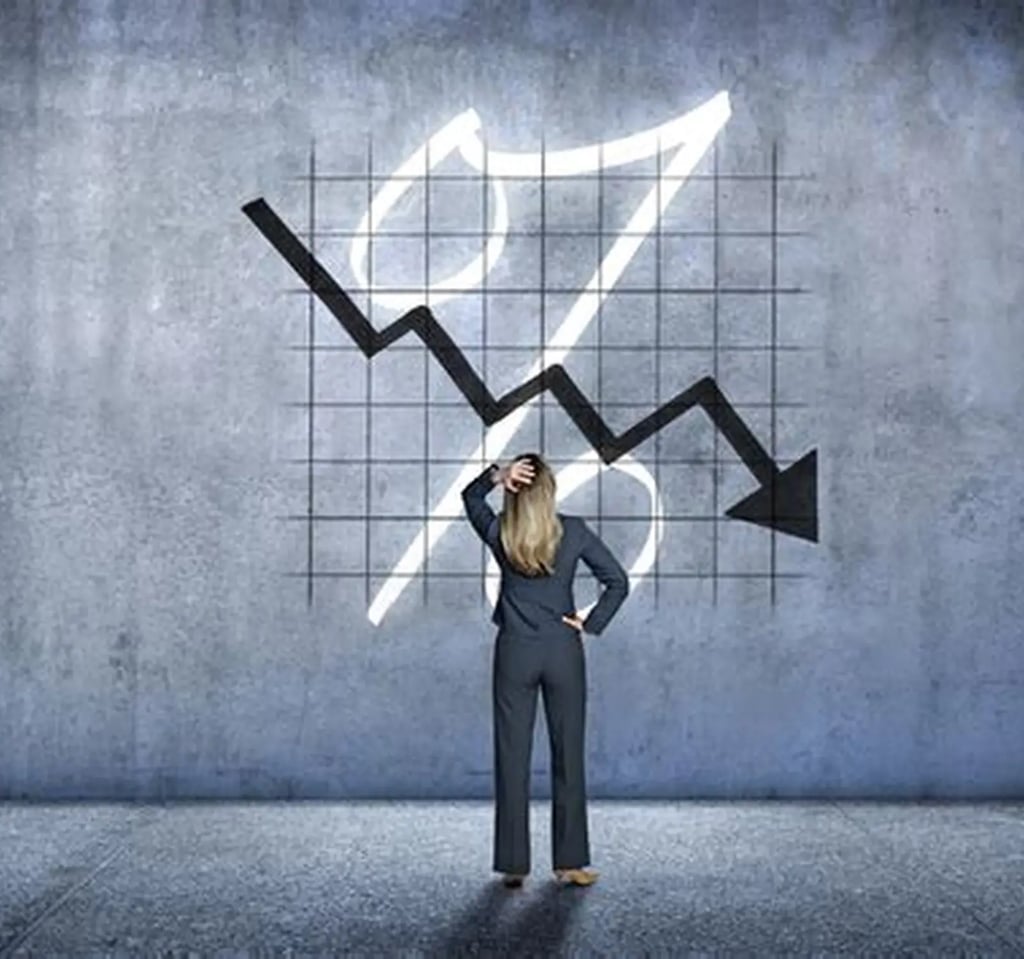
Human beings do not make economic decisions as rational calculators. Instead, our choices are shaped by cognitive biases, emotional pressures, and psychological shortcuts that systematically distort judgment. Behavioral economics research demonstrates that these deviations from rationality are not random; they are patterned, predictable, and rooted in the architecture of the human mind. This article synthesizes contemporary findings on cognitive biases, emotional influences, and identity‑driven behavior to explain why irrational choices persist across markets, households, and financial systems.
The Paradox of Rationality
Classical economics has long been built on a beautifully simple assumption: that human beings are rational actors who make decisions to maximize utility. This premise, elegant in its symmetry and comforting in its predictability, has shaped everything from public policy to market design. It imagines a world where individuals weigh costs and benefits with mechanical precision, where choices are deliberate, consistent, and optimized. Yet the lived reality of human behavior tells a very different story. People routinely make decisions that defy logic, contradict their own stated goals, and undermine their material well‑being. They overspend, procrastinate, avoid opportunities, cling to failing investments, and choose comfort over advantage. This persistent gap between theoretical rationality and actual behavior is not a flaw in humanity; it is a flaw in the model. The paradox of rationality emerges from the tension between the tidy assumptions of economics and the complex architecture of the human mind. Rationality, as traditionally defined, assumes that stable preferences, perfect information, and consistent logic guide individuals. But human cognition is not a sterile laboratory. It is a dynamic ecosystem shaped by emotion, memory, identity, culture, and social context. Every decision is filtered through this psychological terrain, which means that what appears irrational from the outside may be perfectly coherent from within. The mind is not a calculator; it is a storyteller, a protector, a meaning‑maker. And its priorities extend far beyond financial optimization.
At the heart of this paradox lies what can be called the hidden ledger of the mind. While the visible ledger tracks economic outcomes, income, savings, consumption, and investment, the hidden ledger records emotional transactions. These include the relief of avoiding conflict, the pride of moral consistency, the comfort of belonging, and the security of familiarity. Emotional utility is not a metaphor; it is a real psychological payoff that the brain values as intensely as, and often more than, money. When the emotional stakes are high, the hidden ledger dominates the visible one, and decisions shift accordingly. What looks irrational in economic terms is often rational in emotional terms. This is why the classical model collapses under real‑world scrutiny. It assumes that people seek to maximize financial utility, but in practice, they often seek to maximize emotional equilibrium. A person may reject a higher‑paying job because it threatens their identity or stay in a familiar environment because it preserves social belonging. They may avoid a promising opportunity because it triggers fear or spend impulsively because it provides temporary relief from stress. These choices violate the logic of economic optimization, yet they satisfy the deeper logic of emotional self‑preservation. Fear exerts a powerful gravitational pull on decision‑making. It narrows attention, inflates perceived risk, and pushes individuals toward avoidance. The brain is wired to prioritize safety over opportunity, even when the threat is psychological rather than physical. This is why people cling to routines, resist change, and prefer the known to the unknown. The emotional cost of uncertainty often outweighs the potential economic gain. In the hidden ledger, fear is a high‑interest liability, one that people will pay dearly to escape.
Identity functions as another major entry in the emotional ledger. Humans do not simply make choices; they express themselves through them. A decision that aligns with one’s identity generates emotional utility, even if it reduces financial utility. A person who sees themselves as a caregiver may choose a lower‑paying job in education or social work because it affirms their sense of purpose. A consumer may buy a brand that reflects their values, even at a premium. Identity coherence is a form of psychological wealth, one that people protect fiercely. Social belonging adds yet another layer. Humans are social organisms, and the need for acceptance is deeply embedded in our evolutionary history. Many decisions are shaped not by personal preference but by social expectations, norms, and pressures. People conform to group behavior, adopt shared beliefs, and engage in symbolic consumption to signal membership. The emotional utility of belonging often outweighs the economic utility of independence. In this sense, social capital becomes a currency, one that individuals invest in, sometimes at high financial cost. Cognitive dissonance further complicates the picture. When actions conflict with beliefs, the mind experiences psychological discomfort. To resolve this tension, individuals often adjust their beliefs rather than their behavior. This rationalization process restores emotional equilibrium, even if it distorts objective reality. The hidden ledger is balanced not by changing the numbers but by rewriting the narrative. This is why people defend poor decisions, justify sunk costs, and cling to flawed beliefs, not out of stubbornness, but out of a deep need for internal coherence.
Scarcity intensifies these dynamics. When individuals face scarcity of time, money, or mental bandwidth, their cognitive resources become strained. The brain shifts into survival mode, prioritizing immediate emotional relief over long‑term optimization. This is not irrationality; it is adaptation. Scarcity compresses rationality into the present moment, making impulsive or short‑sighted decisions more likely. The poor are not irrational for making choices that seem counterproductive; they are responding rationally to the emotional and cognitive pressures of scarcity. Behavioral economics has shown that these deviations from rationality are not random. They follow predictable patterns shaped by emotional triggers and cognitive biases. Loss aversion, anchoring, framing effects, and temporal discounting are not quirks; they are systematic expressions of the mind’s emotional architecture. They reveal that humans are not irrational; they are predictably emotional. And once we understand the emotional utility embedded in each decision, the paradox dissolves. Read more
Neuroscience reinforces this understanding. Brain imaging shows that emotional valuation occurs milliseconds before rational deliberation. The limbic system fires first, shaping perception and preference before the prefrontal cortex begins its analysis. Rationality, therefore, is not the origin of decision‑making but its interpreter. The brain feels before it thinks, and thinking often serves to justify what feeling has already been decided. This has profound implications for policy, design, and economic theory. If we want people to save more, eat healthier, or make better long‑term decisions, we cannot rely solely on rational incentives. We must design systems that align with emotional motives, security, identity, belonging, and ease. Behavioral interventions that acknowledge emotional utility are far more effective than those that assume rationality.
Ultimately, the paradox of rationality reveals a deeper truth: humans are not irrational; they are emotionally rational. They make choices that preserve psychological equilibrium, protect identity, and maintain social harmony. The hidden ledger of the mind records these emotional transactions with precision, even when the visible ledger of economics cannot. To understand human behavior, we must read both ledgers, the measurable and the meaningful, the financial and the emotional. The paradox dissolves when we accept that rationality is not the absence of emotion but the integration of it. Humans do not merely calculate; they interpret, feel, and narrate. Their decisions reflect not only what they want but who they are. And in that sense, the mind’s hidden ledger is not a deviation from rationality; it is the truest expression of it.
For more than a century, economics has relied on a stylized figure to explain human behavior: Homo economicus, the rational agent who calculates, optimizes, and chooses with mechanical precision. He is consistent, self‑interested, and unburdened by emotion. He evaluates every decision through the cold arithmetic of costs and benefits, selecting the option that maximizes utility. This figure has been extraordinarily useful for building models, designing markets, and predicting aggregate behavior. But as a representation of real human beings, he is a fiction, a convenient abstraction that collapses under the weight of lived experience. People do not move through the world as calculators of profit; they move through it as narrators of meaning. Their choices are not merely transactions but expressions of identity, emotion, memory, and aspiration. To understand human behavior, we must move beyond Homo economicus and toward a model that captures the full psychological complexity of the human mind. The rational agent model fails not because humans are irrational, but because they are more than rational. They are interpretive creatures who seek coherence between their actions and their internal narratives. Every decision is an attempt to maintain alignment between “what I do” and “who I believe myself to be.” This alignment is not a luxury; it is a psychological necessity. When choices contradict identity, the mind experiences dissonance, a kind of internal friction that demands resolution. People will sacrifice money, time, and opportunities to avoid this friction. They will choose the option that preserves their sense of self, even when it violates the logic of economic optimization. In this way, identity becomes a form of utility, and coherence becomes a form of currency.
This narrative dimension of human behavior is what makes the rational agent model so limited. It assumes that preferences are stable, exogenous, and internally consistent. But preferences are dynamic, context‑dependent, and deeply intertwined with emotion. A person’s choice is shaped not only by what they want, but by what they fear, what they value, what they remember, and what they hope to become. The mind is not a static ledger of preferences; it is a living story that evolves with experience. People revise their desires, reinterpret their past, and reimagine their future. They choose not only based on outcomes but based on meaning, the meaning they assign to the act of choosing itself.
Consider how often individuals make decisions that appear economically suboptimal but psychologically coherent. A person may refuse a lucrative job because it conflicts with their identity as a caregiver, an artist, or a community member. Another may remain loyal to a brand, a neighborhood, or a profession long after the economic incentives have eroded. These choices are not irrational; they are expressions of narrative fidelity. They preserve their continuity. Humans are not maximizing machines; they are coherence‑seeking organisms. This coherence is not merely internal. It is also social. People construct their identities in relation to others, family, peers, communities, and cultures. Social belonging is one of the most powerful forces shaping human behavior. Individuals adopt norms, values, and consumption patterns that signal membership in a group. They choose in ways that maintain social harmony, avoid conflict, or reinforce shared meaning. The rational agent model assumes that individuals act independently, but humans are profoundly interdependent. Their choices are embedded in social networks, cultural scripts, and collective narratives. A decision that strengthens social bonds may be economically costly but emotionally invaluable.
Emotion itself is a central driver of behavior, yet it is almost absent from the rational agent model. Fear, pride, shame, hope, and desire shape perception and preference long before logic enters the scene. Neuroscience shows that emotional processing precedes rational deliberation; the brain feels before it thinks. This means that choices are often emotional commitments first and rational justifications second. People do not simply evaluate options; they experience them. They gravitate toward choices that feel safe, familiar, or meaningful, and are away from those that evoke anxiety or uncertainty. Emotional utility is not noise in the system; it is the system. Even the concept of utility itself becomes richer when viewed through this lens. Utility is not merely the satisfaction derived from consumption; it is the psychological resonance of a choice. It includes the relief of avoiding regret, the pride of acting in accordance with one’s values, the comfort of belonging, and the satisfaction of narrative coherence. When we expand utility to include these emotional dimensions, the so‑called “irrational” choices of real people suddenly make sense. They are maximizing something, just not the narrow, financial utility that classical economics assumes.
The failure of Homo economicus is not that he is wrong, but that he is incomplete. He captures one dimension of human behavior, the logical, calculative dimension, but ignores the emotional, social, and narrative dimensions that drive most real decisions. Humans are not purely rational, nor are they purely emotional. They are meaning‑seeking beings who navigate the world through stories, identities, and relationships. Their choices reflect a desire for coherence, belonging, and emotional equilibrium. These motives are not deviations from rationality; they are expressions of a deeper, more holistic rationality, one that integrates both logic and meaning. To move beyond Homo economicus is not to abandon rationality but to redefine it. Rationality must be understood not as the absence of emotion but as the integration of it. A choice is rational when it aligns with the individual’s internal narrative, emotional needs, and social context, not merely when it maximizes financial payoff. This broader conception of rationality allows us to understand human behavior as complex, layered, and deeply human. The future of economics lies in embracing this complexity. It lies in models that incorporate emotional utility, identity coherence, social belonging, and narrative meaning. It lies in recognizing that humans are not profit‑maximizers but meaning‑maximizers. And once we accept this, the patterns of behavior that once seemed irrational become entirely predictable. People are not failing to be rational; they are succeeding at being human.
Predictable Irrationality
Irrationality is often misunderstood as chaos, as if people make mistakes randomly, without structure or pattern. But human behavior is far more organized than that. What looks like “irrationality” from the outside is usually the predictable expression of deeper psychological forces: fear, identity, belonging, status, memory, and meaning. These forces do not operate sporadically; they operate systematically. They shape how people interpret information, how they weigh risks, how they respond to incentives, and how they construct the stories that guide their choices. People deviate from rational choice models in consistent, patterned, and measurable ways. The same emotional triggers produce the same behavioral distortions across individuals, groups, and contexts. Fear reliably narrows attention and increases loss aversion. Identity reliably biases perception toward information that protects the self. Belonging reliably pulls individuals toward group norms, even when those norms conflict with personal preferences or material self‑interest. These are not random errors; they are structured responses rooted in the architecture of the human mind.
Fear, for example, does not simply “make people irrational.” It shifts the utility function itself. It increases the weight placed on potential losses, amplifies the emotional cost of uncertainty, and reduces cognitive bandwidth. As a result, people under fear consistently choose safer, more familiar, or more immediate options, even when those options are objectively inferior. This pattern is so stable that behavioral economists can model it, predict it, and even quantify it. Identity operates with similar regularity. People make choices that protect their sense of who they are, their dignity, their group membership, and their moral self‑image. When a decision threatens identity, individuals systematically undervalue economic incentives and overvalue emotional or symbolic payoffs. This is why people reject profitable opportunities that conflict with their values, or why they persist in costly behaviors that reinforce their identity. These deviations are not noise; they are the predictable consequences of identity‑driven utility. Belonging adds another layer of structure. Humans are social organisms, and the need for acceptance is one of the most powerful forces in decision‑making. People adjust their beliefs, preferences, and behaviors to align with their group, not randomly, but in patterned ways that reflect group norms, social expectations, and the emotional rewards of inclusion. The pull of belonging can be so strong that individuals willingly sacrifice money, convenience, or even personal safety to maintain group cohesion. Again, this is not random irrationality; it is systematic, rule‑governed behavior. When these forces interact, fear, identity, and belonging, they create a landscape of predictable deviations from rational choice. Behavioral economists can map these deviations, model them mathematically, and anticipate when and how they will appear. This is the foundation of the Emotional Utility Framework: the recognition that human behavior is shaped by two currencies, economic and emotional, and that emotional utility follows patterns just as stable as economic utility.
In this sense, “irrationality” is not the opposite of rationality. It is rationality expanded, a broader, more accurate model of how humans make decisions. People are not broken versions of rational agents. They are emotional agents whose choices reflect the logic of survival, identity, and social connection. Once we understand the emotional architecture behind behavior, the deviations stop looking like errors and start looking like predictable, structured, and deeply human patterns.
Cognitive Bandwidth and Scarcity
Scarcity does not merely reduce what people have; it reduces what people can process. When resources become tight, whether those resources are money, time, stability, or emotional capacity, the mind shifts into a compressed cognitive state. This compression is what behavioral economists describe as a reduction in cognitive bandwidth: the mental space required for planning, reflection, self‑control, and long‑term reasoning. Bandwidth is not an abstract metaphor; it is a measurable psychological resource. Under conditions of scarcity, the brain reallocates attention toward whatever problem feels most urgent. This narrowing of focus is adaptive in the short run; it helps individuals respond quickly to immediate threats, but it comes at a cost. As attention collapses around the crisis of the moment, the ability to think broadly, strategically, or patiently diminishes. Long‑term optimization becomes cognitively expensive, and short‑term relief becomes disproportionately attractive. This is why scarcity produces systematic patterns of behavior that look irrational from the outside. People under pressure are not making poor choices because they lack discipline or intelligence. They are choosing under conditions where the mind is overloaded, and overloaded minds prioritize immediacy. The future becomes psychologically distant. Trade-offs that require delayed gratification become harder to evaluate. Even simple tasks, such as paying a bill on time, remembering an appointment, and planning, require more cognitive effort than usual.
Emotional salience intensifies during this state. When bandwidth is compressed, emotions gain influence because they require less cognitive processing than deliberate reasoning. Fear, frustration, shame, and urgency surface, shaping decisions in predictable ways. A person under scarcity becomes more reactive, more sensitive to losses, and more vulnerable to emotional cues. This is not randomness; the mind attempts to conserve limited cognitive resources by relying on fast, affective shortcuts. The result is a behavioral pattern where immediate relief, even if suboptimal, becomes the dominant goal. People choose the option that reduces pressure now, even if it creates larger problems later. This is why scarcity is self‑reinforcing: the very conditions that create hardship also impair the cognitive capacity needed to escape it. Scarcity taxes the mind, and that tax compounds over time. Understanding scarcity as a bandwidth problem reframes the entire conversation about decision‑making under constraint. It shifts the narrative away from blame and toward structure. It reveals that what appears to be impulsivity or shortsightedness is often the predictable consequence of a mind operating under cognitive load.
Identity Economics
Identity is one of the most powerful and most underestimated forces in economic behavior. Traditional models assume that individuals make choices to maximize wealth, utility, or material payoff. But in practice, people often make choices to protect who they are, signal who they belong to, or move closer to who they aspire to become. These identity‑driven motives are not peripheral; they are central. They shape spending, voting, career decisions, social behavior, and even risk preferences. Identity operates as a psychological anchor. It defines the boundaries of what feels acceptable, honorable, dignified, or self‑consistent. When a choice threatens identity, individuals experience emotional costs, shame, dissonance, loss of status, or moral discomfort. When a choice affirms identity, individuals experience emotional rewards, pride, coherence, belonging, and self‑respect. These emotional payoffs are powerful enough to override material incentives, creating systematic patterns of behavior that appear “irrational” only when viewed through a narrow economic lens. People spend money in ways that reinforce their identity. They buy products that signal group membership, lifestyle, or aspiration. They reject cheaper alternatives if those alternatives conflict with the image they hold of themselves. Consumption becomes a form of self‑expression, not merely a means of satisfying needs. This is why individuals may pay more for brands that align with their identity or avoid products that clash with their self‑concept, even when the economic trade‑off is unfavorable.
Identity also shapes political behavior. People vote not only for policies that maximize their economic interests but for candidates and positions that affirm their group identity, moral worldview, or sense of belonging. Voting becomes an act of self‑definition, a way of saying “this is who I am” or “this is the group I stand with.” This explains why individuals may support policies that offer little material benefit or even impose economic costs. The emotional utility of identity alignment outweighs the economic utility of financial gain. Work decisions follow the same logic. People choose careers that reflect their values, their sense of purpose, or their desired social identity. They may turn down higher‑paying jobs that conflict with their self‑image or accept lower‑paying roles that offer meaning, dignity, or alignment with their personal narrative. Identity becomes a constraint on the feasible set of choices, not because individuals lack options, but because certain options feel incompatible with who they are. In this way, identity economics reframes human behavior. It shows that individuals are not simply wealth‑maximizers; they are identity‑maximizers. They seek coherence between their actions and their self‑concept. They pursue choices that reinforce their place in the world. And they avoid choices that threaten their sense of self, even when those choices offer material benefits.
This is not irrationality. It is a broader form of rationality, one that recognizes that emotional utility, social meaning, and identity coherence are real components of human welfare. When identity is incorporated into the utility function, the so‑called “anomalies” of behavior become predictable, structured, and deeply human. People are not failing to maximize utility; they are maximizing a richer, more complex form of utility that includes dignity, belonging, and self‑definition. Identity economics, therefore, expands the boundaries of economic analysis. It reveals that the most important decisions people make are not about money; they are about meaning. And once we understand that the patterns of behavior that once seemed puzzling become entirely coherent. Economic behavior is often misinterpreted as a failure of logic, a breakdown of rationality, or evidence that people simply do not know what is best for them. But this interpretation misses the deeper truth. Human decisions are not made on a single balance sheet. They are made on a dual ledger, one economic, one emotional, and the emotional ledger is often the one that determines the outcome.
Every choice carries psychological costs and benefits that traditional models ignore: the need to protect dignity, the desire to belong, the fear of loss, the pursuit of meaning, the avoidance of shame, the longing for pride. These emotional entries accumulate quietly, shaping preferences, altering incentives, and redefining what “value” means to the individual. When viewed through this lens, behaviors that appear irrational from the outside reveal themselves as internally coherent and emotionally rational. People are not failing to maximize utility; they are maximizing a broader form of utility than economics has historically acknowledged. They are balancing financial outcomes against emotional consequences, trading money for meaning, and choosing identity over optimization. The mind’s hidden ledger captures these trade‑offs with remarkable consistency. Fear reliably shifts attention toward safety. Identity reliably shapes preferences. Scarcity reliably compresses cognitive bandwidth. Belonging reliably influences choices. These patterns are not random errors; they are structured responses rooted in the architecture of human psychology. Once we recognize this, predictably irrational behavior becomes predictable precisely because it is emotionally rational. The deviations follow rules. The patterns repeat. The same emotional forces produce the same behavioral outcomes across individuals, cultures, and contexts. What looks like noise is a signal, the emotional logic beneath the surface.
The Emotional Utility Framework makes this visible. It reveals that economic decisions are not simply calculations of wealth but expressions of emotional accounting. It shows that the mind keeps a second set of books, a hidden ledger where pride, shame, fear, identity, and belonging are recorded with the same seriousness as dollars and cents. And it demonstrates that until we account for this emotional ledger, our models of human behavior will remain incomplete.
In the end, the story of human decision‑making is not a story of irrationality. It is a story of emotional rationality, a form of reasoning that prioritizes psychological survival, social coherence, and identity alignment. When we understand this, the mystery dissolves. The patterns make sense. And the so‑called “irrational” choices reveal themselves as deeply human, deeply structured, and entirely predictable. The evidence is clear: irrational economic behavior is not a flaw; it is a feature of the human mind. Cognitive biases, emotional pressures, and identity-driven motives create a hidden psychological ledger that governs how people spend, save, invest, and choose. Recognizing these patterns allows policymakers, businesses, and individuals to design environments that support better decisions and reduce the cost of human irrationality.
REFERENCES
1. Heerema, R., & Pessiglione, M. (2025). How mood‑related physiological states bias economic decisions. Communications Psychology, 3(55). Nature.
2. Zhang, H. (2024). Emotion and economic decision‑making. In É. Laurent (Ed.), Emotional Intelligence – Understanding, Influencing, and Utilizing Emotions. IntechOpen. https://doi.org/10.5772/intechopen.1005561 (doi.org in Bing)
3. Hou, Z. (2025). Psychological biases in Western consumer decision‑making: A behavioral‑economics perspective and market effects. Schizophrenia Bulletin, 51(Suppl 4), S354. Oxford Academic. https://doi.org/10.1093/schbul/sbaf199.043
4. Kumar, S., Bhesania, T., Harshita, D., Javar, D., Sharanya, S., & Rampurawala, T. (2025). Behavioural economics and decision‑making. Centre for Management Studies.
5. Choudhury Sen, S., & Verma, A. (2024). Behavioral economics: Understanding human decision‑making. International Journal of Business and Management Invention, 13(12), 42–44.
6. Kahneman, D. (2011). Thinking, Fast and Slow. New York: Farrar, Straus and Giroux.
7. Thaler, R. H., & Sunstein, C. R. (2008). Nudge: Improving Decisions About Health, Wealth, and Happiness. New Haven, CT: Yale University Press.
© 2026 Enoma Ojo. All rights reserved.
No part of this publication may be reproduced, distributed, or transmitted in any form or by any means. including photocopying, recording, or other electronic or mechanical methods, without the prior written permission of the author, except in the case of brief quotations embodied in critical reviews, academic commentary, or scholarly analysi