
The Mind Under Pressure (Human Mind Series Part 3)
This Part 3 of the Human Mind Series explores what happens to the human mind when life becomes overwhelming, when stress rises, fear intensifies, and chaos disrupts the familiar patterns we rely on to feel stable. It reveals how pressure doesn’t just influence our emotions; it rewires the very systems responsible for thinking, planning, decision‑making, and self‑control. Readers will learn how the brain shifts from strategic reasoning to survival mode, why clarity disappears under strain, and why even intelligent, disciplined people behave differently when they feel threatened.
HUMAN MIND SERIES
enoma ojo (2026)
2/15/20268 min read
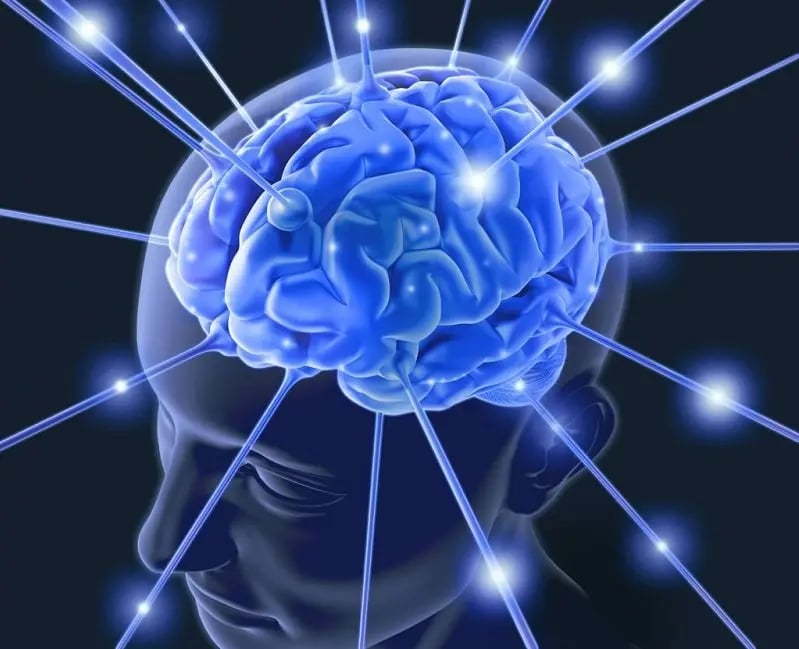
When scarcity tightens into pressure, the mind changes shape. It stops behaving like the thoughtful, strategic instrument we rely on and becomes something sharper, faster, and more primitive. One moment you’re thinking clearly; the next, your heart is racing, your thoughts are scattered, and your decisions feel foreign even to you. This is not a weakness. This is the mind crossing a threshold, from managing limited resources to defending itself against a perceived threat. Scarcity and pressure are not separate psychological states; they are stages of the same mental journey. Part 2 of this series revealed how scarcity of time, money, stability, attention, or emotional safety shrinks cognitive bandwidth and narrows the mind’s capacity to think clearly. Scarcity forces the mind into a constant triage, where every decision feels urgent, and every mistake feels costly. It is the quiet, persistent erosion of mental space.
But scarcity does not remain quiet forever. When scarcity intensifies, when uncertainty accelerates, when the demands of life exceed the mind’s remaining bandwidth, scarcity transforms into something sharper: pressure. Pressure is scarcity that has crossed the threshold from limitation into threat. Where Part 2 examined the slow tightening of cognitive resources, Part 3 examines what happens when that tightening becomes a grip. Scarcity narrows attention; pressure collapses it. Scarcity strains decision-making; pressure overrides it. Scarcity reduces long-term thinking; pressure eliminates it entirely. In scarcity, the mind is stretched. Under pressure, the mind is seized. This transition is not moral, personal, or cultural; it is biological. The same mechanisms that scarcity activates (vigilance, hyper-focus, short-term prioritization) become amplified under pressure until the brain shifts into survival mode. The amygdala takes control. The prefrontal cortex dims. Stress hormones surge. The mind stops planning and starts defending.
Pressure is the moment when the psychology of scarcity becomes the physiology of threat. This is why people living in chronic scarcity often experience chronic pressure. The two states feed each other. Scarcity drains cognitive bandwidth, making the mind more vulnerable to pressure. Pressure, in turn, intensifies the effects of scarcity, making it harder to think, plan, or escape the conditions that created it. Part 3 begins at this intersection, the point where scarcity becomes stress, where uncertainty becomes fear, where cognitive load becomes cognitive overwhelm. It explores how the mind behaves when it is no longer simply managing limited resources but fighting to maintain psychological stability. Understanding this continuum is essential for understanding human behavior, not just in moments of crisis, but in everyday life. Because pressure is not reserved for emergencies. It appears in workplaces, relationships, financial decisions, parenting, leadership, and personal identity. It shapes how people think, react, and interpret the world.
Pressure does not simply weigh on the human mind; it reshapes it. It alters perception, reorganizes priorities, and rewires the pathways through which we think, feel, and act. When stress rises, when fear tightens its grip, when chaos disrupts the familiar rhythm of life, the mind does not remain neutral. It adapts. It defends. It transforms. And in that transformation, human behavior becomes something different from what it is in moments of calm. The modern world often treats pressure as a test of character, as if clarity, discipline, and emotional control should remain intact regardless of circumstance. But the truth is far more biological than moral. The mind under pressure is not failing; it is reverting to its oldest design. It is returning to the architecture that once kept our ancestors alive.
At the center of this shift is the amygdala, the brain’s threat-detection system. When pressure rises, the amygdala becomes hyperactive, scanning for danger, interpreting ambiguity as threat, and preparing the body for survival. In these moments, the mind is not interested in nuance. It is interested in safety. Meanwhile, the prefrontal cortex, the seat of planning, reasoning, and long-term thinking, begins to dim. Blood flow shifts away from it. Cognitive resources are redirected. The brain prioritizes speed over accuracy, instinct over reflection, reaction over strategy. This is why people under pressure struggle to think clearly, make decisions, or regulate their emotions. The system, designed for complexity, is temporarily offline. Stress hormones flood the body. Adrenaline sharpens reflexes. Cortisol increases vigilance. Norepinephrine heightens alertness. These chemicals are not inherently harmful; they are survival tools. But when they remain elevated for too long, they distort perception and narrow the mind’s capacity for balanced judgment.
Under pressure, attention collapses into a tunnel. The mind fixates on the most immediate threat, often at the expense of broader context. Possibilities shrink. Creativity fades. The ability to imagine alternatives, a core function of human intelligence, becomes compromised. The mind becomes a single-lane road. Fear amplifies this narrowing. It pushes the mind toward catastrophic thinking, exaggerating danger and underestimating capability. A small problem becomes a looming disaster. A temporary setback becomes a permanent failure. Fear does not simply distort the future; it rewrites it. Memory becomes unreliable. Stress disrupts working memory, making it harder to hold information, follow steps, or recall details accurately. People under pressure often misremember events, not because they are careless, but because the brain is prioritizing survival over precision. Behavior shifts into one of four survival modes: fight, flight, freeze, or fawn. These are not personality traits. They are biological strategies. A fight emerges as irritability or confrontation. Flight appears as avoidance or withdrawal. Freeze manifests as indecision or emotional numbness. Fawn shows up as appeasement or over-accommodation. Each is a different expression of the same underlying truth: the mind is trying to protect itself.
Planning becomes short-term. The brain seeks immediate relief rather than long-term benefit. Risk perception becomes distorted; some people become overly cautious, others impulsively reckless. Decision paralysis becomes common as the mind struggles to evaluate options with limited cognitive bandwidth. Chaos intensifies all of this. When the environment becomes unpredictable, when routines collapse, when uncertainty becomes constant, the mind loses its sense of orientation. Cognitive overload sets in. Judgment weakens. Emotional volatility increases. Chaos does not merely overwhelm the mind; it destabilizes it. Yet pressure is not purely destructive. Under the right conditions, it becomes something else entirely, not a force that breaks the mind, but a force that sharpens it. Pressure can narrow attention in a way that eliminates noise. It can strip away the unnecessary, the performative, the distracting. It can reveal what actually matters by removing everything that does not. When the threat feels manageable, not overwhelming, not catastrophic, but simply real, the mind enters a state of heightened clarity. The body mobilizes energy. Focus intensifies. Priorities crystallize. The mind stops wandering and begins aiming. This is the paradox of pressure: the same biological systems that can destabilize us can also refine us. Support plays a crucial role in this transformation. Humans think better when they do not feel alone. A single stabilizing relationship, a mentor, a friend, a partner, a leader, can shift the entire stress response. Safety does not always come from the absence of threat; sometimes it comes from the presence of someone who helps us hold the threat without collapsing under it. Pressure becomes tolerable when it is shared.
Structure is equally powerful. The mind under pressure seeks boundaries, patterns, and predictability. When the environment provides clear expectations, consistent rhythms, and reliable anchors, the nervous system relaxes enough to think. Structure does not eliminate pressure; it organizes it. It gives the mind a frame to operate within, allowing clarity to emerge even in the midst of chaos. In these conditions, with manageable threats, supportive relationships, and structured environments, pressure becomes a catalyst. It accelerates insight. It forces decisions that have been avoided. It reveals strengths that were dormant. It exposes values that were buried under routine. Pressure can be the moment when a person finally sees themselves clearly. This is why some of the most important human breakthroughs happen under strain. Pressure compresses attention into a single point, and in that compression, truth becomes visible. People discover what they can endure, what they can change, what they can no longer tolerate, and what they must pursue. Pressure clarifies identity. But this clarity is not the product of suffering alone. It is the product of suffering held within a container of safety. Without that container, pressure overwhelms. With it, pressure transforms. The difference between collapse and clarity is not the intensity of the pressure; it is the presence of support and structure around it.
When these elements align, pressure becomes a teacher. It reveals the gap between who we are and who we want to be. It exposes the habits that no longer serve us. It forces us to confront truths we have postponed. And it pushes us toward decisions that shape the next chapter of our lives. Pressure, in its constructive form, is not the enemy of the mind. It is the sculptor of it. It carves away the excess. It sharpens the edges. It brings the essential into focus. And in doing so, it reminds us that the human mind is not only vulnerable under strain, it is also capable of extraordinary clarity, courage, and transformation. But this clarity is not automatic. It emerges only when the mind feels safe enough to think, not just survive. Safety, emotional, relational, and environmental, is the foundation of human intelligence. Without it, the mind contracts. With it, the mind expands. The mind under pressure is not broken. It is not weak. It is not failing. It is doing exactly what it was designed to do: protect the human being it belongs to. Understanding this is not merely an intellectual exercise; it is an act of compassion. It allows us to see ourselves and others with greater patience, greater empathy, and greater truth. Pressure reveals the architecture of the human mind. It shows us what happens when biology takes precedence over intention. And it reminds us that clarity, resilience, and wisdom are not traits we summon at will; they are states we cultivate by creating environments where the mind can breathe.
In the end, pressure is not simply a force that acts upon the mind; it is a force that reveals it. It exposes the scaffolding of our inner world: what steadies us, what fractures us, what strengthens us, and what we have quietly outgrown. When held within the right conditions, a manageable threat, meaningful support, and a structured environment, pressure becomes less of an adversary and more of an instructor. It teaches us what we value, what we fear, and what we are capable of becoming. It strips life down to its essentials and invites us to rebuild with intention. And in that rebuilding, we discover that the mind is not defined by the moments that overwhelm it, but by the moments when it rises, reorganizes, and reclaims clarity. Pressure, when understood and contained, does not diminish the human mind. It refines it.
Pressure reveals how the mind behaves when it is overwhelmed, but cognitive biases reveal how the mind behaves even when it believes it is thinking clearly. If pressure is the force that reshapes the mind from the outside, cognitive biases are the forces that shape it from within. They operate quietly, automatically, beneath awareness, guiding perception, filtering information, and influencing judgment long before we believe we have “made a choice.” These biases are not flaws in the system; they are the system, the shortcuts, assumptions, and mental habits the brain uses to navigate a world too complex to process in full. Just as pressure narrows attention, cognitive biases narrow interpretation. They determine what we notice, what we ignore, what we believe, and what we dismiss. They simplify reality so the mind can move quickly, but in that simplification, they distort it. And because these forces feel like intuition rather than influence, we rarely question them. We trust the conclusions they produce because they feel like our own.
Part 4 of the Series begins here, at the threshold where invisible mental patterns quietly shape the visible outcomes of our lives. If Part 3 showed how the mind reorganizes itself under threat, Part 4 reveals how the mind organizes itself all the time, even in calm moments, even in safety, even when we are convinced we are being rational. Cognitive biases are the architecture beneath our decisions, the unseen currents beneath the surface of thought. To understand human behavior, we must understand not only how the mind responds to pressure, but how it constructs meaning in the absence of it. And that construction, subtle, automatic, and deeply human, is where the story of cognitive biases begins.
Join the Conversation: https://enomaojo.substack.com
© 2024–2026 Enoma Ojo. All rights reserved.
The Human Mind Series, including its titles, frameworks, narrative structure, psychological analyses, and original written content, is the exclusive intellectual property of Enoma Ojo, founder of Inquiry & Insight. Unauthorized reproduction, adaptation, distribution, or commercial use of any portion of this work is strictly prohibited without written consent. Limited quotations may be used for educational or critical purposes with proper attribution.