
The Loneliness Epidemic: Why Humans Feel More Isolated Than Ever
We’re more connected than ever, yet more isolated than any generation before us. This post explores the silent epidemic of loneliness and why it’s reshaping modern life.
enoma ojo (2025)
1/7/20264 min read
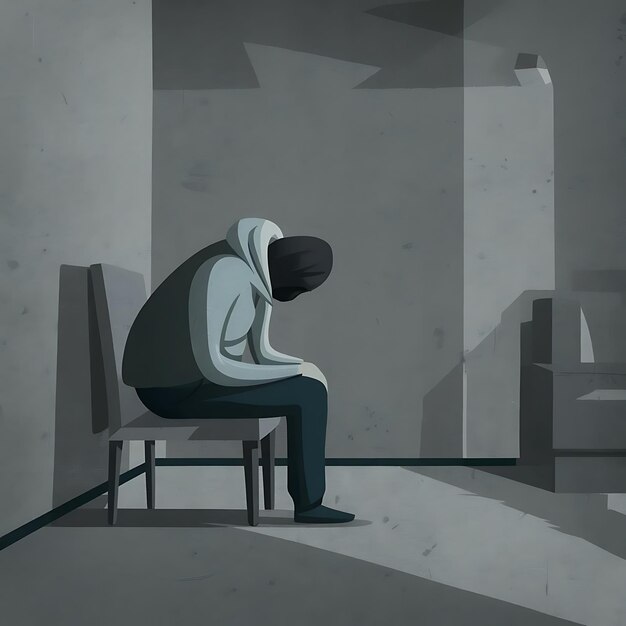
We live in a time of unprecedented connection: billions of people online, endless channels of communication, and cities overflowing with human presence. And yet, beneath this apparent closeness, there is a quiet crisis unfolding, a loneliness epidemic. Global data now confirms what many already feel: loneliness and social isolation are more than private struggles; they are widespread, measurable, and dangerous. The World Health Organization (WHO) estimates that nearly one in six people worldwide report feeling lonely, with even higher rates among adolescents, young adults, and those in low-income settings. This is not merely an emotional inconvenience; loneliness has become a serious public health threat linked to disease, early death, and social breakdown.
This essay explores why humans feel more isolated than ever, how loneliness reshapes our minds, bodies, and societies, and what it will take to rebuild meaningful connection in an age of constant contact. Loneliness is not simply “being alone.” It is the distressing feeling that emerges when there is a gap between the relationships we desire and the relationships we actually have. Social isolation, by contrast, refers to the objective lack of social ties or infrequent social contact. Someone can be surrounded by people, at work, online, at home, and still feel lonely, while another person can live alone yet feel deeply connected. The WHO describes social disconnection as a broader category that includes loneliness and social isolation, as well as negative or strained relationships that fail to provide emotional support. This is important: the problem is not just the absence of people, but the absence of meaningful connection.
Digital technology magnifies this confusion. People may have hundreds or thousands of “friends,” followers, or contacts, yet still lack: Loneliness has become one of the defining crises of modern life. Despite living in a world overflowing with digital connection, people across all ages and cultures report feeling more isolated than ever. WHO now recognizes loneliness as a global public health concern, with millions experiencing emotional disconnection even while surrounded by constant communication. This paradox, hyperconnection without true belonging, is reshaping how humans experience identity, community, and well‑being.
The World Health Organization (2023) and UN reports that loneliness has become a hidden threat to global health that can no longer be ignored. Between 2014 and 2019, loneliness was associated with more than 871,000 deaths annually, equivalent to 100 deaths every hour worldwide. These deaths are not attributed to loneliness directly, but to the health problems it aggravates, from heart disease to mental illness. The roots of this epidemic are complex and layered. Traditional social structures such as extended families, stable neighborhoods, and community institutions have weakened, leaving many without the built‑in support systems previous generations relied on. At the same time, digital technology has transformed how people interact. While online spaces can offer community, they often replace deeper, face‑to‑face relationships with quick, surface‑level exchanges. Economic pressures, long work hours, and cultural narratives that glorify independence further erode opportunities for meaningful connection.
The consequences of loneliness extend far beyond emotional discomfort. Research shows that chronic loneliness increases the risk of heart disease, stroke, depression, anxiety, cognitive decline, and early death. Its health impact is comparable to smoking or obesity. Social isolation also carries economic and societal costs, reducing productivity, weakening community trust, and increasing healthcare burdens. Vulnerable groups, including young people, older adults, those with chronic illness, and marginalized communities, face the highest risks, making loneliness both a personal and structural issue. Loneliness also shapes identity. When people lack meaningful relationships, they may internalize painful beliefs about their worth, belonging, or ability to be loved. These beliefs influence behavior, making it harder to trust, reach out, or form new relationships. Over time, loneliness becomes self‑reinforcing: disconnection fuels negative self‑perception, which deepens isolation. Healing requires more than social activity, it requires rewriting the internal narratives that loneliness creates, and rebuilding environments that support genuine human connection.
Addressing the loneliness epidemic demands both personal and collective action. On a societal level, policies, community programs, and urban design must prioritize social connection as a core component of public health. Technology must be used intentionally, enhancing rather than replacing real relationships. On a personal level, naming loneliness without shame, practicing presence, and rebuilding community through small, consistent acts of connection can begin to break the cycle. Ultimately, the loneliness epidemic reveals a deeper truth: humans are wired for connection, and rebuilding it is essential not only for individual well‑being but for the health and future of society itself.
The loneliness epidemic is not an inevitable feature of modern life, it is a signal. A signal that our systems, our habits, and even our definitions of connection must evolve. Tackling loneliness begins with recognizing that human beings are wired for relationship, and that meaningful connection is not a luxury but a fundamental need. The way forward requires a collective shift: from isolation to community, from performance to authenticity, from digital noise to intentional presence. At the societal level, we must design environments that make connection possible. Cities, workplaces, schools, and digital platforms must prioritize belonging as seriously as they prioritize efficiency. Policies that support mental health, community programs, public spaces, and social infrastructure are not “extras”, they are essential tools for rebuilding the social fabric. When institutions invest in connection, individuals gain the freedom to thrive.
But the most transformative change begins with us. Each person has the power to disrupt the cycle of loneliness through small, consistent acts of courage: reaching out, listening deeply, showing up, and allowing themselves to be seen. Connection grows when people choose vulnerability over silence, compassion over indifference, and presence over distraction. These choices, repeated across families, neighborhoods, and communities, create a ripple effect that strengthens society from the inside out. The loneliness epidemic reveals a truth we can no longer ignore: humanity survives through connection, and we suffer when it is missing. But it also reveals a profound opportunity, to rebuild a world where people feel valued, supported, and understood. If we commit to designing systems that honor our need for belonging, and if we each take responsibility for nurturing connection in our own circles, loneliness loses its power.
The path forward is clear: we must choose connection, intentionally and repeatedly. In doing so, we not only heal ourselves, we heal the world.
© 2024 Enoma Ojo Inquiry & Insight. All rights reserved.