
The Inequality Era: Understanding the Forces That Divide Us
This article examines the widening economic and social divides shaping the 21st century, with a sharp focus on how inequality affects opportunity, dignity, and long‑term stability. It explores the forces driving global and African inequality, from technology and globalization to weak institutions, structural barriers, and the under‑representation of top incomes in official data. Drawing on credible research and regional insights, the piece reveals how inequality is not just a financial gap but a lived experience that determines who thrives and who struggles. It concludes with a powerful call for intentional action, outlining practical pathways for building fairer systems, stronger communities, and a future where opportunity is shared rather than inherited.
ARTICLES & ESSAYS
Enoma Ojo
1/16/20264 min read
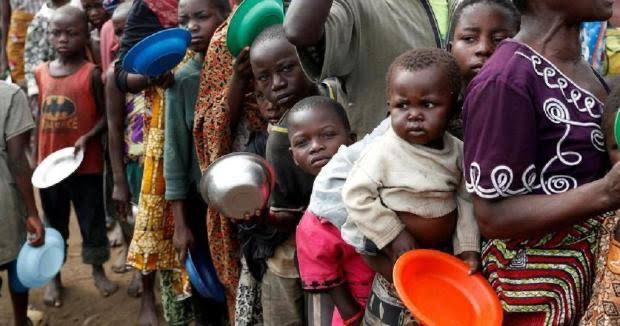
Income inequality has become one of the most defining challenges of the 21st century, shaping the way people live, work, and imagine their futures. Even as global economies grow, the benefits of that growth are distributed unevenly, leaving millions feeling excluded from progress. Inequality today extends far beyond income. It influences health outcomes, educational access, neighborhood safety, and the overall quality of life. Two families living only miles apart can experience completely different realities based on the resources available to them. One of the major drivers of modern inequality is technological advancement. Automation and artificial intelligence have created new wealth but have also displaced workers, widened skill gaps, and concentrated economic power among those who control digital systems. Globalization has also played a significant role. While it has lifted many out of poverty worldwide, it has simultaneously weakened traditional industries in developed nations, leaving certain regions economically stagnant and socially vulnerable.
The G20 Extraordinary Committee on Global Inequality calls inequality “one of the most urgent concerns in the world today,” noting that it undermines democracy, social cohesion, and economic stability. The report emphasizes that inequality is not inevitable; it is the result of policy choices that reward wealth over work. The G20 report highlights that wealth inequality exceeds income inequality by a wide margin, with the top groups accumulating assets at a much faster rate than workers’ wages grow. New data from the World Inequality Database (WID) shows that Latin America is now the most unequal region in the world, with the top 10% earning dramatically more than the bottom 50%. Europe remains the least unequal region, demonstrating how policy choices shape outcomes. 174 out of 209 countries have a post‑tax Gini coefficient above 0.4, meaning 83% of countries, representing 90% of the world’s population, live with high inequality.
Since 2000, the income share of the top 1% increased in 47% of countries, home to 68% of the global population. From 1980 to 2023, the bottom 50% income earners increased by only $358, and the top 1% income earners increased by $191,000. This is 534 times more. The share of national income going to capital (investments, assets) increased in 117 countries, representing 74% of the world’s population. Between 2000 and 2024, the richest 1% captured 41% of all new wealth created, and the bottom 50% captured just 1%. New administrative data shows Latin America has overtaken MENA as the most unequal region, with the top 10% earning dramatically more than the bottom 50%. The World Inequality Database now tracks wealth inequality back to 1820, showing long‑term patterns of concentration that have accelerated in recent decades.
The 2024 DINA update confirms that income inequality in Sub‑Saharan Africa remains extremely high, with many countries showing steep gaps between the top and bottom of the distribution. The World Bank’s Poverty and Inequality Platform (PIP) provides consumption‑based inequality data, which is more accurate for African economies where self‑employment and informal work are widespread. The World Income Inequality Database (WIID) includes thousands of African inequality observations, showing persistent high Gini coefficients across the continent through 2022. When converting consumption data into income distributions, only 75% of country‑years meet the required monotonicity and data‑quality standards, highlighting the difficulty of measuring inequality in the region. The DINA update emphasizes that inequality in Africa is shaped by limited access to capital income, weak tax systems, under‑representation of top earners in surveys, large informal sectors, and historical patterns of exclusion. These structural factors make inequality deeply persistent across generations.
Financialization, the shift from wage‑based income to asset‑based wealth, has further widened the gap. Those who own property, stocks, or capital see their wealth multiply, while those without assets struggle to keep up with rising costs. Policy decisions shape inequality just as much as economic forces. Tax structures, labor protections, healthcare access, and education funding all determine who has the opportunity to advance and who remains stuck. Inequality is not accidental; it is designed. Beyond statistics, inequality is deeply personal. It affects dignity, agency, and the sense of possibility. People with fewer resources often face higher stress, limited choices, and systems that feel distant or unresponsive, creating an emotional and psychological divide. As inequality grows, its impact on society becomes more visible. Trust in institutions declines, political polarization intensifies, and social cohesion weakens. When people feel the system is unfair, they disengage or resist, threatening long‑term stability. Addressing inequality requires more than raising incomes. It demands rebuilding pathways to mobility, investing in communities, strengthening worker protections, and designing policies that prioritize human dignity. A fairer society ensures that opportunity is not determined by birthplace or background.
Ultimately, understanding inequality is essential for shaping a more just future. The Inequality Era challenges us to rethink how we distribute opportunity, how we value human contribution, and how we build systems that allow everyone, not just a few, to thrive. We are living through an age defined by extremes, extreme wealth, extreme poverty, and extreme differences in the lives people can build. Inequality is no longer a distant statistic; it is a lived reality shaping health, opportunity, dignity, and the very architecture of hope. It determines who gets to dream freely and who must fight simply to survive. And while the forces driving inequality are powerful, they are not inevitable. They are the result of choices, political, economic, and societal, made over decades. Which means we can choose differently.
The true danger of inequality is not only the gap between incomes, but the gap between possibilities. When entire populations are locked out of opportunity, societies fracture. Trust erodes. Progress slows. The future becomes something only a few can access. But when opportunity is widened, when dignity is protected, when systems are designed for fairness rather than exclusion, nations grow stronger, more stable, and more human.
Inequality is not just an economic issue. It is a moral test. And every generation is judged by how it responds to the injustices it inherits. Ours is no different. The Inequality Era is not a prophecy; it is a crossroads.
We can continue down the path of division, or we can build a future where opportunity is not a privilege but a shared inheritance. The question is not whether change is possible; the question is whether we will choose it.
And history has always favored those courageous enough to imagine something better.
© 2026 Enoma Ojo. All Rights Reserved.