
The Human Mind and the Architecture of Poverty: Why Understanding Scarcity Is Essential to Understanding Development.
Poverty is often described in numbers, income thresholds, consumption levels, unemployment rates, and lack of access to basic needs. But beneath the statistics lies a quieter, more complex reality: poverty is also a psychological environment. It shapes how people think, decide, plan, and imagine their future. It influences behavior not because of culture or character, but because the human mind responds predictably to scarcity. This essay explores that intersection: where neuroscience meets development, where lived experience meets policy, and where the architecture of poverty becomes inseparable from the architecture of the mind.
INSIGHTS
enoma ojo (2025)
1/17/20268 min read
This is the Story We Rarely Tell About Poverty.
Aisosa grew up on an obscure street tucked inside Ihogbe, one of the old quarters of Benin City, in Mid‑Western Nigeria, a place where life moved quietly but never gently. In his neighbourhood, every decision felt like a negotiation with uncertainty, as though the ground beneath him was always shifting. He wasn’t lazy. He wasn’t unambitious. He simply lived in a world where the margin for error was razor‑thin, where one wrong step could set a family back for years. In such a place, dreams didn’t die; they simply learned to whisper. And from childhood, Aisosa learned that survival required calculation, restraint, and a kind of alertness that children in safer environments never had to develop. The street shaped him long before he understood what shaping meant. It taught him to read the mood of adults, to sense danger before it arrived, to stretch small opportunities into lifelines. Poverty didn’t just limit what he could reach for; it sculpted how he thought, how he hoped, and how he measured possibility.
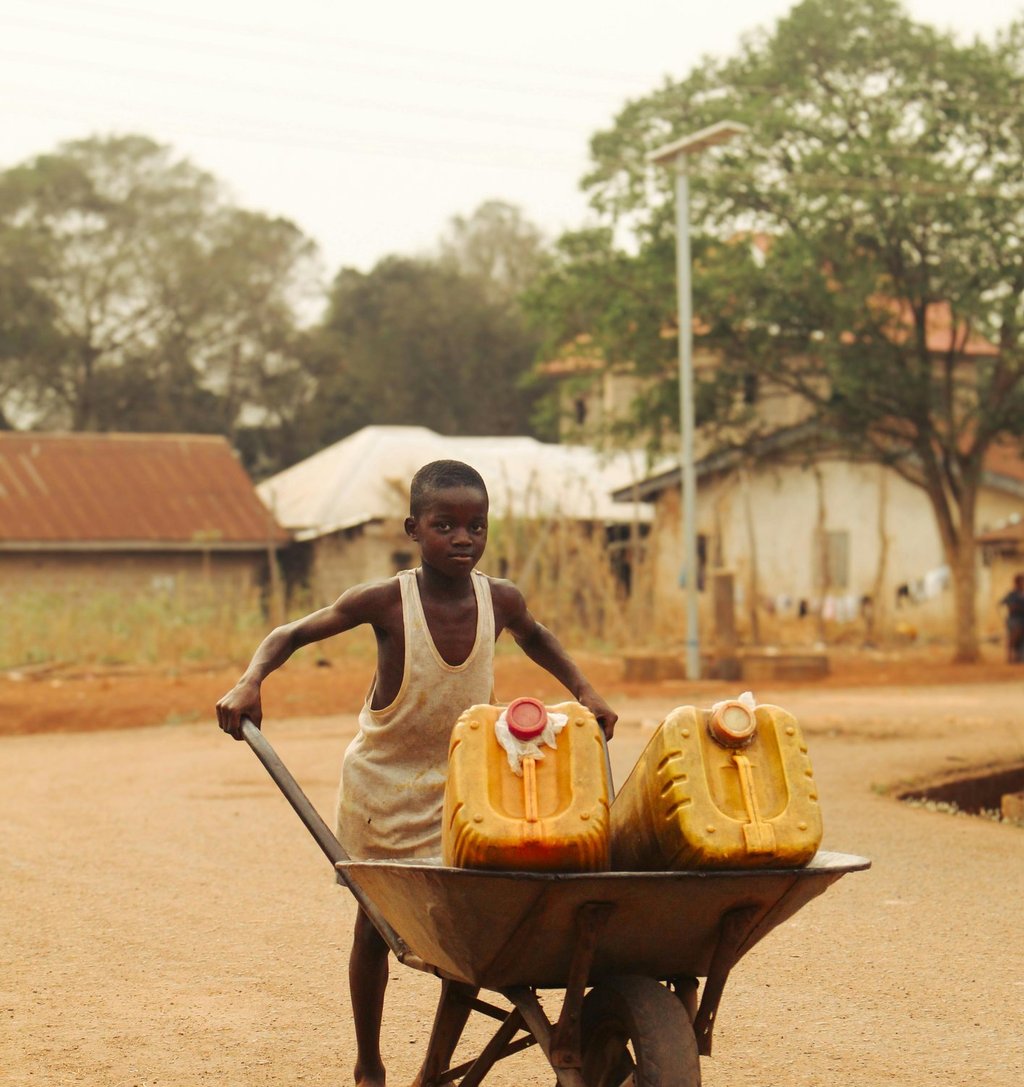
Aisosa lived in a typical Benin City neighborhood, all across the city, Nigeria, and Africa, where life feels suspended between resilience and exhaustion, places where the environment itself becomes a silent teacher. Imagine a settlement on the edge of a growing city in the 1970s. The roads are not really roads, just long scars of red earth carved by years of footsteps, rainwater, and the occasional passing vehicle. When it rains, the ground turns into a thick, stubborn mud that clings to ankles and slows everything down. When it dries, dust rises like a second skin, settling on faces, food, and dreams. Water doesn’t flow from taps here, as the public water supply in Iyaro has since dried up. People queue at dawn around a rusted borehole that works only when the generator cooperates, and often have to trek long distances to locations that had rationed public water supply. Children carry yellow jerrycans, steel and plastic bowls almost as tall as they are, learning early that survival is physical labor. Every drop is rationed. Every spill is a small tragedy. The sanitation system is a patchwork of improvisation. Latrines and dug-earth were popular improvisations. There were open drains running along the edges of homes, carrying wastewater, refuse, and the smell of a society forced to normalize what should never be normal. During the heat of the day, the air thickens with the scent of decay, and during the rainy season, the drains overflow, turning the neighborhood into a breeding ground for mosquitoes and disease.
Electricity is a rumor. The shouts of "Up NEPA" fill the air anytime the public supply restores electricity. Nights are lit by kerosene lamps, candle lights, and the glow of small fires. Darkness teaches caution. It teaches children to memorize the sound of footsteps, to distinguish danger from safety by instinct alone. Strife is woven into the rhythm of daily life. Not always loud, not always violent, but present. It shows up in the tension of parents calculating which bill can wait, in the quiet arguments over food portions, in the way neighbors look out for each other while also competing for the same scarce opportunities. And through all this, the environment shapes the mind. Children raised in such places learn the language of scarcity before they learn their own names. They understand instinctively that nothing is promised, not clean water, not a peaceful night, not the comfort of tomorrow arriving gently. They grow into a kind of sharpened awareness. Their senses become tools for survival: listening for arguments that might spill into the street, watching the sky to predict whether the rains will flood the only path to school, calculating how long the borehole line will be before dawn. They adjust their dreams to the size of their circumstances, not out of weakness, but out of a wisdom forced upon them too early.
Across continents, from Benin City to Lagos to Dhaka, from Detroit to Manila, millions of people navigate daily life carrying an invisible cognitive weight. Their environments demand constant vigilance, improvisation, and emotional endurance. What looks like chaos from the outside is, for them, a carefully managed system of survival. Their minds are not “different” or “less capable.” They are responding exactly as any human mind would when placed in conditions where stability is fragile and resources are unpredictable, shaped by their upbringing. Scarcity reshapes attention. When water, food, safety, or income are uncertain, the mind narrows its focus to the immediate crisis. Psychologists call this tunneling, the brain’s instinctive shift toward short‑term survival at the expense of long‑term planning. This is not a failure of discipline; it is a biological adaptation. The constant need to solve urgent problems drains mental bandwidth, leaving less room for reflection, creativity, or strategic thinking. The environment, not the individual, dictates the cognitive load.
Over time, scarcity becomes more than a condition; it becomes a worldview. Children raised in such environments learn early that nothing is guaranteed, not even tomorrow. They develop hyper‑awareness, emotional maturity, and a heightened sensitivity to risk. They read moods, anticipate conflict, and adjust expectations to reality. These skills are often misinterpreted as anxiety or caution, but they are survival intelligence, the mind’s way of protecting itself in a world where one mistake can have lasting consequences. Yet the imprint of scarcity does not disappear simply because circumstances change. Even when people move into more stable environments, the psychological patterns remain: the instinct to save excessively, the fear of loss, the reluctance to take risks, the expectation that good things may not last. These are not signs of brokenness. They are the echoes of environments that demanded constant adaptation. Understanding this truth allows us to see poverty not as a personal failure but as a psychological ecosystem that shapes the human mind with remarkable precision. Scarcity is a rational tax, and
research in behavioural science shows that scarcity, whether of money, time, or stability, reduces cognitive bandwidth. The brain becomes preoccupied with urgent needs, narrowing attention to immediate problems. This is not a moral failing, it is a neurological response.
Economists define scarcity as the fundamental condition where resources are limited while human wants are unlimited. It is the starting point of all economic decision‑making: because we cannot have everything, we must choose. But for the estimated 831 million people worldwide living in extreme poverty (2025), scarcity is not an abstract principle taught in classrooms; it is a daily reality. When food, water, safety, or income are uncertain, scarcity stops being a theoretical constraint and becomes a lived experience that shapes how the mind works. Psychological scarcity emerges when the brain is forced to operate under constant resource pressure. The same logic that governs economic behavior, trade‑offs, opportunity costs, and prioritization begins to govern cognition. The mind becomes a battlefield of competing needs. Attention narrows to the most urgent problem, a process psychologists call tunneling. Just as scarcity forces economies to allocate limited resources, it forces the brain to allocate limited mental bandwidth. Long‑term planning becomes harder not because people lack discipline, but because the environment demands immediate survival decisions.
Over time, this cognitive load reshapes identity and worldview. People living under chronic scarcity internalize the economic principle that “not everything is possible.” They learn to minimize risks, lower expectations, and avoid choices that could lead to loss. These behaviors are often misinterpreted as a lack of ambition, but they are rational responses to environments where the margin for error is razor‑thin. Economic scarcity becomes psychological scarcity, and psychological scarcity becomes a lens through which people interpret opportunity, danger, and possibility. The imprint of scarcity persists even when circumstances improve. Just as economies recovering from recession remain cautious, individuals who have lived through scarcity carry its lessons into new environments. They save more, trust less, and plan defensively. This is not dysfunction; it is adaptation. Understanding the connection between economic scarcity and the human mind allows us to see poverty not simply as a financial condition, but as a cognitive ecosystem, one that shapes how people think, choose, hope, and imagine their future.
Scarcity doesn’t just limit resources; it limits cognition. When the mind is forced to operate under constant pressure, working memory becomes compromised. The brain, overloaded by immediate concerns, has less capacity to hold information, evaluate options, or think several steps ahead. This is why impulsivity rises under scarcity. It is not recklessness; it is the mind adapting to a world where the future feels too distant, too uncertain, or too fragile to meaningfully shape. In such environments, the present becomes the only reliable horizon.
This cognitive shift makes long‑term planning extraordinarily difficult. Not because people lack discipline or ambition, but because their mental energy is constantly being redirected toward short‑term threats. When you’re unsure how to pay for food, rent, or transport, the brain prioritizes survival over strategy. It’s the same logic the body uses when starved of oxygen; everything else shuts down so the essentials can be protected. Scarcity forces the mind into a perpetual state of triage. Yet in development debates, we often misinterpret these adaptations. We assume that people living in poverty simply need more information, more motivation, or more financial literacy. We treat their decisions as moral or educational failures rather than cognitive responses to environmental pressure. But research shows that when scarcity consumes mental bandwidth, even highly capable individuals struggle to perform tasks that would otherwise be easy. The issue is not knowledge; it is cognitive load.
Poverty is often described in economic terms, such as a lack of income, infrastructure, or opportunity. But beneath these visible deficits lies a deeper, quieter architecture: the psychological world shaped by scarcity. When people live in environments where nothing is guaranteed, the mind reorganizes itself around survival. This is not a sign of weakness; it is the brain’s rational response to instability. Understanding poverty, therefore, requires understanding the cognitive landscape it creates. Scarcity alters how the mind allocates attention. It narrows focus to the most urgent threats, consuming the mental bandwidth needed for planning, reflection, and long‑term decision‑making. What looks like impulsivity from the outside is often the mind’s adaptation to a world where the future feels too distant to influence. In such conditions, the present becomes the only safe place to invest mental energy. This cognitive shift is not a moral failing; it is a survival strategy. Over time, scarcity becomes a worldview.
A system of uncertainty and scarcity dominated Aisosa’s life in Benin City. Children raised in environments of chronic uncertainty learn to anticipate loss, minimize risks, and adjust their expectations to reality. They develop emotional maturity early, not because they are gifted, but because their environment demands it. These psychological adaptations shape identity, ambition, and behavior long into adulthood. Poverty, then, is not just a condition of the wallet; it is a condition of the mind. Yet development debates often overlook this cognitive dimension. We assume that people in poverty simply need more information, more motivation, or more financial literacy. But the science tells a different story: they need more bandwidth. A mind overloaded by scarcity cannot perform like a mind with margin. Until we address the cognitive tax imposed by unstable environments, interventions will continue to misinterpret adaptation as failure and resilience as irresponsibility. To understand development is to understand the human mind under pressure. Scarcity shapes thought, behavior, and possibility with remarkable precision. When we recognize this, we shift from blaming individuals to examining the environments that constrain them. We begin to design policies, programs, and narratives that restore mental bandwidth, expand horizons, and create the conditions where potential human can finally breathe. Only then can development move beyond charity and become true empowerment, the rebuilding of both lives and the minds that inhabit them.
Because in the end, development is not just about changing conditions, it is about freeing the mind from the invisible architecture of scarcity. When people finally have the bandwidth to breathe, to think beyond the next crisis, and to dream without fear, that is when transformation truly begins. The mind is no longer consumed by short‑term threats, working memory improves, decision‑making becomes clearer, long‑term planning becomes possible, creativity reawakens, and emotional regulation strengthens. This is the first and most immediate transformation:
the mind moves from survival mode to strategy mode. People overcome the mental weight of scarcity not through willpower, but through environments that restore stability and bandwidth. The first step is creating predictability, even small forms of routine or safety begin to lift the mind out of survival mode. As stability grows, reducing cognitive load becomes essential: simplifying decisions, automating routines, and removing daily friction frees mental space for clearer thinking. Supportive relationships also play a crucial role, because connection buffers the mind against the isolation and overwhelm that scarcity creates. Finally, as bandwidth returns, people can slowly rebuild their sense of the future, setting small goals, learning new skills, and imagining possibilities that once felt unreachable.
In essence, people overcome scarcity by gaining the mental margin to breathe, think, and plan again.
For privacy, the name used in this passage has been changed, but the life behind it, and the lessons it carries, are true
© 2026 Enoma Ojo. All rights reserved.