
The Future of The Human Mind (Human Mind Series Part 12)
“The Future of the Human Mind” explores how our inner architecture evolves in a world defined by rapid change, infinite information, and emerging technologies. It examines the psychological, emotional, and ethical dimensions of human cognition as we move into an era where the mind is no longer confined by its past or its inherited limitations. This final chapter invites readers to consider not just how the mind works, but who we are becoming, and who we choose to be. This article looks beyond neuroscience and technology to ask a deeper question: What does the mind become when it is free to evolve? This is a journey into possibility, exploring attention, identity, emotional intelligence, collective cognition, and the expanding landscape of human potential. It is a reflection on how we adapt, how we imagine, and how we author the next chapter of our inner lives.
enoma ojo (2026)
4/4/202610 min read
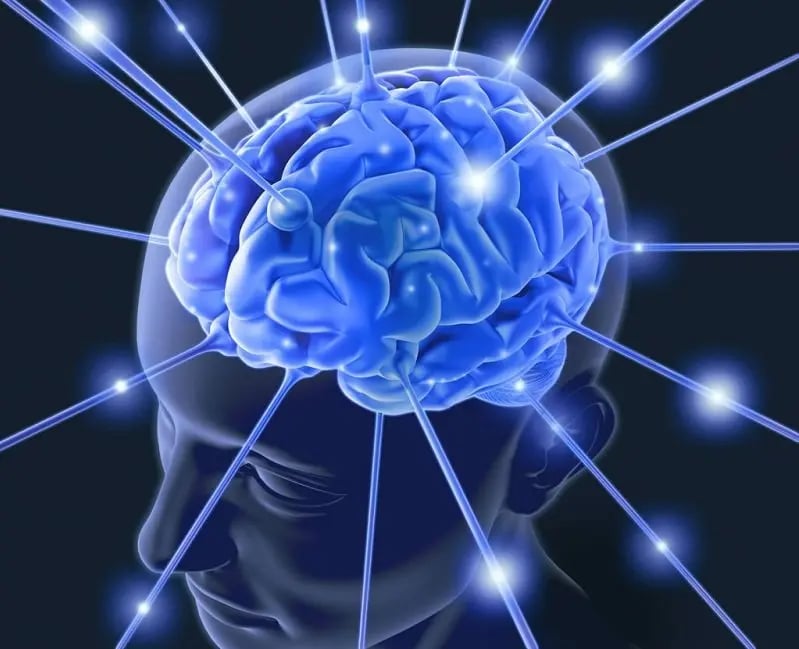
The future of the human mind will not be defined by technology alone, nor by biology alone, but by the evolving relationship between the two. We are entering an era where cognition is no longer a fixed inheritance but a dynamic ecosystem, shaped by culture, tools, pressure, and possibility. The mind is becoming less of a container and more of a network; less of a private chamber and more of a living interface between self and the world. For centuries, human development moved slowly, constrained by the limits of memory, geography, and information. But now, the velocity of change has outpaced the architecture of our instincts. We are thinking faster than our nervous systems were designed for, absorbing more than our emotional bandwidth can process, and navigating environments that evolve in real time. The future of the mind, therefore, is not simply about enhancement; it is about adaptation, resilience, and the redesign of our internal operating systems.
As we close Part 11, we recognize that the psychology of change is not merely about shifting behavior; it is about expanding the mind’s capacity to imagine, to adapt, and to evolve. Every transformation, no matter how small, widens the internal landscape and alters what becomes possible next. And it is here, at the edge of this expanded horizon, that the final chapter of this series begins. Part 12, The Future of the Human Mind, looks beyond individual change and asks a larger question: What does the mind become when it is no longer confined by its past, its patterns, or its inherited limitations? It is an exploration of potential, not just who we are, but who we can become as our inner architecture continues to unfold. And as we step into Part 12, we enter a different kind of terrain, not the terrain of change, but the terrain of emergence. If Part 11 explored how the mind sheds, adapts, and reorganizes, then Part 12 asks what becomes possible once that reorganization is complete. This is the chapter where the mind is no longer defined by what it has survived, but by what it is now capable of creating.
The future is not a prediction; it is a landscape of potential. It is the unfolding of new cognitive architectures, new emotional capacities, new forms of intelligence, and new ways of being. It is the moment when the mind stops looking backward for reference and begins looking forward for possibility. And in that forward gaze, something extraordinary begins to take shape, a mind that is not confined by its past but expanded by its future. It will not be shaped by a single force but by the convergence of many: biology, technology, culture, pressure, and imagination. We are entering an era where the mind is no longer a passive receiver of experience but an active designer of its own evolution. The question is no longer What can the mind do? But what will we allow it to become? The future of the human mind will not be shaped by a single force but by the convergence of many, biology, technology, culture, pressure, and imagination. We are entering an era where the mind is no longer a passive receiver of experience but an active designer of its own evolution (Siegel, 2012).
For most of human history, the mind evolved slowly, constrained by the limits of memory, geography, and information. But today, the velocity of change has surpassed the architecture of our instincts. We are thinking faster than our nervous systems were built for, absorbing more than our emotional bandwidth can process, and navigating environments that shift in real time. This acceleration has created a paradox: we have more knowledge than ever, yet less clarity; more connection, yet more fragmentation; more tools, yet more cognitive strain. The future of the mind will depend on how we resolve this tension, whether we adapt, collapse, or transform. One of the defining features of the future mind will be cognitive elasticity — the ability to stretch, reconfigure, and reorganize mental models as the world evolves. Rigid minds will struggle; adaptive minds will thrive. The next era of human development will reward flexibility over certainty, curiosity over expertise, and integration over accumulation.
Technology will not replace the mind, but it will reshape the terrain in which the mind operates. Artificial intelligence, neural interfaces, and cognitive augmentation will expand what is possible, but they will also challenge our sense of identity, agency, and meaning. The future mind will be a hybrid mind, part biological, part digital, part cultural. As information becomes infinite, attention becomes the new scarcity. The future of the mind will be defined not by how much we know, but by what we choose to notice. In a world of endless stimuli, attention becomes a form of power, a form of self‑protection, and a form of self‑creation. Emotional intelligence will shift from being a “soft skill” to a survival skill. The ability to regulate emotion, interpret nuance, and navigate interpersonal complexity will determine whether individuals can maintain psychological stability in environments that are increasingly volatile and unpredictable. Identity itself will become more fluid. As the boundaries between physical and digital life blur, the self will no longer be anchored solely in memory or biography. Instead, identity will become a dynamic narrative, continuously updated, continuously negotiated, continuously reconstructed.
The future mind will also face new forms of psychological pressure. Hyper‑visibility, algorithmic influence, and the collapse of traditional social structures will challenge our sense of autonomy. The ability to maintain an inner life, a private, grounded, self‑authored interior world, will become a rare and valuable skill. At the same time, the future offers unprecedented opportunities for psychological growth. Access to global knowledge, diverse perspectives, and new modes of learning will allow individuals to expand their cognitive horizons in ways previous generations could not imagine. One of the most profound shifts will be the rise of collective intelligence, the ability of groups, networks, and communities to think together, solve problems together, and innovate together. The future mind will not be isolated; it will be a node in a larger cognitive ecosystem. Yet even as we move toward collective intelligence, the need for solitude, reflection, and internal coherence will become more important. The future mind must learn to balance connection with introspection, speed with stillness, and innovation with wisdom.
The ethical dimension of the future mind cannot be ignored. As our cognitive capacities expand, so do the consequences of our decisions. The future will require not only smarter minds but wiser minds, minds capable of restraint, empathy, and long‑term thinking. Education will undergo a fundamental transformation. Instead of memorization and standardization, the future will demand metacognition, the ability to understand how one thinks, learns, and adapts. The most valuable skill will be the ability to update one’s worldview in response to new evidence. The relationship between humans and intelligent machines will become one of the defining psychological challenges of the century. The question is not whether machines will think like humans, but whether humans will allow machines to shape how we think. The future mind must learn to collaborate with technology without surrendering its agency. Creativity will become a central form of intelligence. In a world where machines can replicate logic, pattern recognition, and even language, the unique human capacity to imagine, to synthesize, to dream, and to generate meaning will become the most valuable cognitive asset. Technology will not replace the mind, but it will reshape the terrain in which the mind operates. Artificial intelligence, neural interfaces, and cognitive augmentation will expand what is possible, but they will also challenge our sense of identity, agency, and meaning (Editors of ScienceNewsToday, 2025).
The future mind will be resilient and will also require a new form of resilience, not the resilience of endurance, but the resilience of transformation. The ability to let go of outdated beliefs, reinvent oneself, and adapt to new realities will determine who thrives in the decades ahead. Spirituality, philosophy, emotional and human psychology, and interpretive understanding will re‑emerge as essential psychological tools. As traditional structures weaken and technological systems grow more dominant, humans will seek deeper structures to understand their place in the world. The future will not be satisfied with efficiency alone; it will hunger for purpose. The future mind will also face new forms of psychological pressure. Hyper‑visibility, algorithmic influence, and the collapse of traditional social structures will challenge our sense of autonomy (OECD, 2022).
Ultimately, the future of the human mind is not a technological story; it is a human story. It is the story of how we navigate uncertainty, how we construct meaning, how we relate to one another, and how we choose to evolve. Technology may accelerate our capabilities, but it cannot answer the questions that sit at the center of our humanity. The tools may change, but the core questions remain the same: Who are we becoming? And who do we want to be? The future of the mind will be shaped not by the sophistication of our machines, but by the sophistication of our choices, the values we uphold, the narratives we embrace, the relationships we cultivate, and the courage we bring to the unknown. It will be shaped by our willingness to pause and make reflections in a world that never stops moving, to think deeply in a culture that rewards speed, and to remain human in systems that increasingly blur the boundaries between the organic and the artificial. What lies ahead is not merely an evolution of intelligence, but an evolution of responsibility. As our cognitive capacities expand, so does our obligation to use them with wisdom, empathy, and foresight. The future mind must learn to hold complexity without collapsing, to wield power without losing humility, and to imagine possibilities without abandoning the grounding truths that make us human.
In the end, the future of the human mind is a mirror, reflecting not just our potential but our intentions. It asks us to decide whether we will use our expanding capacities to divide or to connect, to consume or to create, to escape reality or to transform it. The mind we build tomorrow begins with the choices we make today.
In the beginning, we examined the architecture of human decision making, where we asked how the mind works, how it decides, how it protects itself, how it constructs identity, how it responds to pressure, and how it navigates the invisible architecture of thought. But now, at the end of this journey, the question has shifted. The mind is no longer something to be explained; it is something to be shaped. The story is no longer about what the mind has been, but about what it can become. The future of the human mind is not a technological story; it is a human story. It is the story of how we learn to carry complexity without collapsing, how we learn to evolve without losing ourselves, and how we learn to remain human in a world that is constantly rewriting the boundaries of what is possible. The tools may change, the systems may shift, and the world may accelerate, but the essential questions remain: Who are we becoming? And who do we choose to be?
While we return to where we began, to the quiet interior space where thought becomes intention, where intention becomes action, and where action becomes identity, we should remember that the mind is still the most powerful instrument we possess, not because of its speed or its memory, but because of its capacity to imagine, to choose, and to transform. It is the only place where change begins, and the only place where change can be sustained. This series ends here, but the mind does not. It continues to unfold, to reorganize, to reach new forms of understanding. It continues to rewrite its own architecture in response to what we allow, what we resist, what we fear, and what we dare to hope for. The journey forward is not predetermined; it is authored. And the author, now and always, is you.
The future of your mind will not wait for you. The world is accelerating, the pressures are intensifying, and the systems around you are evolving whether you participate or not. The question is no longer whether the mind can adapt; it is whether you will choose to guide that adaptation or surrender it to habit, distraction, and inertia. Every day, your mind is shaped by what you consume, by what you avoid, by what you tolerate, and by what you believe you deserve. The only question is whether you are shaping it consciously or allowing it to be shaped for you. The future of your mind is not something that happens later; it is something that is happening now, in every unnoticed moment, in every unexamined thought, in every automatic reaction. This is the invitation, and the responsibility. To wake up. to pay attention, to reclaim authorship, and to decide, with intention, what kind of mind you are building and what kind of future you are stepping into. The series may close, but your evolution does not. The next chapter is unwritten, and the pen is already in your hand.
A closing note from the author
Writing this series has been more than an intellectual exercise; it has been a journey inward. Each part required me to sit with the mind, not as an abstract concept, but as a living, shifting landscape that shapes every part of our human experience. As I explored the architecture of thought, the weight of memory, the power of identity, the psychology of pressure, and the quiet mechanics of change, I found myself evolving alongside the work. It revealed something profound: the mind is not a mystery to be solved, but a territory to be understood, respected, and continually rediscovered. With every chapter, I realized how much of our inner world operates beneath awareness, and how much becomes possible when we finally turn toward it with curiosity instead of fear. If these twelve parts have shown me anything, it is that the human mind is both fragile and formidable, both vulnerable and astonishingly resilient. It carries our wounds, our wisdom, our illusions, our potential, and it is always becoming something new. I am grateful for the journey, and grateful for the clarity it brought. This work changed me. I hope, in some small way, it changes you too.
For the reader
This series is dedicated to every person who has ever felt the weight of their own thoughts, the pull of their own patterns, or the quiet ache of wanting to become more than their circumstances. It is for those who are learning to understand themselves, those who are unlearning what no longer serves them, and those who are brave enough to imagine a different future for their mind and their life. May these words meet you where you are, and may they accompany you as you step into who you are becoming.
At Inquiry & Insight, we believe the mind is not a fixed inheritance but a living architecture, one that expands with every question we ask, every truth we face, and every possibility we dare to imagine. This series may end here, but your inquiry does not. Your insight does not. The work of understanding the mind continues in every moment you choose awareness over autopilot, intention over habit, and evolution over fear.
Refereneces
1. Banasiak, M. (2026). The future of brain health is architecture. Psychology Today.
2. Carrara, A. (2025). A unified understanding of the human mind: A neuroethical perspective. CNS Spectrums, 30(1), e5. https://doi.org/10.1017/S109285292400049X
3. Editors of ScienceNewsToday. (2025, November 4). The future of psychology: What tech and society are changing. ScienceNewsToday.
4. Kosfeld, M., Heinrichs, M., Zak, P. J., Fischbacher, U., & Fehr, U. (2005). Oxytocin increases trust in humans. Nature, 435(7042), 673–676.
5. Mayer, R. C., Davis, J. H., & Schoorman, F. D. (1995). An integrative model of organizational trust. Academy of Management Review, 20(3), 709–734.
6. OECD. (2022). Building trust to reinforce democracy. OECD Publishing.
7. Porges, S. W. (2011). The polyvagal theory: Neurophysiological foundations of emotions, attachment, communication, and self-regulation. W. W. Norton.
8. Siegel, D. J. (2012). The developing mind: How relationships and the brain interact to shape who we are (2nd ed.). Guilford Press.
9. World Bank. (2015). World Development Report 2015: Mind, society, and behavior. World Bank Group.
10. Zak, P. J. (2005). Trust: A biological basis. Nature, 435(7042), 605–606.
© 2026 Inquiry & Insight by Enoma Ojo. All rights reserved.
This work is protected by U.S. and international copyright law. No portion may be copied, stored, or transmitted without explicit written consent.