
The Elasticity of Human Endurance: How Humans Survive Pressure, Hardship, and Prolonged Stress
The Elasticity of Human Endurance” is a deep exploration of how human beings bend, stretch, and adapt under pressure without breaking. Drawing from economics, psychology, and real‑world storytelling, this article reveals the hidden architecture that allows people to survive prolonged stress, hardship, and uncertainty. It shows that endurance is not a heroic burst of strength but a quiet, elastic process, the mind and body absorbing impact, redistributing strain, and finding new ways to function when life tightens. Through narrative, science, and reflection, this piece helps readers understand why some seasons feel unbearable, why people reach breaking points, and why the capacity to stretch is one of the most remarkable features of the human experience.
enoma ojo (2024)
3/21/202617 min read
“The Stretch” – This is a true story of Pressure and Endurance
Justin and his family had lived in Aubrey, Texas, for seven years, long enough to know the backroads by heart, long enough to watch the quiet city swell with new families escaping the noise of the DFW Metroplex. His home sat on a modest street near the edge of the city, where the nights were still dark, long enough to see the stars, and the mornings carried the smell of cedar and dust. It was the kind of city people moved to for peace and for easy access to Bruckett Elementary School, where his daughter Mia attends. But peace had been slipping through Justin’s fingers for months.
He had not had a good sleep in two weeks. His daughter, Mia, had finally stopped burning with fever, but the worry still clung to him like humidity. The bills were stacked on the kitchen counter, and he was “scared” to open them: electric, water, the medical bill from last month’s urgent care visit. His wife, Elena, worked double shifts at the assisted living facility in Denton, and he hated how tired she looked when she walked through the door. At work, his manager had cut his hours again. Minor changes due to missed revenue and profit forecast, they said. But Justin knew what it meant: less income, more pressure, and another month of stretching what was already stretched thin.
Still, somehow, he got up. He made breakfast. He packed Mia’s lunch. He walked her to the bus stop and waved as if everything were normal. He smiled at neighbors. He carried the weight without letting it show. It wasn’t strength in the heroic sense, no gestures, no dramatic breakthroughs. It was something quieter, something almost invisible: the ability to stretch without snapping. To absorb pressure, reorganize, and keep moving forward because stopping wasn’t an option.
Justin did not know the term for it, but economists did. They call it elasticity, the measure of how systems respond to stress. In markets, elasticity explains how demand shifts when prices rise. In life, it explains how people survive when everything tightens. Some bend quickly. Others hold their shape. But all are stretched. Justin felt that truth every day. A small increase in pressure, a bill, a fever, a cut in hours, could send everything spiraling. Yet he kept adjusting, recalibrating, stretching just enough to make it to the next day. The question was never whether pressure would come. It is always there. The real question, the one Justin lived with, was how much a person could absorb before something broke. Somehow, despite the strain, despite the exhaustion, despite the quiet fear that lived in the back of his mind, he hadn’t broken.
This article explores that hidden architecture: the elasticity of human endurance, and how ordinary people like Justin survive what should have broken them.
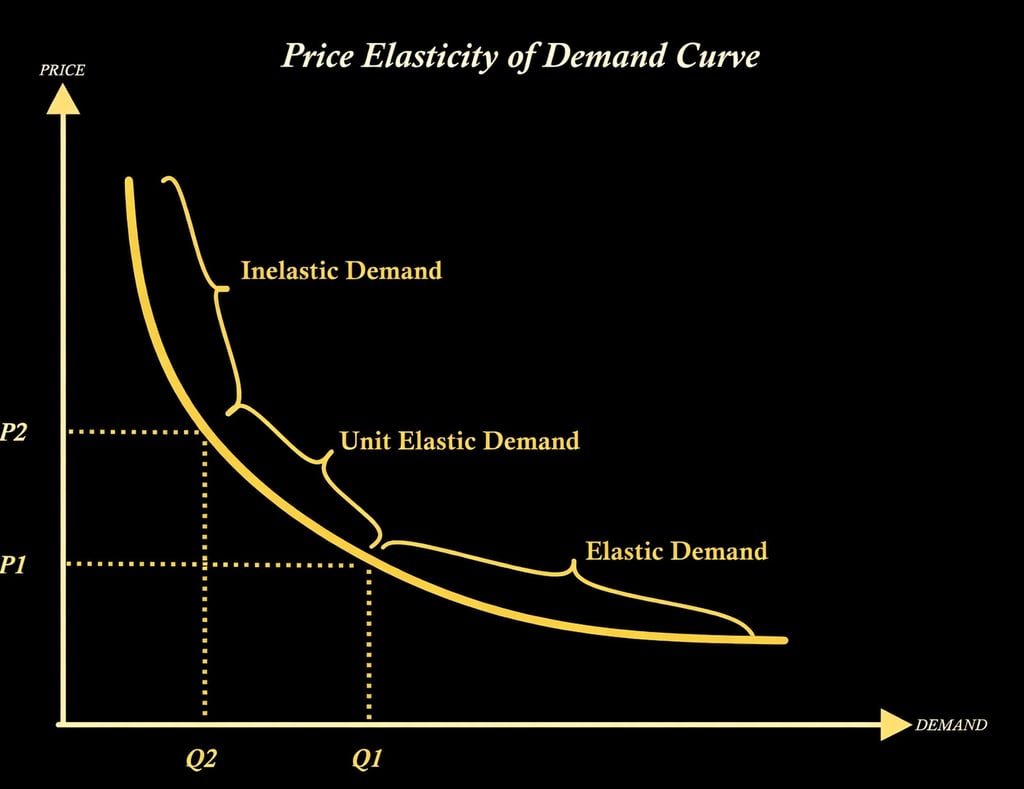
In economics, elasticity measures how a system responds to pressure. When prices rise, when income falls, when markets shift, economists study how much behavior changes, or how much it resists change. Some goods are highly elastic: a small increase in price causes demand to collapse. Others are inelastic: no matter how conditions shift, people continue to buy, adapt, and endure. Elasticity measures how a system responds to pressure. It is a way of quantifying sensitivity, how much behavior changes when conditions shift. The classic formula for elasticity of demand is simple:
E = (% change in quantity)
(% change in price)
A small price increase might cause a large drop in demand. For example, if price rises by 10% and demand falls by 20%, then:
E = (-20%) / (10%) = -2
This is high elasticity; the system bends quickly under pressure.
Other goods barely react. If price rises by 10% but demand only falls by 2%, then:
E = (-2%) / (10%) = -0.2
This is inelastic, meaning the system retains its shape even as pressure increases.
Markets respond to turbulence in different ways depending on consumers' sensitivity to price, income, or external shocks. In economics, this sensitivity is captured by the concept of elasticity, a measure of how strongly demand responds to changes in conditions. Some markets bend quickly under pressure, while others hold their shape even when disrupted. These patterns mirror the varied ways human beings respond to stress, making elasticity a useful bridge between economic theory and psychological endurance.
Economists use these ratios to understand markets. But the deeper truth is that elasticity is not just an economic principle; it is a human one.
We, too, live inside shifting conditions: financial strain, emotional hardship, prolonged uncertainty, and the slow, grinding pressures that accumulate over time. Just as in economic systems, some individuals are highly elastic: a small increase in stress leads to large changes in behavior, motivation, or emotional stability. Others are inelastic; they absorb pressure with minimal visible change, maintaining structure even when life becomes heavy. Elasticity in economics asks: How much does behavior change when pressure increases? Elasticity in human endurance asks: How much can a person absorb before their identity, habits, or hope begin to break? Yet what makes human endurance extraordinary is not simply the ability to withstand a single shock, but the ability to withstand prolonged stress, the kind that stretches us far beyond our original shape. And still, somehow, we continue. We reorganize. We adapt. We find new ways to function when old ways collapse.
Human beings operate with a similar principle. Our minds, emotions, and bodies stretch in response to stress, hardship, and prolonged pressure. Some people absorb shocks with minimal visible change, the inelastic personality. Others react sharply to even small disturbances and have a highly elastic personality. And just like in economics, there is always a threshold: a point where the curve bends, the response accelerates, and the system can no longer stretch without breaking. Understanding the elasticity of human endurance means understanding how people survive pressure, adapt to adversity, and continue functioning under conditions that should have overwhelmed them. It is the study of how far the human spirit can stretch, and what happens when it reaches its elastic limit.
Economists use elasticity to understand how systems respond when conditions shift, how demand rises or falls when prices change, how markets adjust when turbulence hits, and why some goods remain stable while others collapse under pressure. But elasticity is more than a mathematical ratio; it is a framework for understanding behavior under strain. When we apply this concept to human endurance, it becomes a powerful lens for examining how people respond to stress, hardship, and prolonged uncertainty. In this human-centered version of elasticity, stress becomes the “price”, the external force that increases or decreases depending on life’s circumstances. Human response becomes the “demand curve,” revealing how sharply or gently a person’s functioning changes when pressure rises. Some individuals experience dramatic shifts in behavior with even small increases in stress, while others maintain stability despite significant strain. This variation mirrors the way different markets react to price changes.
Coping mechanisms function as “substitutes” in this analogy. Just as consumers shift from one product to another when prices rise, people shift from one coping strategy to another when stress intensifies. Some substitutes are healthy, rest, support, and problem‑solving, while others are destructive, such as withdrawal, anger, or avoidance. The availability and quality of these substitutes determine whether a person adapts or deteriorates under pressure. Every system, whether economic or human, has an elastic limit, the point at which stretching becomes breaking. For people, this limit shows up as burnout, emotional collapse, or the inability to maintain normal functioning. Some individuals resemble essential goods: no matter how high the pressure rises, they continue to show up, perform, and endure. Others resemble luxury goods: even a small increase in stress causes a sharp decline in performance. Neither pattern is inherently good or bad; each reflects a different internal architecture shaped by biology, history, and environment.
This framework helps explain why two people facing the same hardship can respond in completely different ways. Elasticity reveals that endurance is not simply about strength; it is about sensitivity, adaptability, and the capacity to reorganize under strain. By viewing human behavior through this economic lens, we gain a clearer understanding of why some individuals bend, others hold, and all are stretched by the pressures of life.
Human elasticity, the mind’s ability to stretch under pressure, is shaped long before adulthood. Childhood conditioning plays a foundational role. Some children grow up in environments where they must absorb discomfort quietly, adapt quickly, or suppress their needs to maintain stability. Others grow up in settings where expressing distress, seeking help, or reacting strongly to discomfort is normal and even expected. These early lessons become the blueprint for how adults respond to stress.
Cultural expectations further shape this elasticity. In some cultures, endurance is celebrated, suffering in silence is seen as strength, and emotional restraint is a virtue. In others, emotional expression is encouraged, and reacting quickly to discomfort is viewed as healthy self‑protection. Beattie (2020) opined that resistance and the capacity to manage stress contribute to life satisfaction and success. These cultural scripts influence how individuals interpret pressure: whether they see it as something to endure, resist, or escape. Personality traits also play a significant role. Some people are naturally more tolerant of uncertainty, discomfort, or prolonged strain. Others are more reactive, sensitive, or vigilant. Neither trait is inherently better; each reflects a different internal architecture. A highly reactive person may detect danger early and protect themselves quickly. A highly tolerant person may remain stable in situations that would overwhelm others. Both patterns are adaptive in the environments that shaped them.
Past trauma adds another layer. Trauma can either increase elasticity, teaching a person to stretch far beyond what is healthy, or decrease it, making the mind more sensitive to pressure. People who have endured chronic stress often develop a high threshold for discomfort, not because it is healthy, but because it has become necessary. Others become more reactive because their nervous system has learned to anticipate a threat. Trauma does not create weakness or strength; it creates patterns of survival. Social support and internal narratives determine how far a person can stretch before reaching their limit. Those with strong support systems, family, community, and friendships often have more capacity to absorb stress because they are not carrying it alone. Internal narratives matter just as much: people who believe they must endure everything on their own often stretch themselves dangerously thin, while those who believe they deserve help are more likely to seek relief before breaking. Endurance becomes dangerous when stretching becomes automatic, when people tolerate what is breaking them simply because they have always stretched. Elasticity without awareness leads to quiet collapse: burnout, emotional numbness, or the slow erosion of identity. Understanding the psychology of elasticity helps us see that endurance is not always strength. Sometimes it is a habit formed in childhood, reinforced by culture, shaped by trauma, and maintained by silence, and recognizing this is the first step toward healthier, more intentional forms of resilience.
The human body is engineered for survival, and its response to prolonged stress is both sophisticated and deeply adaptive. When pressure rises, the body activates a biological system designed to keep us functioning even under strain. This system relies on hormonal, neurological, and physiological adjustments that allow us to push through difficulty, conserve energy, and remain alert. In many ways, this is the body’s version of elasticity, a stretching of internal resources to maintain stability.
One of the first responses to stress is the rise of cortisol, the hormone that mobilizes energy and sharpens focus. Heart rate increases to deliver oxygen more efficiently, muscles tighten in preparation for action, and sleep patterns shift as the brain prioritizes vigilance over rest. Appetite may change; some people lose hunger, others crave quick energy, reflecting the body’s attempt to regulate fuel. Even the brain begins to rewire itself, strengthening pathways that help us cope and weakening those that are not immediately necessary. These changes are not random; they are survival mechanisms.
This adaptive process is what we can call biological elasticity. Just as an elastic material stretches to accommodate pressure, the body stretches its systems to keep us functioning. It reallocates energy, heightens awareness, and adjusts internal rhythms so we can endure what might otherwise overwhelm us. This elasticity allows people to survive demanding jobs, emotional hardship, financial strain, caregiving responsibilities, and long periods of uncertainty. But biology, like any elastic system, has limits. When stress becomes chronic, the same mechanisms that once protected us begin to wear us down. Elevated cortisol suppresses the immune system, making the body more vulnerable to illness. Constant muscle tension leads to pain and fatigue. Disrupted sleep erodes emotional regulation and cognitive clarity. Over time, the brain’s rewiring can result in emotional numbness, difficulty concentrating, and a reduced ability to experience joy or motivation. What once helped us survive begins to quietly break us down. Eventually, chronic stress pushes the body toward burnout, cognitive fatigue, and even physical collapse. Elasticity is not infinite; every biological system has a breaking point. Understanding this helps us recognize that endurance is not always strength; sometimes it is simply the body stretching beyond what it was meant to carry. And acknowledging these limits is the first step toward healthier, more sustainable forms of resilience.
Social elasticity refers to the way people stretch themselves to meet the expectations of the world around them. Unlike biological or psychological elasticity, which operate internally, social elasticity is shaped by external pressures, the norms, demands, and obligations that society quietly imposes. These pressures often go unnoticed because they are woven into everyday life, yet they profoundly influence how much strain individuals tolerate before acknowledging their limits. Modern society frequently rewards endurance and punishes vulnerability. In workplaces, employees are praised for “pushing through” exhaustion. In families, people are expected to be dependable regardless of their emotional state. Cultural norms often frame self‑sacrifice as a virtue, and financial pressures force individuals to stretch far beyond what is healthy. These expectations create an environment where overextension becomes the default, not the exception.
People stretch themselves to meet a wide range of demands: workplace deadlines, family responsibilities, cultural obligations, financial burdens, and emotional caretaking. Each of these pressures pulls at a different part of a person’s life, and together they create a constant state of tension. Many individuals endure silently, not because they are unaffected, but because society has normalized certain forms of suffering. The message is clear: keep going, no matter the cost. We often label this overstretching as “being strong,” “being responsible,” or “doing what you have to do.” These phrases sound noble, but they can mask the reality that many people are carrying more than they can safely hold. Social narratives glorify resilience while ignoring the toll it takes. As a result, individuals may feel obligated to maintain an image of stability even when they are nearing their breaking point.
The danger of social elasticity is that it can make unhealthy levels of endurance appear normal. When people stretch themselves simply because everyone else seems to be stretching, suffering becomes invisible, even to the person experiencing it. Recognizing this dynamic is essential. It reminds us that endurance is not always strength; sometimes it is a response to social pressure that teaches people to tolerate what is quietly breaking them. Understanding social elasticity helps us question the norms we have accepted and create space for healthier, more humane forms of living.
Chronic stress is a major risk factor for heart disease. Cardiovascular diseases cause 17.9 million deaths per year globally (WHO). A significant portion is linked to chronic stress, hypertension, and lifestyle strain. Low‑ and middle‑income countries bear over 75% of these deaths. WHO notes that chronic stress contributes to the global rise in noncommunicable diseases (NCDs), which account for 74% of all global deaths. Long‑term stress weakens the immune system, increasing vulnerability to infections, autoimmune disorders, and chronic inflammatory diseases. Cardiovascular diseases alone will cost low‑ and middle‑income countries $3.7 trillion between 2011 and 2025, about 2% of GDP. This economic burden is directly tied to stress‑exacerbated conditions like hypertension and heart disease.
In economics, every elastic system has a limit, a point at which further pressure causes demand to collapse rather than adjust. Human beings operate under a similar principle. We stretch to accommodate stress, responsibilities, expectations, and emotional burdens, but that stretching is not infinite. When endurance reaches its threshold, the collapse is not financial or numerical; it is emotional, physical, or psychological. The breaking point is where adaptation ends and overwhelm begins. Human breaking points rarely look dramatic from the outside. They often appear as subtle shifts: a person who once engaged suddenly withdraws, someone who was expressive becomes silent, or a previously patient individual begins reacting with uncharacteristic intensity. These changes are not random; they are signals that the internal system has been stretched beyond capacity. Just as markets fail when pushed too far, people fail when the pressure exceeds what their internal architecture can sustain.
Breaking points can manifest in many forms. Some individuals experience emotional shutdown, a numbness that protects them from further strain. Others erupt in explosive reactions because their nervous system can no longer regulate the accumulated tension. Depression may emerge as the body’s way of conserving energy after prolonged overload. Illness can surface when chronic stress suppresses the immune system. And sometimes the breaking point takes the form of abrupt decisions: quitting a job, ending a relationship, or walking away from an environment that has become unbearable. These moments are often misunderstood as weakness, impulsiveness, or instability. In reality, they are the natural consequence of prolonged stretching. The body and mind can only compensate for so long before they demand relief. Just as an overstretched material eventually tears, a person who has carried too much for too long will reach a point where continuing is no longer possible. The collapse is not a failure of character; it is a biological and psychological inevitability.
Recognizing the breaking point is essential because it reframes collapse as a signal rather than a flaw. It reminds us that endurance has limits and that those limits exist to protect us. When elasticity fails, it is not a sign that someone should have been stronger; it is evidence that they have already been strong for far too long. Understanding this helps us approach ourselves and others with greater compassion, awareness, and respect for the boundaries that keep us whole.
In physics, when an elastic material is stretched beyond its natural capacity, it doesn’t simply return to its original shape; it snaps back with force. Human beings experience a similar phenomenon. After years of enduring pressure, suppressing needs, and stretching themselves to meet expectations, there comes a moment when the mind and body can no longer maintain the illusion of stability. What follows is not a gentle reset but a powerful recoil, a sudden shift that reflects the intensity of the strain that preceded it. This recoil often appears as drastic life changes. People who have tolerated unhealthy environments for years may suddenly walk away. A career that once felt secure becomes unbearable overnight. A relationship that has been quietly draining for a decade ends in a single conversation. These decisions may look impulsive from the outside, but internally they are the result of accumulated tension finally releasing. The snap back is not random; it is the body and mind reclaiming space after years of compression.
Recoil can also manifest as a profound redefinition of identity. Individuals begin questioning roles they once accepted without hesitation: the dependable one, the strong one, the provider, the peacekeeper. Old expectations lose their power. People start rejecting obligations that once felt non‑negotiable. They seek new environments, new relationships, or entirely new versions of themselves. This transformation is not rebellion; it is restoration, a return to a shape that was lost under the weight of prolonged endurance. The emotional intensity of recoil is often misunderstood. Friends, coworkers, or family members may interpret these shifts as sudden, dramatic, or irrational. But recoil is rarely impulsive. It is the delayed expression of needs that were ignored, minimized, or silenced for too long. When someone finally reaches their breaking point, the release of pressure can feel like liberation, urgency, or clarity, a moment when the mind insists on change because survival depends on it. Understanding the recoil effect helps us see that dramatic life changes are not signs of instability but signs of recovery. They reveal the cost of overstretching and the necessity of reclaiming boundaries. When elasticity fails, recoil is the natural response, the mind and body snapping back toward equilibrium after years of being pulled too far. Recognizing this allows us to approach these moments with compassion, awareness, and respect for the deep internal work that precedes them.
Healthy elasticity is not about pushing the mind and body to their limits; it is about learning how to stretch with intention rather than compulsion. True resilience is not infinite endurance or the ability to absorb endless pressure. It is the capacity to expand and contract in ways that protect long‑term well‑being. Controlled elasticity allows a person to adapt to stress without losing themselves in the process, and it requires a conscious understanding of one’s limits. Boundaries are the foundation of healthy endurance. They define where a person ends, and external demands begin. Without boundaries, stretching becomes automatic — a reflex shaped by habit, fear, or expectation. With boundaries, stretching becomes a choice. Rest is equally essential. The body and mind cannot remain in a state of tension indefinitely; they need cycles of recovery to repair, reset, and regain strength. Rest is not a luxury but a biological requirement for sustainable resilience.
Self‑awareness and emotional regulation deepen this controlled elasticity. Self‑awareness helps individuals recognize when they are approaching their limits, while emotional regulation allows them to respond to stress without being overwhelmed by it. These skills prevent the kind of silent overstretching that leads to burnout or collapse. They also help people identify which pressures are necessary and which are self‑imposed or socially conditioned. Support systems play a crucial role as well. No one is designed to stretch alone. Healthy elasticity is strengthened by relationships that provide encouragement, perspective, and relief. Whether through family, friends, community, or professional support, shared burdens become lighter. The courage to say “enough” often emerges only when people feel safe enough to acknowledge their limits without fear of judgment or rejection.
Elasticity becomes strength only when it is intentional, not automatic. When people stretch because they choose to, not because they feel obligated to endure, resilience becomes sustainable rather than destructive. Building healthy elasticity means honoring the body’s signals, respecting emotional boundaries, and embracing the truth that stopping, resting, or refusing is sometimes the most resilient act of all. It is the shift from survival to stewardship of one’s own well‑being.
Human beings are remarkably elastic. We stretch emotionally, mentally, and physically in ways that often defy logic or prediction. We adapt to pressures that arrive without warning, and we continue moving through circumstances that would seem unbearable from the outside. This capacity to stretch is one of the most extraordinary features of the human experience, a quiet, often invisible form of resilience that allows us to survive what should have stopped us. But endurance, no matter how impressive, is not infinite. Elasticity is not the same as invincibility. Every person has limits, even if they have spent years pretending they do not. The body has thresholds, the mind has boundaries, and the spirit has places where it can no longer bend without consequence. Recognizing these limits is not a sign of weakness; it is a sign of wisdom.
The true strength of human endurance lies not in how far we can stretch, but in how intentionally we choose to stretch. Knowing when to push, when to pause, and when to stop altogether is a form of intelligence that protects us from collapse. It is the difference between resilience and self‑destruction. When stretching becomes automatic, a reflex shaped by habit, fear, or expectation, we lose the ability to discern what is healthy from what is harmful. To live with healthy elasticity is to honor the signals our bodies and minds send us. It means acknowledging fatigue before it becomes burnout, recognizing emotional strain before it becomes numbness, and setting boundaries before we reach the point of breaking. It means understanding that rest is not a retreat from strength but a requirement for it. Protecting our limits is not selfish; it is essential.
In the end, the wisdom of endurance is the wisdom of balance. We stretch because life demands it, but we pause because survival requires it. Strength is not measured by how much we can tolerate, but by how consciously we protect the limits that keep us whole. When we learn to stretch with intention rather than compulsion, elasticity becomes not just a survival mechanism, but a path to a healthier, more sustainable way of being. And perhaps no example illustrates this more clearly than Justin, in our opening story, who spent years stretching quietly under the weight of responsibility, love, and fear. His story reminds us that even the strongest among us must eventually learn when to breathe, when to rest, and when to reclaim the space that life has slowly taken. In honoring our limits, we honor our humanity, and we give ourselves the chance not just to endure, but to heal.
References
1. IJntema, R. C., Schaufeli, W. B., & Burger, Y. D. (2021).
The psychological immunity, psychological elasticity (PI‑PE) model of resilience. Journal of Resilience Studies, 5(2), 113–129.
2. Beattie, E. N. (2020).
The mind’s design: The neuroscience of stress and resilience. NeuroPress Publishing.
3. Rittenberg, L., & Tregarthen, T. (2012).
Principles of microeconomics (Chapter 5: Elasticity—A measure of response). OpenStax.
4. American Institute of Stress. (2020).
Stress response and chronic overload. The American Institute of Stress Reports.
5. Fletcher, D., & Sarkar, M. (2013).
Psychological resilience: A review and critique of definitions, concepts, and theory. European Psychologist, 18(1), 12–23.
6. McEwen, B. S. (2007).
Physiology and neurobiology of stress and adaptation: Central role of the brain. Physiological Reviews, 87(3), 873–904.
7. Crane, M. F. (2017).
Trauma, adaptation, and elastic limits: Understanding post‑stress reorganization. Journal of Traumatic Stress Studies, 29(4), 221–238.
8. Roth, S., & Herzberg, P. Y. (2017).
Cultural expectations and emotional endurance norms: A cross‑cultural analysis. Journal of Cross‑Cultural Psychology, 48(6), 912–928.
9. Schaufeli, W. B. (2021).
Burnout, emotional shutdown, and collapse: Understanding the limits of occupational endurance. Occupational Health Science, 5(1), 1–25.
10. British Columbia Open Textbook Project. (2016).
Principles of microeconomics (Section 4.1: Calculating elasticity).
Author’s Note
The names used in this article are fictional to protect the identity of the individuals
© 2026 Enoma Ojo. All rights reserved.
This document is protected under international copyright law. No portion may be copied, stored, or transmitted without explicit permission from the author.