
The Audacity of Corruption: Nigeria’s Enduring Struggle Against Institutionalized Impunity.
A penetrating examination of how corruption in Nigeria has evolved from individual misconduct into a protected system of impunity. This article traces the historical, political, and psychological forces that allow corruption to survive, even as citizens demand accountability. It exposes the structures that shield the powerful, silence victims, and weaken national progress, while challenging readers to confront what must change for justice to prevail.
ARTICLES & ESSAYS
enoma ojo (2025)
3/1/202625 min read
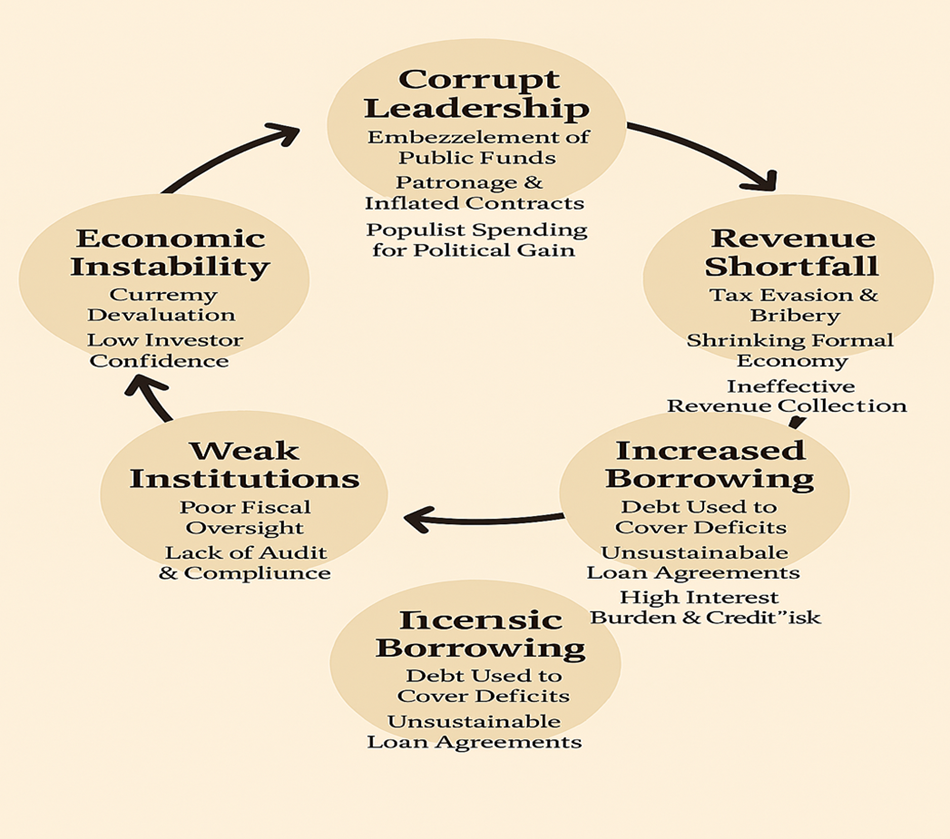
Nigeria’s struggle with corruption has matured into an entrenched system of institutionalized impunity, eroding the nation’s capacity to achieve sustainable economic growth and inclusive development. This study interrogates the audacity of corruption, how it flourishes despite legal frameworks, public dissent, and repeated reform attempts. It explores the structural evolution of corrupt practices from colonial bureaucratic legacies to modern governance failures, revealing how administrative inertia and weak accountability mechanisms have nurtured a cycle of misuse, misappropriation, and misgovernance. Drawing upon historical trends, macroeconomic indicators, and institutional economics, the article demonstrates how corruption undermines investment confidence, distorts public expenditure, and exacerbates poverty. It argues that the normalization of impunity has crippled the nation’s ability to mobilize resources effectively, deliver essential services, and achieve policy coherence. Comparative insights from reform-led economies underscore the urgency of rethinking Nigeria’s institutional architecture, shifting the focus from episodic anti-corruption campaigns to holistic, systemic redesign. Ultimately, the paper calls for a transformative approach that reclaims economic potential and restores public trust through radical transparency, civic empowerment, and institutional integrity.
In a broader sense, corruption is defined as the abuse of entrusted power for private gain, manifesting across economic, social, and political domains with devastating consequences. Economically, it distorts resource allocation, deters investment, and undermines fiscal discipline. Socially, it erodes public trust, deepens inequality, and normalizes injustice. Politically, it weakens democratic institutions, fuels authoritarian tendencies, and perpetuates elite capture. According to the 2024 Corruption Perceptions Index (CPI) by Transparency International, over two-thirds of countries score below 50 out of 100, indicating widespread governance failures and systemic impunity. Nigeria, with a CPI score of 26, ranks among the most corrupt nations globally, reflecting entrenched dysfunction in its public sector. This low score underscores the severity of institutional decay and its direct correlation with economic stagnation and rising poverty. In Nigeria, corruption is not merely a deviation from ethical norms; it is a structural affliction that has stunted development, hollowed out institutions, and denied millions access to basic opportunities. This paper interrogates the audacity of corruption in Nigeria, tracing its historical roots, examining its economic toll, and proposing pathways toward institutional renewal and national accountability. Corruption wears no mask in Nigeria; it is bold, brazen, and it dances in broad daylight. The scale is unprecedented, and it has unmasked Nigeria’s boldest betrayals. Nigeria is a nation where corruption is not hidden; it is celebrated. Stealing has become part of governance. Corruption in Nigeria is not merely a flaw in governance; it is a deeply entrenched system of impunity. The term “audacity” reflects how brazen and normalized corrupt practices have become, from petty bribery to grand-scale embezzlement. Despite democratic transitions and anti-corruption rhetoric, the culture of corruption remains defiant and widespread.
- “Corruption is a cancer that steals from the poor, eats away at governance and moral fibre, and destroys trust.”
— Robert Zoellick, former President of the World Bank
Since gaining independence in 1960, Nigeria has faced persistent challenges with corruption, misappropriation of public funds, and illicit financial flows (IFFs). These systemic issues have significantly stunted economic growth, exacerbated poverty, and undermined institutional development. While exact figures are difficult to pinpoint due to opacity and poor record-keeping, conservative estimates suggest that Nigeria has lost hundreds of billions of dollars over the past six decades. According to the Human and Environmental Development Agenda (HEDA), Nigeria loses $15–$18 billion annually to illicit financial flows. Some sources estimate losses as high as $50 billion per year, especially during peak periods of oil revenue mismanagement. Over 60 years, this could amount to: $15 billion × 60 years = $900 billion, and another aggressive estimate rounds up to $50 billion × 60 years = $3 trillion. According to the Debt Management Office (DMO), Nigeria’s public debt has ballooned from $1.5 billion in 1970 to over $91 billion in 2024, with much of it attributed to poor fiscal discipline and corruption. The Nigerian Naira has depreciated from ₦0.55 = $1 in 1972 to ₦1500 = $1 in 2024, reflecting decades of economic mismanagement. Capital flight due to corruption and lack of investor confidence has drained billions in potential foreign direct investment (FDI). The estimated capital flight between 1980 and 2020 exceeds $400 billion, according to various economic studies. Over 80% of government revenue is now allocated to debt servicing, leaving minimal funds for development. Misappropriation of borrowed funds and inflated contracts has contributed to non-productive debt accumulation, further compounding economic losses.
Between 1960 and 2024, Nigeria recorded a staggering 332.9 % increase in her external debt profile, and this mainly resulted from the post-war reconstruction, rehabilitation, and reintegration. NBS (2024) reports that this debt includes a breakdown of domestic and external debt by state and federal governments. This huge debt escalation within just a few years of independence already signaled the strain on Nigeria’s financial discipline. There was a 469% increase between 1977 and 1983. This surge represented Nigeria’s dependence on external financing, often compounded by corruption and financial mismanagement. However, between 1999 and 2015, Nigeria recorded, for the first time, a huge decrease by 74.11%, from $28.2 billion to $7.3 billion. This was due to the historic debt relief deal secured under President Olusegun Obasanjo’s administration in the mid-2000s. Nigeria’s external debt plummeted from $28.2 billion in 2005 to $2.1 billion by 2007 and later stabilized around $7.3 billion during the Goodluck Jonathan administration. It was one of the largest debt relief packages ever granted to a developing country and marked a turning point in Nigeria’s fiscal history.
- “Corruption is worse than prostitution. The latter might endanger the morals of an individual, the former invariably endangers the morals of the entire country.”
— Karl Kraus, Austrian satirist
Nigeria’s external debt ballooned from $7.3 billion in 2015 to approximately $42.9 billion by 2025 due to a combination of structural, fiscal, Institutional, and geopolitical factors. Nigeria’s economy is heavily reliant on oil exports, which account for a significant portion of government revenue. The 2014–2016 oil price crash severely reduced earnings, forcing the government to borrow to finance budget deficits. Despite occasional rebounds, oil production faced security challenges and technical setbacks, limiting recovery. The COVID-19 pandemic resulted in emergency borrowing, which triggered a historic recession in 2020, prompting Nigeria to seek emergency funding from international lenders like the IMF, World Bank, and African Development Bank. These loans were used to support healthcare, social safety nets, and economic stimulus packages. Nigeria maintained untargeted fuel subsidies, which consumed a large portion of the budget. Combined with increased security spending and infrastructure ambitions, this widened the fiscal deficit and necessitated more borrowing. Nigeria’s government revenue-to-GDP ratio remains one of the lowest globally, around 7.5%, according to the IMF. This limited the country’s ability to fund development internally, pushing it toward external debt. Nigeria increasingly turned to Eurobonds and commercial loans, which carry higher interest rates and shorter maturities. These instruments helped raise quick capital but added to long-term debt servicing burdens. The depreciation of the Naira against the U.S. dollar inflated the dollar-denominated debt stock. Exchange rate reforms and multiple FX windows created volatility, further complicating debt management.
Nigeria’s estimated financial losses since independence, ranging from $900 billion to over $3 trillion, represent more than just economic figures. They reflect decades of missed opportunities, institutional decay, and the human cost of poverty and underdevelopment. Addressing this legacy requires not only accountability but a radical redesign of governance structures and fiscal transparency. Nigeria’s ballooning external debt, from $7.3 billion in 2015 to $42.9 billion in 2025, is not merely the result of external economic shocks or global market volatility. It is symptomatic of a deeper structural illness: the audacity of corruption entrenched within the nation's governance architecture. Each surge in borrowing reveals a troubling deficit not just in fiscal resources, but in institutional credibility. When leadership is compromised by clientelism and public finance management is hijacked by rent-seeking behavior, debt becomes less a developmental tool and more a mechanism for economic sabotage. In this context, Nigeria’s debt profile serves not as a standalone indicator, but as a lens into the systemic impunity that continues to cripple national progress.
- “The fight against corruption is not just about the corrupt, it’s about the citizens who have to live with the consequences.”
— Ban Ki-moon, former UN Secretary-General
Public debt has traditionally been framed as an economic instrument, used to stimulate growth, finance development, and manage macroeconomic stability. However, in many developing countries, debt has evolved into a revealing metric of governance failure. Beyond its numeric scale, debt embodies the quality of leadership, transparency, and institutional accountability. The patterns of accumulation, opacity in contracting, and the misuse of borrowed funds reflect the deeper maladies afflicting political systems and public institutions. This research article argues that debt is more than a fiscal concern; it is a mirror, one that reflects the erosion of governance integrity, the entrenchment of elite interests, and the failure of institutional checks and balances. The exponential rise in public debt across Sub-Saharan Africa and South Asia is not solely the result of global economic shocks or developmental needs; it is often the consequence of systemic misgovernance. In Ghana, for instance, the nation’s debt trajectory has transitioned from post-HIPC relief to unsustainable borrowing. By 2023, debt servicing consumed nearly 47% of government revenues, crowding out critical expenditures in health, education, and infrastructure. These figures spotlight a governance system unable to prioritize citizens' welfare over political convenience. Corruption plays a catalytic role in this dysfunction. Political elites often contract loans with limited parliamentary oversight or public consultation, driven more by short-term political survival than long-term development planning. These opaque practices undermine the democratic fabric and erode public trust. Furthermore, off-budget financing, hidden liabilities in public-private partnerships, and contingent guarantees to failing state-owned enterprises reveal a deliberate attempt to bypass accountability. Debt becomes an enabler of rent-seeking behavior and patronage politics rather than a tool of transformational development.
The absence of robust institutions is a breeding ground for debt mismanagement. Where legal frameworks are weak, fiscal rules unenforceable, and oversight bodies under-resourced or politicized, debt is easily weaponized. Sri Lanka’s debt crisis stands as a sobering example. Billions were poured into vanity projects and failing SOEs, many driven by political patronage. The result was a kleptocratic structure that hollowed out state capacity and triggered a sovereign default. Moreover, the international debt resolution architecture itself reflects governance asymmetries. Developing countries face holdout creditors, opaque restructuring negotiations, and limited bargaining power. The G20's Common Framework, while a step forward, remains ineffective without concurrent domestic reforms. The lack of a sovereign bankruptcy framework means countries are left to renegotiate under duress, further entrenching governance failures. Debt, in this context, is both the symptom and the accelerant of institutional decay. This pattern mirrors a cyclical paradox: poor governance leads to excessive borrowing, excessive debt leads to fiscal strain, and fiscal strain weakens governance even further. Without intervention, nations remain trapped in a spiral of debt dependency, public disillusionment, and policy inertia.
Breaking this cycle demands more than debt restructuring; it requires a reconceptualization of debt governance. Transparency must be redefined as a governance imperative. Countries should enforce loan-level disclosures, subject debt contracting to legislative review, and empower civil society to participate in fiscal monitoring. These steps go beyond technical fixes; they re-anchor the debt discourse in democratic accountability. Innovations such as state-contingent debt instruments can help buffer economic shocks, while fiscal responsibility laws can provide a rules-based approach to debt sustainability. Tax reform, subsidy rationalization, and the dismantling of elite rent-seeking networks are critical to restoring fiscal credibility. Yet, technical solutions alone will falter without institutional and leadership reform. Debt relief initiatives should be conditional on demonstrable governance reforms, not just economic indicators. Countries must show progress in combating corruption, strengthening oversight institutions, and fostering inclusive policymaking. Without such conditions, relief risks enabling further decay and rewarding fiscal recklessness. Debt is a revealing mirror, not of fiscal deficits alone, but of deeper deficits in leadership, accountability, and public purpose. By treating debt as a governance challenge rather than merely a financial one, nations can begin to chart a path toward institutional resilience, public trust, and sustainable development.
The debt trap is not merely a fiscal phenomenon; it is a governance pathology. It reflects a recurring cycle where poor leadership decisions, institutional weaknesses, and opaque financial practices converge to create a self-reinforcing loop of dependency and decay. This article also examines how each stage of the debt trap connects to the next, forming a closed circuit that undermines national development, erodes public trust, and perpetuates economic fragility. Using Nigeria and other developing nations as reference points, we explore how governance failures fuel debt accumulation and how debt, in turn, deepens governance dysfunction. Razlog et al (2020) examined Nigeria’s borrowing practices and highlighted similarities with India on managing debt sustainably. The cycle begins with excessive borrowing, often justified by governments as necessary for infrastructure or development. However, in many cases, loans are contracted without rigorous cost-benefit analysis, transparency, or parliamentary oversight. Political incentives, such as election cycles or patronage networks, drive leaders to prioritize short-term visibility over long-term sustainability. This stage reflects a failure of institutional checks and balances. Weak audit systems, politicized debt management offices, and fragmented fiscal frameworks allow governments to bypass scrutiny. In Nigeria, for example, the proliferation of off-budget financing and contingent liabilities has obscured the true debt picture, making it difficult for citizens and watchdogs to hold leaders accountable. Once borrowed, funds are often misallocated, diverted to vanity projects, inflated contracts, or corrupt procurement schemes. This misuse not only fails to generate returns but also sets the stage for the next phase: fiscal strain.
- “Behind most of our so-called successful civil servants who have joined politics and business, there is a collapsed or collapsing public institution they once served.”
— PLO Lumumba, Kenyan anti-corruption crusader
As debt servicing obligations mount, governments face fiscal strain. Interest payments consume a growing share of national budgets, crowding out essential services like health, education, and infrastructure maintenance. In Ghana, debt servicing reached 47% of government revenue by 2023, leaving little room for developmental spending. This fiscal pressure triggers public distrust. Citizens, witnessing deteriorating services and rising poverty, begin to question the legitimacy of their leaders. Protests erupt, as seen in Kenya and Nigeria, where subsidy removals and tax hikes sparked widespread unrest. The erosion of trust further weakens governance, as leaders resort to populist measures or repression to maintain control. Meanwhile, the economy suffers. With reduced public investment and investor confidence, growth slows, exacerbating the debt-to-GDP ratio. Credit ratings fall, borrowing costs rise, and countries become trapped in a cycle of refinancing old debt with new loans, often at higher interest rates. This is the heart of the debt trap: borrowing not for development, but for survival. The final stage of the cycle is institutional decay. As governance structures buckle under fiscal and political pressure, oversight bodies lose autonomy, and corruption becomes entrenched. Debt management becomes reactive rather than strategic, focused on crisis containment rather than reform. International lenders, recognizing the risks, impose conditionalities, often austerity measures that further alienate the public. Without meaningful reform, these interventions merely delay the inevitable. The absence of a sovereign bankruptcy framework means countries must negotiate under duress, often sacrificing sovereignty or strategic assets. This decay feeds back into the cycle. Weak institutions enable further opaque borrowing, public distrust deepens, and economic vulnerability worsens. The trap tightens.
To escape the debt trap, nations must treat debt as a governance challenge, not just a financial one. This requires radical transparency through loan-level disclosures, legislative oversight, and citizen engagement. Institutional reform through the strengthening of audit bodies, enforcing fiscal rules, and depoliticizing debt management. Innovative instruments, by state-contingent debt, improved tax systems, subsidy rationalization, and conditional relief, are to be tied to governance benchmarks, not just macroeconomic metrics. Ultimately, the debt trap is a mirror, reflecting the deficits in leadership, accountability, and institutional resilience. Breaking demands courage, clarity, and a commitment to reform that transcends political cycles. For Nigeria and others, the path forward lies not in more borrowing but in rebuilding the foundations of governance itself.
- “Corruption is Africa’s greatest problem. Not poverty. Not lack of riches. Not racism. Corruption.”
— Dennis Prager
Nigeria’s budget deficits are less a reflection of strategic development spending and more a result of entrenched institutional negligence. Recurrent spending dominates fiscal policy, salaries, allowances, and overheads swallow most resources, leaving little for capital investment. Political leaders prioritize short-term popularity (e.g., subsidies, electoral bonuses) over structural reforms. There's minimal accountability or alignment between budgeting processes and actual development outcomes. This negligence distorts fiscal sustainability and undermines public confidence in government competence. Election cycles in Nigeria warp fiscal discipline; governments often inflate budgets for campaign-driven projects. Populist programs like fuel subsidies or youth grants, and money transfers are introduced without long-term planning or cost-benefit analysis. Successive administrations abandon previous fiscal blueprints, making continuity impossible. Rather than building resilient institutions, leaders pursue fleeting policy wins that contribute to structural economic instability. Case study: The perennial fuel subsidy debate, often seen as “pro-poor,” but costing trillions with no accountability.
“In Nigeria, political ambition too often masquerades as economic strategy.”
- Anonymous
According to the World Bank Group’s 2024 debt report, Nigeria repaid over $689 million to the IDA and IBRD combined. Chronic deficits force Nigeria into a cycle of external borrowing, often at punitive interest rates. Multilateral loans (IMF, World Bank) and Chinese infrastructure financing are used to plug spending gaps, not fuel productivity. Debt servicing now consumes a disproportionate share of annual revenue, leaving scant room for actual development. Debt transparency is low, many contracts remain opaque, with inflated project costs and limited public scrutiny. Debt isn’t the problem; how it’s accumulated, justified, and concealed is. Keynesian economics argues that deficits can stimulate growth during recessions by boosting aggregate demand through government spending. However, a budget deficit becomes a problem when a persistent deficit leads to rising debt and interest payments, limiting future fiscal flexibility, and ultimately, leading to higher borrowing, loss of investor confidence, and reduced access to credit. The deficit is visible, but the system that enables it is what truly needs reform.
The Corruption Perceptions Index (CPI) is more than just a ranking; it’s a global mirror reflecting how corruption shapes governance, development, and human rights across borders. The CPI ranks 180 countries by perceived levels of public sector corruption, using data from 13 independent sources, including the World Bank, WEF, and think tanks. Scores range from 0 (highly corrupt) to 100 (very clean). In 2024, the global average remains stagnant at 43, with over two-thirds of countries scoring below 50. This stagnation signals a global failure to tackle corruption, especially in regions facing conflict, authoritarianism, and weak institutions
Corruption is evolving footprint across regions. Sub-Saharan Africa has the lowest CPI scores, and is a region facing climate stress and weak institutions. Eastern Europe & Central Asia are plagued by state capture and authoritarian drift. Western Europe & EU are witnessing a declining integrity due to elite business influence. South America struggles with organized crime and a lack of political accountability. Asia Pacific: Mixed progress, caught in vicious corruption-climate cycles. CPI spotlights global corruption, and this helps governments identify weak spots in governance, track progress, and prioritize reforms. Countries with declining scores often face pressure to improve transparency and accountability. Businesses and investors use CPI scores to assess risk, and lower scores can deter FDI inflow, due to fear of bribery, fraud, and regulatory instability. CPI global data also reveals how corruption undermines democratic institutions, silences dissent, and fuels authoritarianism.
Corruption is not merely a deviation from ethical norms; it is a systemic outcome of leadership failure. In the world’s most corrupt countries, governance is often shaped by authoritarianism, elite capture, and institutional erosion. These nations exhibit patterns where power is centralized, accountability is absent, and public resources are diverted for private gain. This essay examines the leadership peculiarities that define the 20 most corrupt countries globally, highlighting how these traits perpetuate corruption, undermine development, and entrench inequality. A dominant feature across the most corrupt nations is authoritarian rule, where leaders consolidate power and suppress dissent. In North Korea, the Kim dynasty has institutionalized corruption through dynastic control, opaque budgeting, and diversion of aid funds. Similarly, Syria’s Bashar al-Assad has weaponized state institutions to enrich loyalists and fund repression, turning governance into a tool of survival for the regime. Elite capture is another hallmark. In Equatorial Guinea, President Obiang and his family control vast oil revenues, with little transparency or redistribution. The state functions as a private enterprise, where public offices are synonymous with personal enrichment. In Eritrea, President Isaias Afwerki has dismantled constitutional checks, subordinated the judiciary, and created a patronage system that rewards loyalty over competence. These leadership models prioritize regime preservation over national progress. Institutions are hollowed out, and corruption becomes a structural feature rather than an anomaly.
“Corruption, the greatest single bane of our society today.”
— Olusegun Obasanjo, former President of Nigeria
Corruption thrives where institutions are weak or deliberately sabotaged. In Somalia, fragmented leadership and clan-based patronage have prevented the emergence of a unified state apparatus. Warlords and militias operate with impunity, and public funds are siphoned off through informal networks. South Sudan mirrors this dynamic, with military elites dominating politics and diverting aid and oil revenues to sustain conflict. Resource mismanagement is a recurring theme. In Venezuela, populist leadership under Chávez and Maduro misused oil wealth to fund political loyalty, collapsing the economy and triggering mass emigration. Libya, post-Gaddafi, has seen militia-led governance where oil revenues are contested and misappropriated, fueling instability. In Yemen, civil war has fractured leadership, allowing corruption to flourish amid humanitarian collapse. Foreign aid is often diverted, and state institutions are manipulated by competing factions. These cases illustrate how leadership failures in resource-rich countries transform potential into peril. Cronyism is a defining trait in corrupt leadership. In Nicaragua, President Ortega has filled key positions with loyalists, undermining institutional independence and enabling widespread bribery in customs and resource sectors. Sudan’s military-Islamist coalition manipulates elections and curtails press freedom, ensuring that corruption remains unchallenged. Legal immunity compounds the problem. In Afghanistan, warlordism and political instability have created a culture where elites operate above the law. Aid diversion and nepotism are rampant, and judicial institutions lack the power to prosecute high-level offenders. Burundi exhibits neopatrimonialism, where tribal favoritism dictates resource allocation, marginalizing opposition and entrenching inequality.
Public disillusionment follows. Citizens lose faith in governance, protests erupt, and reform becomes elusive. In Haiti, political cronyism and aid diversion have eroded trust, while in Guinea-Bissau, drug trafficking linked to political elites has compromised national sovereignty. Across these countries, certain patterns emerge: Suppressing opposition through censorship, arrests, and electoral manipulation, appointing cronies to key positions, sidelining merit and professionalism, misusing debt and aid for personal gain, often through opaque contracts, and operating above the law, with little fear of prosecution or public scrutiny. These leadership peculiarities create a feedback loop: corruption weakens institutions, which in turn enables more corruption. The implications are profound: economic stagnation, social unrest, and democratic backsliding. Breaking this cycle requires bold reform: strengthening institutions, including independent judiciaries, empowered audit bodies, and depoliticized civil services. Enhancing transparency through public access to budgets, procurement data, and debt contracts, empowering civil society through protecting media freedom, supporting watchdog organizations, fostering civic education, and international accountability, by sanctions, asset recovery, and conditional aid tied to governance benchmarks. Ultimately, corruption is a leadership crisis. Reform must begin at the top, with leaders who prioritize public service over personal gain, and institutions that serve citizens rather than regimes.
“The war against corruption will not be won overnight, but with political will, it will be won.”
— Nana Akufo-Addo, President of Ghana
Corruption in Nigeria doesn’t just bend the rules, it rewrites them. It transcends the conventional definitions of bribery and embezzlement, becoming a systemic culture that shapes governance, social norms, and even national identity.
Nigeria ranks 26, according to CPI (2024). Corruption is inherently elusive. It thrives in secrecy, often hidden behind bureaucratic opacity, elite networks, and institutional decay. Yet, despite its intangible nature, global organizations have developed tools to assess and compare corruption across countries. published annually by Transparency International. It does not measure actual instances of corruption but rather perceived levels of public sector corruption, based on expert assessments and business surveys. This approach is grounded in the reality that corruption is difficult to observe directly, especially in environments where whistleblowers are silenced and records are manipulated. Beyond the numbers, corruption statistics are not definitive verdicts; they are mirrors reflecting how governance is perceived and experienced. While imperfect, tools like the CPI offer a starting point for dialogue, reform, and accountability. For countries like Nigeria, where corruption is deeply intertwined with leadership traits and institutional fragility, these rankings can catalyze introspection and inspire systemic change. Ultimately, the goal is not just to improve scores, but to rebuild trust, strengthen institutions, and restore public purpose.
Corruption and weak institutions in Nigeria fuel borrowing, which often results in the misallocation of resources. Leaders prioritize personal or political gain over national interest. Funds are diverted to patronage networks, inflated contracts, or ghost projects. The result of all these is that governments borrow more to fill the gap left by stolen or wasted resources. There is the erosion of revenue collection where the tax system is undermined by bribery and favoritism, and informal economies flourish, thereby shrinking the taxable base of the Nigerian economy. Ultimately, with low revenue, governments rely on debt to fund basic services. Lack of fiscal discipline has been a bane of most African and developing countries in the world. According to the Washington Consensus, most developing nations embark on excessive public spending, especially on subsidies or inefficient state enterprises, which are the major sources of drains on economic growth, and borrowing to cover deficits, which often lead to unsustainable debt and dependency on foreign loans. Weak institutions fail to enforce budgetary rules or spending limits. Corrupt officials bypass procurement laws and accountability checks, and borrowing becomes a tool to mask deficits and mismanagement. Archibong et al (2021) highlighted the Consensus Reforms and economic performance in Sub-Saharan Africa, against fiscal discipline. The lack of fiscal discipline in many African countries is not simply a matter of poor budgeting; it’s a complex interplay of economic shocks, institutional weaknesses, political incentives, and global financial pressures.
Many African leaders view public office as a personal fortress. The prioritization of political survival over economic growth and development for its citizens is driven by a complex mix of historical, structural, and personal incentives. - Staying in power often means controlling patronage networks, manipulating elections, and suppressing dissent. Economic reforms that threaten elite interests, like cutting subsidies or enforcing transparency, are avoided to maintain loyalty. Development requires long-term planning, but political survival hinges on short-term optics. Leaders may prioritize visible projects (roads, stadiums) over systemic reforms (education, industrial policy). Election cycles incentivize populist spending rather than strategic investment. In Nigeria, and many other developing countries, politics is deeply intertwined with ethnic identity and regional loyalties. Leaders often exploit divisions to consolidate power, using state resources to reward loyal constituencies. This undermines national cohesion and diverts funds from inclusive development. Political office is often a gateway to personal enrichment. Leaders may prioritize policies that enable looting, like opaque procurement or weak oversight. Economic growth threatens this model by introducing transparency and competition. Structural reforms (e.g., subsidy removal, tax enforcement) can trigger public unrest. Leaders fear that economic discipline will erode their popularity or provoke elite resistance. As a result, they delay or dilute reforms to avoid political risk. Some leaders rely on foreign aid and loans to maintain budgets without domestic reform. This creates a cycle of dependency, where accountability shifts outward rather than inward. Global institutions sometimes prioritize stability over transformation, reinforcing the status quo.
In Nigeria, the incentives driving political behavior are misaligned with the needs of institutional progress and public welfare. The result is a recurrent cycle of inefficiency and stagnation, where power preservation eclipses reform, and corruption is not just tolerated, idolized, and glorified, but normalized. Corruption in Nigeria, is enabled, excused, and, in all cases, overlooked. The visual framework, in figure 8, captures this systemic interplay: when leaders prioritize loyalty over accountability, institutions weaken under the weight of politicized appointments, fractured mandates, and diminished checks and balances. Short-term political calculations, often fueled by electoral cycles, spawn reactive policies that lack fiscal coherence or long-term utility. Meanwhile, rent-seeking behaviors calcify into informal networks that distort resource allocation and stifle innovation. The impact isn’t abstract. It translates into poor service delivery, budget volatility, civic disengagement, and arrested economic growth. Across developing nations and even within advanced democracies, this pattern reproduces itself with alarming consistency, proving that development is not merely a function of funding, but of governance architecture. For reformers, entrepreneurs, and institutional advocates, the challenge is clear: realign incentives to reward transparency, effectiveness, and citizen-responsive governance. Strategic institutional reform isn’t optional; it’s essential to recalibrating political behavior and reviving development trajectories.
Nigeria is plagued by a fundamental structural challenge. There are audit lapses where accountability disappears, and Nigeria’s weak auditing frameworks allow for ghost expenditures and untraceable financial flows. In 2020 alone, the Auditor General’s report flagged billions in unreconciled transactions, yet prosecutions remain scarce. This lack of accountability undermines investor confidence and stalls infrastructure development. Looting of recovered loot, where officials tasked with recovering stolen funds (e.g. EFCC leadership) have themselves been accused of misappropriating those same assets. Ghost workers and phantom payrolls where ministries and agencies have paid billions to nonexistent employees, with insiders pocketing the salaries. Some payrolls include thousands of ghost names. The oil sector embezzlement is a blatant case of audacious corruption where billions of dollars vanish annually through inflated contracts, missing barrels, and opaque deals in the Nigerian National Petroleum Corporation (NNPC). Tax collection privatization scams, where firms like Alpha Beta, allegedly linked to top politicians, were given exclusive rights to collect taxes, leading to billions siphoned through inflated commissions. COVID-19 relief fund diversion schemes through the emergency funds meant for pandemic relief were misappropriated, with reports of inflated procurement and ghost beneficiaries. The Supreme, High, and other lower court justices are appointed by friends, loyalists, and political party members, and judges and magistrates have received massive bribes to sway verdicts, undermining justice and enabling impunity. Electoral fraud and vote buying have become the order of the political process. Elections are routinely marred by vote-buying, rigging, and manipulation by officials who then claim democratic legitimacy. Customs and border corruption is touted as the most brazen act of impunity. Customs and immigration officers rank among the most bribed officials, facilitating smuggling and illegal trade.
Appointing quality leadership to key positions in a country’s governance structure is like installing a reliable compass in a ship; it doesn’t just steer policy, it shapes national destiny. They model integrity, making it easier to build systems that resist corruption and promote public trust. The Nigerian leadership structure is characterized by the appointment of tainted officials. Presidents have repeatedly appointed individuals with known corruption allegations to key positions, perpetuating the cycle. Appointing tainted political leaders, those with histories of corruption, unethical behavior, or compromised integrity, can have far-reaching consequences that ripple through every layer of society. Nigerians have lost faith in institutions when leaders are seen as self-serving or morally compromised, and this distrust has led to low voter turnout, civil unrest, and apathy toward civic duties. Tainted leaders often weaken checks and balances by undermining independent bodies like the judiciary or anti-corruption agencies. Over time, this leads to systemic dysfunction, where institutions prioritize political interests over the public good. Nigerian leaders with compromised ethics often prioritize personal gain over national interest, enabling embezzlement, nepotism, and kickbacks. The Nigerian political system encourages unethical behavior to be normalized, and citizens become desensitized or resigned, believing that “all politicians are the same.” This weakens democratic culture and makes it harder to hold future leaders accountable. Overall, these compromised leaders engage in policy paralysis and short-termism. Instead of long-term development, Nigerian leaders focus on populist gimmicks, propaganda, or quick wins to maintain power. This stifles innovation, reform, and strategic planning.
Visionary leadership attracts foreign investment, ensures fiscal discipline, and promotes efficient resource allocation. Strong governance frameworks reduce waste and improve infrastructure, education, and health outcomes. Competent leaders translate long-term visions into actionable policies. They balance short-term political pressures with sustainable development goals, ensuring continuity across administrations. In times of economic shocks, pandemics, or conflict, quality leaders provide calm, coordinated responses. Their ability to mobilize institutions and communicate clearly can prevent panic and restore stability. Ethical leaders foster citizen participation, encouraging feedback and inclusive policymaking. This builds a culture of shared responsibility, where governance is not just top-down but collaborative. Quality leadership reinforces the independence and capacity of judicial, legislative, and regulatory bodies. This creates a resilient governance ecosystem that can withstand political transitions and external pressures. Nigeria, since its independence in 1960, has struggled with visionary leadership.
The British colonial system left behind a deeply divided federal structure, reinforcing ethnic and regional rivalries. Leadership became regionally driven, with national unity often sacrificed for local political dominance. Political elites have historically mobilized support through ethnic and religious identities, not national vision. This fostered clientelism, where loyalty to leaders was rewarded over competence or reform. Nigeria’s oil wealth created incentives for resource capture, not development. Leaders often prioritized personal enrichment and short-term political survival over long-term planning. Repeated coups disrupted democratic continuity and institutional development. Military rulers often lacked inclusive governance strategies, deepening distrust and weakening civil society. Nigerian leadership has often operated in opaque systems, with limited checks and balances. Institutions meant to enforce accountability, like the judiciary and anti-corruption bodies, have been politically compromised
Nigeria has had development plans, but they were rarely implemented or sustained. Visionary leadership requires policy continuity, but frequent regime changes and politicization of reforms have stifled progress. Decades of poor leadership have led to disillusionment, especially among young Nigerians. Without robust civic engagement, visionary leaders struggle to emerge or gain traction. Nigeria’s development plans have consistently fallen short due to a mix of structural weaknesses, political interference, and implementation failures. Successive governments often abandon or dilute plans initiated by their predecessors. Development becomes politicized, with leaders prioritizing short-term optics over long-term strategy. Funds allocated for development are frequently diverted or misused. Procurement processes are opaque, and accountability mechanisms are weak. Many of the Nigerian development plans were based on inadequate or outdated statistics, making targets unrealistic, and monitoring and evaluation frameworks are either absent or poorly enforced. Frequent changes in leadership lead to shifting priorities, disrupting continuity. Plans are often altered midstream, distorting their original objectives. Public institutions lack the technical expertise and autonomy to execute complex plans. Many plans mirror donor-driven frameworks without adapting to Nigeria’s unique context. This leads to poor ownership and limited grassroots engagement. Thousands of infrastructure and social projects are left incomplete due to poor budgeting, corruption, or regime change. These abandoned efforts waste resources and erode public trust
Oil accounts for over 90% of Nigeria’s export earnings and a large portion of government revenue. This centralization of wealth makes the sector a magnet for rent-seeking behavior and elite capture. Agencies like the Nigerian National Petroleum Corporation (NNPC) have been repeatedly accused of financial mismanagement and opaque accounting. Lack of transparency in licensing, contracts, and revenue flows creates loopholes for embezzlement. Oil wealth enables politicians to fund campaigns, reward loyalists, and consolidate power, often bypassing democratic accountability. This entrenches a system where Nigeria’s public office becomes a gateway to personal enrichment. Fluctuating oil prices lead to budget shortfalls, which are often used to justify emergency spending with little oversight. During booms, excess funds are misallocated; during busts, austerity hits the poor hardest. Nigeria exemplifies the resource curse, where abundant natural wealth paradoxically leads to underdevelopment, inequality, and corruption. Oil-rich regions like the Niger Delta suffer environmental degradation while remaining impoverished, fueling unrest and further instability. Global oil firms and foreign intermediaries have been implicated in bribery and shady deals, making corruption a transnational issue. Investigations have revealed billions in unaccounted oil revenues and illicit financial flows.
Insiders and weak oversight often aid oil theft and bunkering. Oil deals are struck below market value or without proper documentation. Tax evasion and royalty underpayment were multinationals and local firms exploit loopholes. Subsidy fraud & under-recovery claims: Over ₦15.87 trillion claimed between 2006–2023. Weak metering and monitoring systems make it difficult to track actual production and exports. Nigeria’s oil sector, once the backbone of national revenue, has become a symbol of systemic dysfunction. With over $23 billion lost in 2022 alone to theft and mismanagement, the consequences are staggering, economically, environmentally, and institutionally. - Daily losses of up to 400,000 barrels translate to $1.7 billion monthly, crippling budget execution and widening fiscal deficits. Multinationals like Shell and ExxonMobil are divesting due to hostile upstream conditions, reducing foreign direct investment and technical expertise. - Nigeria consistently misses its production targets, prompting quota reductions and weakening its global oil influence. Over 589 spills in 2024, with 80% linked to sabotage, have devastated ecosystems in the Niger Delta, and hundreds of clandestine operations pollute land and water, while explosions have claimed 285 lives since 2021. Oil theft in Nigeria is not just a criminal enterprise, it’s a structural crisis. It reflects a failure of governance, accountability, and strategic vision. Addressing it requires more than surveillance; it demands institutional reform, civic engagement, and a realignment of incentives across the petroleum value chain.
Conclusion
Corruption, in its most brazen form, is not merely a deviation from moral norms, it is a systemic declaration that impunity reigns. The sheer audacity with which public resources are siphoned, laws circumvented, and accountability mocked reflects a governance culture that has normalized betrayal. This phenomenon is not accidental; it is the product of institutional design that rewards loyalty over legality and protects elites at the expense of national progress. When corruption becomes a cultural norm, reform becomes a political inconvenience. The intricate web of vested interests, both domestic and international, ensures that audits, whistleblowers, and policy reforms are often cosmetic. This erosion of integrity breeds a generation that no longer trusts the state and views public service as a transactional domain. Yet the real danger lies not in the existence of corruption, but in our acceptance of it as inevitable.
To dismantle this architecture of audacity, reform must transcend slogans and enter systems. It begins with recalibrating our institutions for transparency, tightening procurement processes, protecting investigative journalism, and enforcing consequences without prejudice. National development cannot coexist with institutional decay. A reset is needed, one anchored in civic education, judicial independence, and digital governance frameworks that close the loopholes exploited by corruption’s architects. The fight against corruption is not just a governance imperative; it is a survival strategy for nations teetering on the brink. Nigeria’s future demands that public duty be redefined as a sacred trust, not a private enterprise. To challenge corruption is to reclaim dignity, restore institutional memory, and reimagine leadership through the lens of accountability. Corruption is not merely a failure of ethics; it is the architecture of institutional decay. Until Nigeria dismantles the incentives that sustain it, development remains a mirage. Ending corruption is not simply about exposing wrongs; it’s about building systems where right becomes the most rewarding choice, and no institution is stronger than the values it rewards. Corruption flourishes where silence is patriotic and scrutiny is punished. It is not a glitch in governance; it is the design flaw that weakens nations. Reform must begin at the level of incentives. Until corruption in Nigeria is treated as a policy emergency rather than a political inconvenience, development will remain stuck in reverse. The audacity of corruption may be daunting, but the resolve to confront it must be greater. Reform is not an ideal; it is a necessity and a national imperative, and the time to act is now.
References
1. Archibong B, Gulibaly, B, and Okonjo-Iweala, N (2021). Washuington Consensus Reforms and Economic Performance in sub-Saharan Africa. Brookings Institution
2. Debt Management Office, Nigeria. (2024) Debt Report Article
3. Human and Environmental Development Agenda HEDA (2023)
4. Lilia Razlog, Yua Man Lee, Ying Li, Jaime Gannon Bozon (2020) State Debt Management in Nigeria, Challenges and Lessons Learned. World Bank , MTI Global Practice.
5. National Bureau of Statistics, NBS Debt Report 2024’
6. Paris Club (2025, October) Treatment of Nigeria’s Debt.
7. Transparency International (2024) Corruption Perception Index 2024.
8. World Bank Group Report (2024) Nigeria: External Debt Servicing and Payments
© 2025 Enoma Ojo. All rights reserved. No part of this article may be reproduced, distributed, or transmitted without prior written permission from the author.