
The Age of Convergence: How Politics, Economics, Technology, and Humanity Are Rewriting the World Order
This article curiously examined the new world order. Humanity has entered an era defined by convergence, a moment when politics, economics, technology, and human psychology are no longer separate forces but interdependent strands of a single global web. Economic power is migrating, inequality is widening, and demographic shifts are redrawing the map of opportunity. Asia is rising, Africa is young and restless, Europe is aging, and the United States remains innovative yet polarized. Automation is transforming labor faster than societies can adapt, while global interdependence ensures that local crises now ripple across continents in real time. At the same time, technology has become humanity’s fastest leap forward and its most destabilizing force. Artificial intelligence, biotechnology, quantum computing, and clean energy are reshaping geopolitics, labor markets, and even human identity. Research and development has become the new arms race, with nations competing not for territory but for patents, talent, data, and technological sovereignty. Yet even as our tools advance, humanity faces profound psychological and social challenges, declining attention spans, rising loneliness, polarization, misinformation, and cultural fragmentation. Our emotional evolution is struggling to keep pace with our technological acceleration, and humanity has only scratched the surface of invention, innovation, scientific breakthroughs, and growth trajectories.
enoma ojo (2025)
2/3/202611 min read
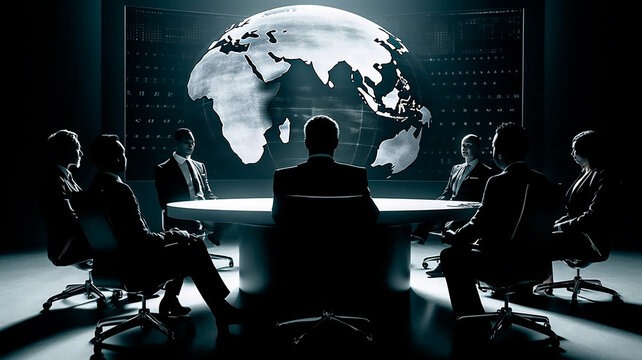
The future has already begun; we are simply catching up to its consequences. The world we inherited is dissolving, and a new one is forming in real time, shaped by forces that no single nation, ideology, or generation fully understands. This is not the beginning of a story, but the midpoint of a transformation that has been accelerating for decades. The question is no longer whether change is coming, but whether we are prepared to meet it.
We stand at a great turning, a moment when humanity must decide what kind of species it wants to become. Our tools have outpaced our wisdom, our connections have outgrown our cohesion, and our progress has arrived faster than our ability to absorb it. This article is not a prediction; it is a reflection on a world already reshaped and a reminder that the choices we make now will echo far beyond our lifetimes.
The global order is shifting beneath our feet. Power is migrating, identities are fracturing, technologies are converging, and the old maps no longer explain the world we live in. What follows is not a forecast, but a field report from the front lines of a new era, an era where nations rise or fall on their ability to understand the web of forces reshaping humanity.
A new world is forming, and it is no longer moving in straight lines. Politics, economics, science, technology, and human behavior, once treated as separate domains, are now colliding in ways that are reshaping civilization. We are living through an era of convergence, where the boundaries between disciplines, nations, and identities are dissolving, and the consequences will define the next century. Global politics is undergoing its most dramatic shift since the end of the Cold War. Nations are reevaluating alliances, populations are losing trust in traditional institutions, and power is decentralizing, moving from governments to networks, corporations, and digital communities. The political question of our time is no longer “Who governs?” but “Who influences?”, and influence today is borderless.
Inequality, inflation, and the new geography of wealth are reshaping the global economy in ways that feel both familiar and unprecedented. Economic power is no longer anchored to the old centers of gravity. It is migrating. sometimes slowly, sometimes with seismic speed. Asia is rising with confidence and scale. Africa is young, restless, and poised for demographic transformation. Europe is aging into a quieter, more defensive posture. And the world’s greatest power, the United States, remains a paradox: unmatched in innovation, yet increasingly polarized at home. Three forces define this new economic landscape.
First, inequality, not only between nations, but within them, has become the defining fault line of the 21st century. The gap between the globally connected and the locally constrained is widening. Wealth clusters in cities, industries, and digital platforms, while rural regions and traditional sectors fall behind. Inequality is no longer just an economic issue; it is a political, cultural, and psychological one, shaping everything from voting patterns to social trust.
Second, automation is transforming labor faster than societies can adapt. AI, robotics, and algorithmic decision‑making are rewriting the rules of productivity and employment. Entire categories of work are disappearing, while new ones emerge too quickly for education systems to keep pace. The result is a world where skills depreciate faster, job security weakens, and the premium on adaptability grows. The divide is no longer simply between high‑skilled and low‑skilled workers, but between those who can reinvent themselves and those who cannot. Third, global interdependence has made local crises instantly global. A drought in one region can disrupt food prices worldwide. A conflict in a strategic corridor can reshape energy markets overnight. A supply chain shock in a single factory can ripple across continents. The world economy has become a tightly woven fabric, resilient in some ways, fragile in others. Nations are discovering that sovereignty in the 21st century is less about isolation and more about managing vulnerability.
In this environment, the next economic superpower may not be a country at all. It may be a network, a constellation of innovators, cities, digital ecosystems, and knowledge hubs that transcend borders. Power is shifting from geography to connectivity, from territory to technology, from governments to platforms. The winners of the next era will be those who can harness talent, data, and trust at scale. We are entering an age where economic leadership is no longer inherited; it is constructed. And the map of global power is being redrawn not by armies or empires, but by demographics, algorithms, and the restless energy of a world in transition.
Science and technology have become humanity’s fastest leap forward, a force moving so quickly that our political, economic, and cultural systems are struggling to keep pace. We are living through the most rapid technological acceleration in human history. What once took centuries now unfolds in decades; what once took decades now happens in years. Artificial intelligence, biotechnology, quantum computing, and clean energy are no longer distant possibilities. They are active agents reshaping geopolitics, labor markets, national security, and even the boundaries of human identity. Artificial intelligence is redefining intelligence itself, not as a uniquely human trait, but as a scalable resource. Algorithms now make decisions in finance, medicine, transportation, and warfare. Nations are racing to build AI ecosystems not just for economic advantage, but for strategic dominance. The countries that master data, compute power, and talent pipelines will shape the rules of the 21st century.
Biotechnology is rewriting life at the molecular level. Gene editing, synthetic biology, and personalized medicine are transforming healthcare and agriculture. The ability to design organisms or cure diseases at scale is becoming a geopolitical asset. Biological innovation is no longer confined to elite laboratories; it is becoming democratized, with startups and universities driving breakthroughs once reserved for national research agencies. Quantum computing promises to upend encryption, logistics, and scientific discovery. Whoever achieves quantum advantage will gain unprecedented power, the ability to simulate complex systems, break current security protocols, and accelerate innovation across every sector. It is a race measured not just in patents, but in national survival.
Clean energy technologies are redrawing the map of global power. Solar, wind, battery storage, and green hydrogen are shifting influence away from fossil‑fuel giants and toward nations that can innovate, manufacture, and deploy at scale. Energy security is becoming a technological challenge, not just a resource challenge. Technology has become the new battlefield of global competition. Nations are no longer competing primarily for territory, but for talent, data, supply chains, and intellectual property. The front lines are semiconductor fabs, research labs, cloud infrastructure, and digital platforms. Power is increasingly measured in computational capacity and scientific breakthroughs. Yet technology is also the greatest equalizer. It gives individuals, startups, and small nations capabilities that once belonged only to superpowers. A teenager with a laptop can build tools that reach millions. A small country with a strong education system can become a global innovation hub. Knowledge has become the new currency of influence, and access to technology can elevate voices that were once marginalized. We are entering an era where scientific progress is not just accelerating, it is converging. The fusion of AI with biology, energy, and quantum systems is creating possibilities that blur the line between science fiction and reality. The challenge for humanity is not simply to innovate, but to govern, adapt, and ensure that this technological leap forward expands opportunity rather than deepens inequality.
Research and development has become the new arms race, not in the metaphorical sense, but in the literal architecture of global power. R&D is now the currency that determines which nations lead, which nations follow, and which nations fade into irrelevance. In a world where technological breakthroughs shape everything from military strategy to economic growth, the countries that invest aggressively in innovation are pulling ahead, while those that underinvest are slipping into strategic dependency.
The global competition is no longer centered on missiles, tanks, or aircraft carriers. It is a race for patents, scientific talent, data, intellectual property, and technological sovereignty. Nations are pouring resources into AI labs, semiconductor fabs, biotech clusters, and quantum research centers. Universities have become geopolitical assets. Scientists are now strategic resources. Even supply chains, once seen as purely economic, have become instruments of national security.
This new arms race is multidimensional. It is a race for talent. Countries are competing to attract the brightest minds in AI, biology, physics, and engineering. Immigration policy has become innovation policy. Nations that can retain and empower scientific talent will shape the next century. It is a race for data. Data is the raw material of artificial intelligence, and the nations that control large, diverse, and secure datasets will build the most powerful algorithms. Data governance is becoming a form of geopolitical leverage. It is a race for intellectual property. Patents are the new territory. Whoever owns the breakthroughs owns the future industries, from autonomous systems to gene therapies to quantum encryption. It is a race for technological sovereignty. Countries are scrambling to secure their own chip manufacturing, energy technologies, and digital infrastructure. Dependence on foreign technology is now seen as a national vulnerability.
The winners of this race will not simply enjoy economic growth; they will define the rules of the future, the standards, the platforms, the ethical frameworks, and the global norms that shape how humanity lives, works, and interacts. The nations that lead in R&D will set the pace of innovation and the boundaries of possibility. We are entering an era where the size of an army no longer measures power, but by the speed of discovery. The new superpowers will be those that can imagine, invent, and iterate faster than the world around them. And in this race, hesitation is defeated
Humanity has become a species at a crossroads. For all our scientific triumphs and technological breakthroughs, we are confronting a set of deep psychological and social challenges that threaten to outpace our ability to adapt. Our tools have evolved at lightning speed, but our emotional and cultural frameworks remain rooted in older eras. The result is a widening gap between what we can build and what we can handle.
Attention spans are collapsing under the weight of infinite information. Loneliness is rising even in crowded cities. Polarization is fracturing between communities and nations. Misinformation spreads faster than the truth. Identity has become fluid, contested, and often weaponized. Cultures are fragmenting into micro‑tribes that no longer share a common narrative. We are more connected than at any point in human history, yet more divided in how we interpret reality itself. This is not merely a social problem; it is a psychological turning point. The human mind was not designed for constant stimulation, perpetual comparison, or the emotional volatility of digital life. Our nervous systems are overwhelmed. Our institutions are strained. Our sense of meaning is under pressure.
The central question becomes unavoidable: Can humanity evolve emotionally and socially at the same pace as our technology? Can we develop the wisdom, empathy, and resilience required to navigate a world where our inventions amplify both our potential and our vulnerabilities? The answer will determine the trajectory of the 21st century. If we fail to grow inwardly as fast as we grow outwardly, we risk becoming a civilization defined by anxiety, fragmentation, and distrust. But if we rise to the challenge, if we cultivate emotional intelligence, rebuild social cohesion, and create new cultural anchors, then this era of disruption can become an era of renewal. Humanity stands at a threshold. Our tools are powerful. Our challenges are profound. And our future depends not only on what we invent, but on who we become.
The big insight of our era is that everything is connected, not metaphorically, but structurally. The world now operates like a web, where every strand influences others. Politics shapes economics. Economics determines the direction of technology. Technology transforms human behavior. And human behavior loops back to reshaping politics. This is the cycle, the feedback loop, the convergence that defines the 21st century. Politics no longer exists in isolation. A single policy decision can shift markets, redirect investment flows, or accelerate technological adoption. Economic inequality can fuel political extremism. Trade policy can determine which technologies flourish and which stagnate. Political stability has become an economic asset; political dysfunction has become a global risk. Economics, in turn, is inseparable from technology. Innovation drives productivity, competitiveness, and national power. The structure of an economy, whether it is inclusive or extractive, dynamic or stagnant, determines how quickly new technologies are adopted and who benefits from them.
Economic incentives shape the direction of scientific research, the priorities of corporations, and the behavior of consumers.
Technology then reaches into the deepest layers of human behavior. It influences how we communicate, how we learn, how we work, how we form identity, and how we perceive truth. Algorithms shape attention. Platforms shape culture. Digital ecosystems shape the emotional climate of entire societies. Technology is no longer a tool; it is an environment.
And human behavior, our fears, hopes, biases, and collective emotions- flow back into politics. Polarization, misinformation, and identity fragmentation reshape elections, governance, and public trust. Social movements can emerge overnight. Cultural shifts can destabilize institutions. The psychological state of the population becomes a political variable. This is the loop. This is the convergence. It is the defining structure of our time. The nations, leaders, and societies that understand this interconnectedness will thrive. They will design policies that anticipate ripple effects. They will build economies that adapt quickly. They will cultivate technological ecosystems that strengthen, rather than fracture, social cohesion. They will invest in human development, emotional, cognitive, and cultural, as a form of national resilience.
Those who cling to old silos, outdated assumptions, or linear thinking will be left behind. The world no longer rewards narrow expertise or rigid hierarchies. It is not a collection of separate domains; it is a single, dynamic system where every decision triggers ripple effects across politics, economics, technology, culture, and human psychology.
In this environment, survival depends on pattern recognition. Progress depends on systems thinking. Leadership depends on the ability to see connections that others overlook. The future belongs to those who can read the web, who understand how a technological breakthrough can reshape labor markets, how a cultural shift can destabilize politics, how a supply‑chain disruption can alter global alliances, and how a psychological trend can influence economic behavior.
The next era will not be led by specialists trapped in their lanes, but by integrators, thinkers, policymakers, entrepreneurs, educators, and citizens who can navigate complexity with clarity. Those who embrace interconnectedness will anticipate change rather than react to it. They will innovate faster, adapt quicker, and build institutions capable of thriving in a world defined by constant flux. The world has become a living network. And the advantage now belongs to those who can see the whole web, and act with the wisdom, agility, and imagination that this moment demands.
There is a clarion call to action, and it grows louder by the day. The world is not waiting. The pace of change is accelerating, and the next decade will not reward hesitation or nostalgia. It will reward nations that invest boldly in innovation, leaders who embrace complexity rather than fear it, societies that elevate education and critical thinking, and individuals who choose to adapt, learn, and stay curious. Countries that double down on research, talent development, and technological sovereignty will shape the global agenda.
Those who cling to outdated models will find themselves dependent on others for their economic security and strategic relevance. Leaders who understand the interconnectedness of politics, economics, technology, and human behavior will navigate uncertainty with clarity. Those who insist on linear thinking will be overwhelmed by the speed and scale of disruption.
Societies that cultivate critical thinkers, not just credentialed workers, will build resilience from the inside out. They will produce citizens capable of discerning truth from noise, engaging across differences, and contributing meaningfully to a world defined by complexity. And individuals who remain curious, adaptable, and committed to lifelong learning will thrive. In a world where skills expire quickly and knowledge doubles at unprecedented rates, the most valuable trait is not mastery but the willingness to evolve. The next decade will not be shaped by the strongest or the wealthiest alone, but by those who can learn the fastest, think the deepest, and collaborate across boundaries. The call to action is clear: invest in minds, embrace complexity, and prepare for a world where adaptability is the new advantage.
In an age defined by convergence, our destiny will belong to those bold enough to learn, adapt, and lead before the future arrives.
References
1. International Monetary Fund. (2025). World economic outlook: Globalization at a crossroads. IMF Publications.
2. Organisation for Economic Co‑operation and Development. (2025). Technology convergence: Trends, prospects and policies. OECD Science, Technology and Innovation Outlook.
3. World Economic Forum. (2025). Technology convergence report 2025. World Economic Forum.
4. Cohen, S. (2023). Technology, culture, economics, and politics. State of the Planet, Columbia Climate School.
5. Mbabu, M. M., & Gulali, D. (2024). Understanding globalization in the 21st century. Greener Journal of Economics and Accountancy, 11(1), 17–20.
6. Sociology.Institute. (2025). The multidimensional effects of globalization on society. Economic Sociology Review.
7. E‑International Relations. (2025). Global governance and the evolution of sovereignty in an interconnected world.
8. International Journal of Constitutional Law. (2025). National sovereignty in the age of global interdependence.
© 2026 Enoma Ojo. No part of this article may be reproduced, distributed, or transmitted without written permission.