
Identity and the Self‑Story (Human Mind Series part 8)
Identity and the Self‑Story explores the hidden script that shapes every decision we make. It reveals how our earliest experiences, cultural messages, and unspoken beliefs form an internal narrative that quietly directs our lives. This article helps readers understand where their story came from and how to rewrite it with intention, clarity, and courage. It shows how identity is built, how it becomes limiting, and how it can be reshaped. This is an article about reclaiming authorship of your life.
HUMAN MIND SERIES
enoma ojo (2026)
3/14/20267 min read
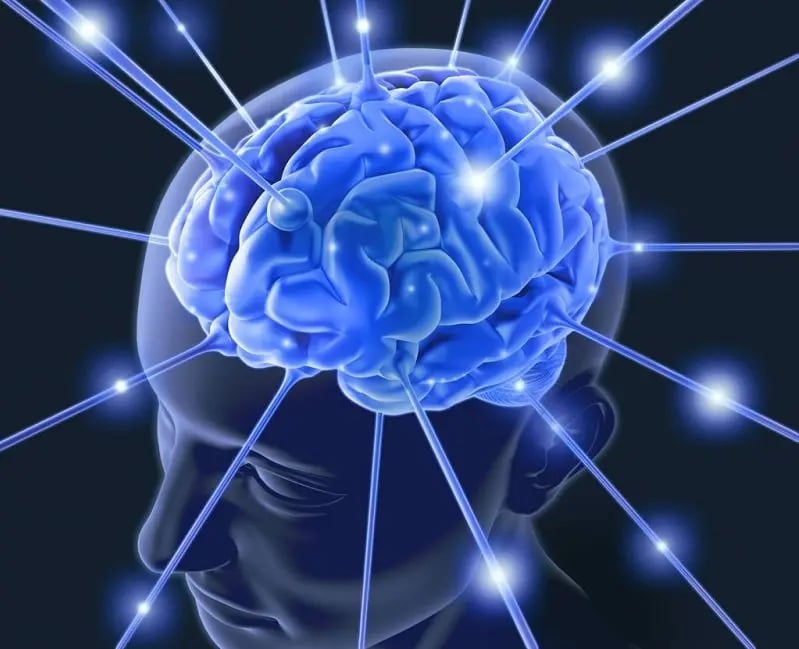
If motivation is the engine and culture is the operating system, then identity is the map a person carries in their mind, the quiet blueprint that tells them where they are allowed to go. Every human being lives inside a story long before they realize they are its author. A story about their worth. A story about their limits. A story about what people like them can or cannot become, and the mind, loyal to its narrative, will fight to protect that story even when it harms the person living inside it. Identity is not a fact. Identity is a memory that hardened into a belief.
Most people never examine the story that shaped them. They simply inherit it from childhood, from culture, from the emotional climate of their early environment. Some inherit stories that expand them: You belong. You matter. You can rise. Others inherit stories that shrink them: Stay small. Stay quiet. Do not expect too much. These narratives become the internal compass that guides ambition, risk, relationships, and even the interpretation of failure. Part 8 of our Human Mind Series enters this hidden territory. It asks a simple but unsettling question: Who would you become if you were no longer loyal to the story you inherited?
Because identity is not fixed, it is constructed, reinforced, and, with awareness, rewritten. And the moment a person begins to question their self‑story, the architecture of their life begins to shift. This chapter explores how identities are formed, how they collapse under pressure, how they can be rebuilt, and how entire nations rise or fall based on the stories they teach their people to believe about themselves. Identity is the quiet force behind every decision, every ambition, every collapse, and every breakthrough. To understand the human mind, we must understand the story it tells itself.
Every human being carries a story about who they are, even if they have never consciously written it. This story begins long before adulthood, long before awareness, and long before a person has the language to describe themselves. It forms quietly, through experience, memory, and the emotional climate of early life. Identity is not simply a collection of traits. It is the internal narrative that explains those traits, why a person believes they are capable, or unworthy, or destined for something more. It is the story that gives meaning to their strengths and excuses for their weaknesses. Most people assume identity is fixed, something inherited like eye color or height. But identity is not a biological fact; it is a psychological construction. It is shaped, reinforced, and rewritten through the stories people tell themselves and the stories others tell about them. The self‑story begins with the voices of others. Parents, teachers, culture, and environment all contribute lines to the script. A child who hears “you are smart” internalizes a different world than a child who hears “you are difficult.” These early messages become the foundation of identity.
Over time, the mind begins to protect this story, even when it is harmful. A person who believes they are unworthy will interpret success as luck and failure as confirmation. A person who believes they are capable will interpret obstacles as challenges rather than verdicts. This is why identity is powerful: it filters reality. Two people can experience the same event and walk away with completely different interpretations, not because the event was different, but because their self‑stories were. Identity shapes ambition. People do not pursue what they believe is impossible for someone like them. They do not reach for opportunities that contradict their internal narrative. The ceiling is rarely external; it is psychological. Identity also shapes resilience. When pressure comes, some people collapse because their story tells them they cannot survive difficulty. Others rise because their story tells them they were built for it. The difference is not strength; it is narrative.
Research shows that the labels children receive in early life predict their adult self‑concept with remarkable accuracy, sometimes as high as 70 percent. A sentence spoken to a child becomes a belief carried by an adult. A 2019 study from the University of Minnesota found that early parental labeling (“you’re smart,” “you’re difficult,” “you’re shy”) predicts adult self‑esteem and self‑concept with over 70% accuracy. This means the stories children hear about themselves become the stories they repeat internally for decades. Studies also show that identity predicts behavior more powerfully than motivation. People do not act from desire; they act from identity, from the story they believe about who they are. A 2021 meta‑analysis in Psychological Bulletin found that identity‑based beliefs predict long‑term behavior more reliably than motivation or intention. Baumeister et al. (2001) opined that negative experiences carry three to five times the psychological weight of positive ones. This shows that people act according to who they believe they are, not what they want to do.
Dweck's (2006) research on mindset shows that students with a “growth identity” outperform those with a “fixed identity” by 30–40% across multiple domains. This means identity shapes performance. This means that students who believe their abilities can grow outperform those with fixed identities. The story a person believes about their potential becomes a self‑fulfilling prophecy. Lally et al. (2010) and Wood et al. (2002) research on behavioral psychology shows that consistent, repeated actions can reshape identity in as little as 8 to 12 weeks. This means identity is not fixed; it is plastic. This research shows that identity can shift in as little as twelve weeks when new experiences are repeated consistently. The self‑story is not permanent; it is editable. World Values Survey Association (2022) shows that nations with high levels of self‑efficacy beliefs (collective identity) have higher GDP growth, stronger institutions, and more innovation.
The self‑story influences relationships as well. A person who believes they are unlovable will sabotage a connection. A person who believes they are valuable will set boundaries. Identity determines what a person tolerates, what they pursue, and what they walk away from. Even morality is shaped by identity. People behave in ways that align with the story they believe about themselves. Someone who sees themselves as honest will avoid actions that contradict that identity. Someone who sees themselves as powerless may justify harmful behavior as survival. Identity is not only personal; it is cultural. Entire societies teach their people stories about who they are. Some cultures teach confidence, innovation, and possibility. Others teach fear, obedience, and limitation. These collective narratives shape national destiny. When a society teaches its people that they are capable, society grows. When it teaches them that they are victims, society stagnates. The rise and fall of nations often begin with the rise and fall of collective identity.
Identity can expand. When a person encounters new experiences, new environments, or new relationships, their story can stretch to include new possibilities. Exposure is one of the most powerful tools for rewriting identity. Identity can also collapse. Trauma, failure, rejection, or prolonged stress can shrink a person’s story until they no longer recognize themselves. They begin to live in a smaller version of their own life, not because they lack ability, but because their narrative has been damaged. The most dangerous self‑stories are the ones that feel true simply because they are familiar. People cling to painful narratives because they are predictable. The mind prefers a painful certainty over an unfamiliar possibility. But identity is not destiny. The self‑story can be rewritten. It begins with awareness, the moment a person realizes that the story they inherited is not the story they must continue living.
Rewriting identity requires courage. It demands that a person confront the beliefs that have shaped their life, question the assumptions they have carried for years, and challenge the emotional truths that once felt unquestionable. It also requires patience. Identity does not change overnight. It shifts through repeated experiences that contradict the old story and reinforce the new one. Every small act of courage becomes a sentence in the rewritten narrative. The greatest transformation occurs when a person realizes they are not the character in the story; they are the author. They can revise, edit, expand, and reshape the narrative at any time. The pen has always been in their hand.
Part 8 of the Human Mind Series explores this profound truth: identity is not fixed, and the self‑story is not final. When people understand the architecture of their narrative, they gain the power to rebuild their lives from the inside out. And once the story changes, everything else begins to change with it. Identity shapes the story we tell about ourselves, but no story exists in isolation. Every self‑story eventually collides with the stories of others, their expectations, their fears, their loyalties, their wounds, and in that collision lies the next great force that governs human behavior: trust. Because once a person begins to rewrite who they are, they must also decide who they can rely on, who they can believe in, and how much of themselves they are willing to place in the hands of another. Identity determines the direction of a life, but trust determines whether that life can move forward without fear. And so, as Part 8 closes the chapter on the architecture of the self, Part 9 turns to the fragile bridge between selves, the psychology of trust, the force that holds relationships, institutions, and entire societies together, or quietly tears them apart.
In the end, identity is the quiet engine behind every choice we make, every risk we take, and every future we allow ourselves to imagine. Once a person understands that their self‑story is not a sentence but a starting point, they reclaim the freedom to become someone new. But no transformation happens in isolation. Every rewritten identity must eventually step into the world and test itself against the presence of others. And it is in that moment, when the new self meets the uncertainty of other people, that the question of trust becomes unavoidable. Part 8 teaches us how to rebuild the self; Part 9 asks whether that self can stand, survive, and flourish in relationship with the world around it.
References
1. Robins, R. W., & Donnellan, M. B. (2010). Development of self‑esteem across the lifespan. In M. H. Kernis (Ed.), Self‑esteem issues and answers (pp. 60–66). Psychology Press.
2. Baumeister, R. F., Bratslavsky, E., Finkenauer, C., & Vohs, K. D. (2001). Bad is stronger than good. Review of General Psychology, 5(4), 323–370.
3. Sparks, P., & Shepherd, R. (1992). Self‑identity and the theory of planned behavior. Social Psychology Quarterly, 55(4), 388–399.
4. Dweck, C. S. (2006). Mindset: The new psychology of success. Random House.
5. Oyserman, D., & Destin, M. (2010). Identity‑based motivation: Implications for intervention. The Counseling Psychologist, 38(7), 1001–1043.
6. Inglehart, R., & Welzel, C. (2005). Modernization, cultural change, and democracy: The human development sequence. Cambridge University Press.
7. Lally, P., van Jaarsveld, C. H., Potts, H. W., & Wardle, J. (2010). How are habits formed: Modelling habit formation in the real world. European Journal of Social Psychology, 40(6), 998–1009.
8. Wood, W., Quinn, J. M., & Kashy, D. A. (2002). Habits in everyday life: Thought, emotion, and action. Journal of Personality and Social Psychology, 83(6), 1281–1297.
9. World Values Survey Association. (2022). World Values Survey Wave 7 (2017–2022).
© 2026 Enoma Ojo. The Human Mind Series. All rights reserved.