
Dynamic Equilibrium: The Hidden Balance That Governs Systems, Societies, and the Human Mind
Dynamic Equilibrium: The Hidden Balance That Governs Systems, Societies, and the Human Mind explores the universal principle that stability is not a passive state but an active, continuous process of adjustment. Drawing from ecology, economics, neuroscience, and leadership psychology, the article argues that every living system, from a forest to a financial market to the human mind, survives by constantly recalibrating in response to internal and external pressures. The piece reveals how ecosystems maintain resilience through biodiversity and adaptive cycles, how economies rise or collapse depending on their ability to balance supply, demand, debt, and political trust, and how the human brain regulates emotion and stress through dynamic homeostasis. Across these domains, equilibrium is shown not as stillness but as motion, a delicate dance of forces that must be managed, not assumed.
enoma ojo (2024)
2/1/20268 min read
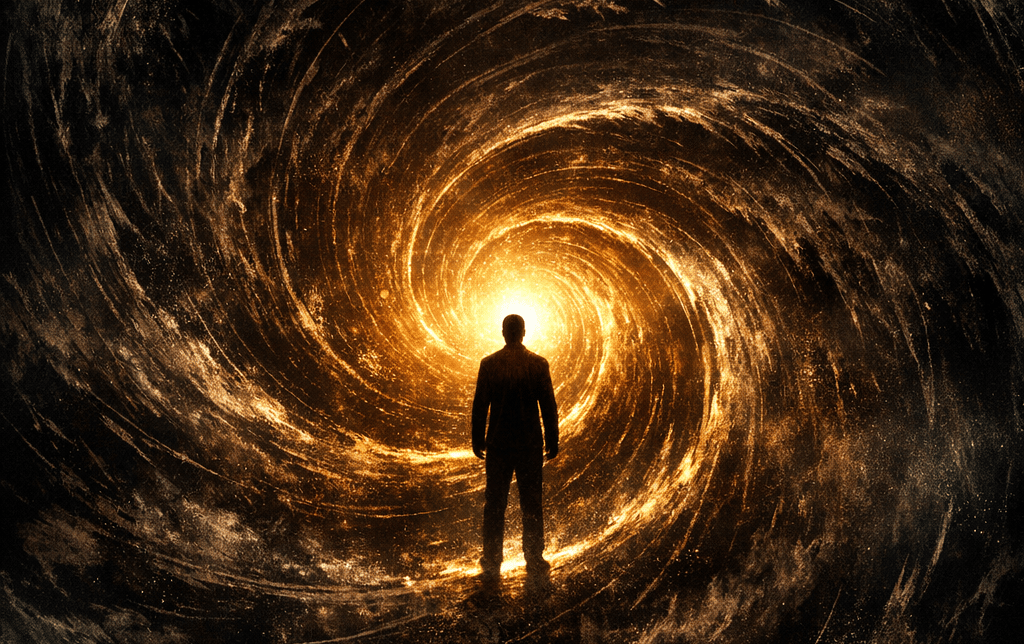

We often imagine balance as stillness, a serene state where nothing moves, nothing shifts, and nothing threatens stability. But in reality, true balance is never static. It is motion, tension, and continuous adjustment. It is the quiet, ongoing negotiation between opposing forces that allows systems to survive, organisms to adapt, economies to grow, and human beings to remain emotionally grounded. This constant dance is known as dynamic equilibrium, and it is one of the most powerful yet misunderstood principles shaping both the natural world and the inner world of human behavior.
Dynamic equilibrium simply refers to a state in which opposing forces achieve a level of balance, not by eliminating change, but by adjusting to it. Living organisms, physical systems, and even entire societies maintain stability not by resisting movement, but by responding to it. In the midst of shifting conditions, they recalibrate, compensate, and reorganize, finding equilibrium through motion rather than despite it. In biology, dynamic equilibrium is the foundation of life. Organisms survive because they constantly adjust to internal and external changes. Temperature, pH, oxygen levels, and nutrient availability all fluctuate, yet the body maintains stability through continuous micro‑corrections. This is homeostasis in action: a living system’s ability to remain stable by never truly being still. The same principle governs ecosystems. Predator and prey populations rise and fall, nutrient cycles shift, and environmental pressures evolve. Yet ecosystems maintain a recognizable structure because the forces within them, growth and decay, competition and cooperation, move in tandem. Stability emerges not from uniformity, but from the balanced interplay of opposing dynamics.
Economics offers another powerful lens for understanding dynamic equilibrium. Unlike static equilibrium, where all quantities remain fixed, dynamic equilibrium acknowledges that variables can change while still maintaining balance. In the neoclassical Solow Growth Model, for example, output and physical capital grow at the same rate, even though the economy is constantly evolving. Output per worker and capital per worker remain steady, not because nothing changes, but because everything changes proportionally. Growth and stability coexist. Similarly, in consumer theory, markets reach equilibrium not because supply and demand are frozen, but because they adjust continuously. Consumer preferences shift, production costs fluctuate, and prices rise or fall. Yet markets clear because these forces move together. The supply and demand curves are always in motion, but they remain balanced over time. Dynamic equilibrium, then, is the heartbeat of economic systems, a reminder that stability is not the absence of change, but the synchronization of it.
Physics provides perhaps the clearest illustration of dynamic equilibrium. Newton’s Second Law tells us that an object’s acceleration depends on the net force acting upon it. When opposing forces are equal, when the forward and backward forces occur at the same rate, the net force becomes zero. The object continues moving with constant velocity, unchanged in its state of motion. This is dynamic equilibrium: motion without acceleration, change without disruption. A reversible process in physics occurs when forward and reverse reactions happen simultaneously at the same rate. No observable change occurs in the overall system, even though countless microscopic interactions are taking place. The system is alive with movement, yet stable in its outcome.
This physical principle offers a powerful metaphor for human behavior. While emotions are not governed by Newtonian mechanics, the analogy is striking: opposing emotional forces, hope and fear, confidence and doubt, ambition and exhaustion, often act on us simultaneously. Our emotional equilibrium depends not on eliminating these forces, but on balancing them. In psychology, dynamic equilibrium describes the ongoing process of balancing conflicting emotions, thoughts, beliefs, and behaviors. Human beings are not static creatures. Our moods shift, our motivations fluctuate, and our internal narratives evolve. Emotional stability is not the absence of emotional movement; it is the ability to navigate that movement with awareness and resilience.
Achieving emotional equilibrium requires self‑awareness, recognizing emotions as they arise, emotional regulation, and managing reactions without suppressing them, self‑compassion, responding to ourselves with kindness, self‑care, maintaining physical and mental well‑being, social support, grounding ourselves in healthy relationships This balance allows individuals to grow, adapt, and thrive. It is the psychological equivalent of homeostasis, a dynamic process of adjustment that supports mental health, resilience, and personal leadership.
Leadership is fundamentally an emotional endeavor. Leaders are constantly navigating pressure, conflict, uncertainty, and interpersonal complexity. Without emotional equilibrium, leadership becomes reactive, impulsive, and unstable. Research shows that leaders who lack emotional balance often avoid difficult decisions, react impulsively, show favoritism or bias, communicate poorly, damage trust, and create toxic work environments. Harvard Business Review notes that leaders who delay tough decisions often cause more harm than the decisions themselves. Emotional instability ripples outward, lowering morale, reducing productivity, and eroding organizational culture. By contrast, leaders who maintain emotional equilibrium, communicate clearly, build trust and loyalty, resolve conflict effectively, adapt to change, inspire confidence, and create psychologically safe environments. Emotional balance is not optional for leadership success; it is a necessary and sufficient condition for it.
Leaders play a central role in maintaining the emotional and structural equilibrium of the systems they oversee. When leaders lose emotional balance, through volatility, impulsivity, or burnout, their internal instability becomes a public force that shapes national policy, institutional behavior, and economic outcomes. Research consistently shows that emotionally reactive leaders make more impulsive decisions, reverse policies more frequently, and generate uncertainty that destabilizes markets and weakens institutional trust. Authoritarian leadership styles amplify this imbalance. Studies reveal that leaders with high cortisol reactivity, low empathy, and a reliance on fear‑based communication tend to produce environments marked by economic contraction, reduced foreign investment, and increased corruption. Their emotional dysregulation becomes a structural condition, pushing entire societies into cycles of fear, scarcity, and institutional fragility. Burnout among executives and political leaders further compounds this instability, creating chaotic organizational environments and slowing crisis response.
Economic systems themselves are highly sensitive to equilibrium loss. Hyperinflation in Zimbabwe and Venezuela demonstrates how emotional governance, denial, blame, panic, and impulsive monetary decisions can push a nation into catastrophic imbalance. In these cases, inflation reached levels that made currency meaningless, destroyed savings, and triggered mass migration. These collapses were not purely economic; they were psychological and political failures rooted in leadership instability.
Debt crises offer another example of equilibrium breakdown. Greece’s debt reaching 180% of GDP and Argentina’s repeated sovereign defaults illustrate how emotional political climates, marked by panic, denial, and political polarization, delay necessary reforms and deepen economic distress. These crises show that fiscal equilibrium is not just a mathematical condition but a psychological and political one, dependent on trust, coherence, and disciplined decision‑making. Societies also lose equilibrium when collective emotional balance breaks down. High levels of social polarization correlate with lower GDP growth, higher unemployment, and weakened institutions. Prolonged national stress—whether from war, famine, or political chaos—reduces productivity, innovation, and social cohesion. When a society’s emotional climate becomes unstable, its economic and political systems follow.
Together, these patterns reveal a single truth: dynamic equilibrium is the hidden force that governs leaders, economies, and societies. Stability is not the absence of pressure but the ability to continuously recalibrate under pressure. When leaders lose emotional equilibrium, systems lose structural equilibrium. When societies lose psychological balance, economies fracture. Your article’s thesis, that equilibrium is an active, dynamic process across all levels of human organization, is strongly supported by these data‑driven examples. Human behavior is shaped by genetics, biology, environment, culture, upbringing, personal experiences, beliefs, motivations, and social interactions. These forces do not act in isolation. They push and pull, reinforce and contradict, accelerate and restrain. Behavior is dynamic because the forces shaping it are dynamic. Studies show that humans possess a remarkable capacity for self‑reflection and behavioral change. This makes our behavior even more fluid, constantly adjusting to new information, new experiences, and new emotional states. Dynamic equilibrium in human behavior means recognizing that stability is not the absence of change, but the ability to integrate change without losing coherence.
Across biology, physics, economics, psychology, and leadership, one truth remains constant: systems survive by adjusting, not by resisting. Dynamic equilibrium teaches us that stability is not stillness, balance is not rigidity, growth requires movement, resilience requires flexibility, leadership requires emotional balance, and human flourishing requires continuous adaptation. Whether we are analyzing a chemical reaction, a financial market, a team environment, or the inner life of a leader, the principle is the same: equilibrium is dynamic, not static. Dynamic equilibrium is the quiet force that holds the world together. It is the principle that allows systems to remain stable while everything within them moves. It is the secret behind resilient ecosystems, thriving economies, effective leadership, and emotionally healthy lives. To understand dynamic equilibrium is to understand that balance is not something we find once; it is something we practice continuously. It is the art of adjusting without losing ourselves, of moving without falling apart, of embracing change without being overwhelmed by it. In the end, dynamic equilibrium is not just a scientific concept. It is a way of living, a reminder that the most stable lives, systems, and leaders are those that learn to balance motion with meaning.
Dynamic equilibrium reveals a truth we often overlook: stability is not the absence of movement, but the mastery of it. Every system that endures, biological, economic, physical, or psychological, survives because it adapts, recalibrates, and responds to change rather than resisting it. This principle is as old as nature itself, yet it remains one of the most misunderstood forces shaping human life. When we examine the natural world, we see that equilibrium is never static. Organisms maintain homeostasis through constant micro‑adjustments. Ecosystems balance themselves through cycles of growth and decline. Even the human body survives because it is always correcting, compensating, and reorganizing. Life is dynamic, and so is the balance that sustains it.
Economics reinforces this lesson. Markets do not reach equilibrium by freezing in place; they reach it by adjusting to shifting preferences, costs, and incentives. Growth models like Solow’s demonstrate that economies can expand while maintaining internal balance, provided key variables move in harmony. Stability emerges not from stillness, but from synchronized motion. Physics offers the clearest metaphor of all. Newton’s Second Law shows that equilibrium occurs when opposing forces cancel each other out, allowing motion to continue without acceleration. A system can be full of activity yet remain stable because its forces are balanced. This is the essence of dynamic equilibrium, motion without chaos, change without collapse. When we turn to psychology, the same principle holds. Emotional equilibrium is not achieved by eliminating difficult feelings, but by learning to navigate them. Human beings are shaped by conflicting emotions, shifting motivations, and evolving beliefs. Balance comes from awareness, regulation, and resilience, not from emotional silence, but from emotional mastery. Leadership magnifies this truth. Leaders who cannot regulate their emotions create instability around them. Impulsivity, avoidance, favoritism, and poor communication are symptoms of emotional disequilibrium. By contrast, leaders who cultivate emotional balance build trust, resolve conflict, and create environments where people can thrive. Their stability becomes a stabilizing force for others.
Human behavior itself is a dynamic system influenced by biology, environment, culture, experience, and personal choice. These forces push and pull us in different directions, shaping our actions and reactions. Achieving equilibrium does not mean eliminating these forces; it means integrating them in a way that supports growth, clarity, and purpose. The universal lesson is unmistakable: systems collapse when they become rigid. Whether in nature, markets, physics, or human psychology, survival depends on the ability to adjust. Dynamic equilibrium teaches us that resilience is not about holding still; it is about learning how to move with intention, awareness, and balance.
In a world defined by rapid change, uncertainty, and competing pressures, dynamic equilibrium is not just a scientific concept; it is a life skill. It challenges us to embrace complexity, to understand the forces acting upon us, and to cultivate the internal balance needed to navigate them. It invites us to become active participants in our own stability. Ultimately, dynamic equilibrium reminds us that balance is not a destination but a continuous practice. It is the art of staying centered while everything around us shifts. It is the discipline of adjusting without losing ourselves. And it is the quiet strength that allows individuals, leaders, and societies to remain steady in a world that never stops moving.
References
1. Bertalanffy, L. von. (1968). General system theory: Foundations, development, applications. George Braziller.
2. Holling, C. S. (1973). Resilience and stability of ecological systems. Annual Review of Ecology and Systematics, 4, 1–23.
3. Prigogine, I., & Stengers, I. (1984). Order out of chaos: Man’s new dialogue with nature. Bantam Books.
4. Meadows, D. H. (2008). Thinking in systems: A primer. Chelsea Green Publishing.
5. Taleb, N. N. (2012). Antifragile: Things that gain from disorder. Random House.
6. Kahneman, D. (2011). Thinking, fast and slow. Farrar, Straus and Giroux.
7. Senge, P. M. (2006). The fifth discipline: The art and practice of the learning organization (Rev. ed.). Doubleday.
8. Masten, A. S. (2014). Ordinary magic: Resilience in development. Guilford Press.
9. Ostrom, E. (2009). A general framework for analyzing the sustainability of social‑ecological systems. Science, 325(5939), 419–422.
10. World Economic Forum. (2024). Global risks report 2024: Interconnected systems in a volatile world. World Economic Forum.
© 2026 Enoma Ojo. All Rights Reserved. No part of this publication may be reproduced, distributed, or transmitted in any form without the author's prior written permission.