
Data Doesn’t Protect Itself, People Do
An exploration of why cybersecurity is ultimately a human responsibility. This post breaks down how habits, awareness, and everyday decisions shape data protection far more than technology alone.
enoma ojo
1/3/20267 min read
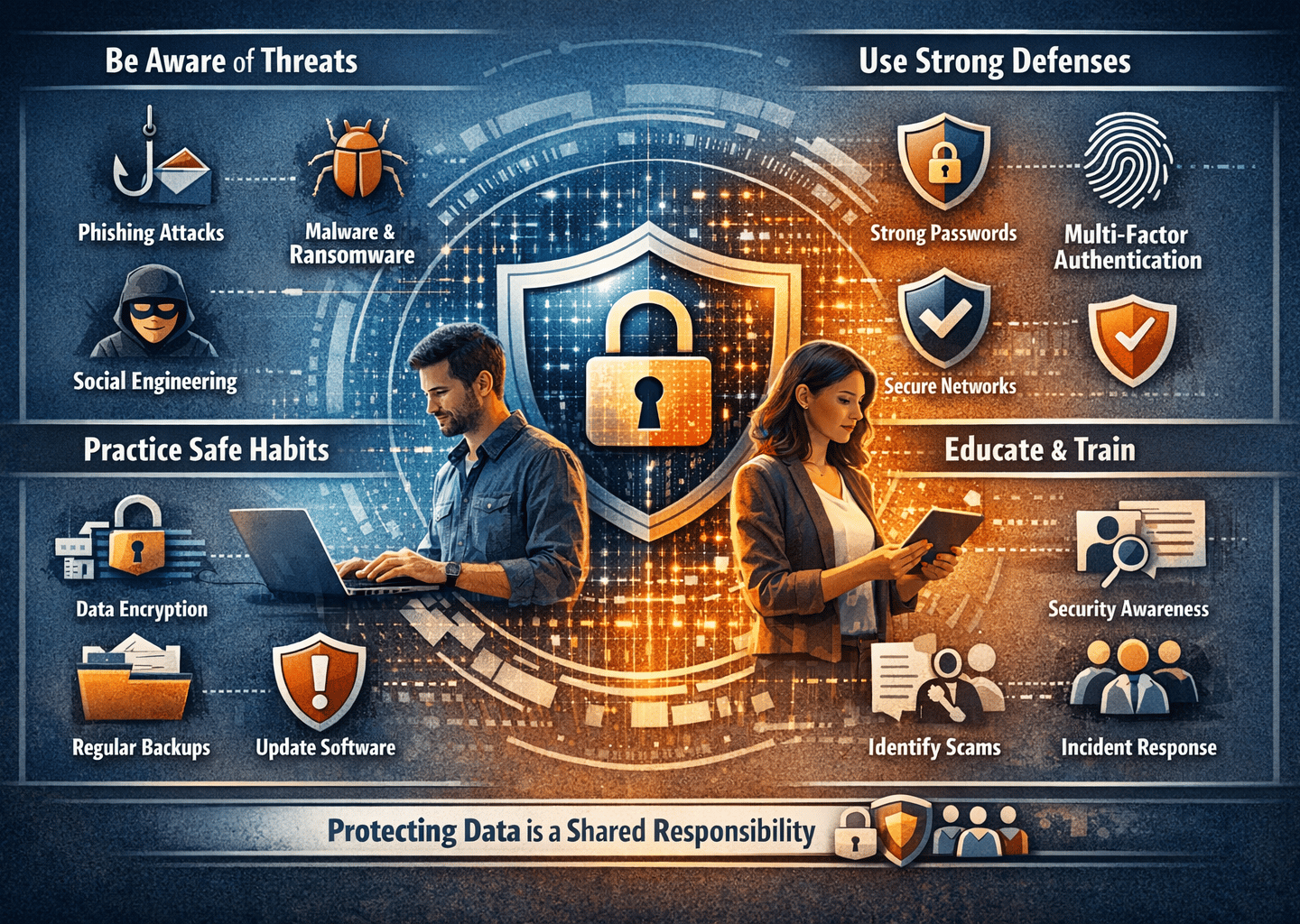
In a world dominated by digital systems and automated safeguards, it's easy to forget that data protection begins with people. Technology may enforce boundaries, but it’s human leadership that defines them. This article reframes data protection not as a technical checklist but as a culture of accountability, especially critical in healthcare, where data integrity directly impacts patient trust and safety. Human error drives most cybersecurity breaches in America. In today’s digital-first world, data protection is often viewed as a technical challenge, one that can be addressed through encryption protocols, firewalls, and automated compliance tools. However, this framing overlooks a deeper truth: data protection is a human responsibility. Behind every security system is a person who decided, raised a concern, or designed a process with integrity. This is especially true in healthcare, where data isn’t just numbers, it’s stories, identities, and lives. A patient’s medical record contains their fears, their history, and their hope. Protecting that data is not just about avoiding fines or meeting HIPAA requirements; it’s about honoring dignity.
The human face of data protection is the nurse who double-checks access permissions. It’s the IT analyst who flags suspicious login. It’s the administrator who pauses to ask, “Should we be collecting this data at all?” These quiet acts of stewardship form the backbone of ethical data governance. Effective data protection begins with leadership, not just technical expertise, but moral clarity. Leaders must move beyond compliance checklists and embrace stewardship: the belief that data is entrusted to us, not owned by us. In healthcare systems, this leadership is especially critical. The complexity of EMR workflows, third-party integrations, and regulatory audits demands a cross-functional approach. Data protection cannot live in a silo; it must be woven into clinical, financial, and operational decision-making. When leaders model this mindset, they create a culture where privacy is proactive, not reactive. Staff begin to see data protection not as a burden, but as a shared responsibility. And that shift, from obligation to ownership, is where transformation begins. Technology can enforce rules, but only people can build culture. A strong data protection program depends on education, accountability, and trust. Training must go beyond phishing simulations and password hygiene. It should include real-world decision-making scenarios, role-based risk awareness, and empathy-driven accountability. Employees need to understand not just how breaches happen, but why their actions matter. For example, a nurse in a hospital setting should be trained differently from a finance administrator; each faces distinct data risks and ethical responsibilities. By tailoring training to specific roles and workflows, organizations can move from generic compliance to meaningful stewardship. This approach fosters a culture where security is not just a checklist, but a shared value embedded in daily operations.
Moreover, effective training must address the emotional and psychological dimensions of cybersecurity. People often bypass protocols out of urgency, fear, or misplaced trust. That’s why simulations should include stress-based decision-making, peer pressure scenarios, and even social engineering tactics that mirror real attacks. When employees see themselves as protectors of patient data, financial integrity, or institutional trust, not just system users, they become active participants in defense. Cybersecurity is ultimately a human discipline, and training must reflect the complexity of human behavior, not just technical controls. Accountability is equally vital. Organizations must define clear roles for data governance, establish escalation paths for concerns, and reward ethical behavior. When someone flags a potential risk, they should be celebrated, not sidelined. Trust is the final ingredient. Staff must trust that leadership will support them when they raise concerns. Patients must trust that their data will be handled with care. And regulators must trust that the organization is committed to continuous improvement. In healthcare, the stakes are higher. A data breach doesn’t just expose information; it can delay treatment, erode patient confidence, and trigger legal consequences. That’s why healthcare leaders must approach data protection with clinical urgency and ethical depth. But beyond these tactics lies a deeper truth: data protection is a form of care. Just as we protect patients’ bodies, we must protect their stories. Just as we safeguard physical spaces, we must safeguard digital ones. When healthcare organizations embrace this mindset, they move from compliance to compassion. They become not just providers of care, but protectors of trust.
True data stewardship goes beyond meeting HIPAA or GDPR requirements. It involves strategic vision, ethical decision-making, and cross-functional collaboration. Leaders must embed privacy into enterprise architecture, align policies with institutional values, and ensure that every department, from IT to finance, understands its role in protecting sensitive information. Leadership Beyond Compliance means shifting from a mindset of minimum requirements to one of maximum responsibility. In cybersecurity, this means leaders must do more than enforce policies; they must embody them. True leadership recognizes that data protection is not just an IT issue, but a cultural imperative. When executives and managers model secure behavior, prioritize transparency, and invest in continuous education, they send a powerful message: security is everyone’s job. This kind of leadership fosters trust, accountability, and resilience across the organization, especially in sectors like healthcare, where data is deeply personal and mission-critical. Going beyond compliance also means anticipating risks before they become headlines. Leaders must champion proactive governance, cross-functional collaboration, and ethical decision-making. They should ask: Are we empowering our teams to make secure choices? Are we designing workflows that reduce friction and risk? By integrating cybersecurity into strategic planning, budget priorities, and employee engagement, leaders move from reactive oversight to visionary stewardship. In doing so, they protect not just systems, but the people, reputations, and legacies those systems serve. In today’s regulatory landscape, compliance is no longer the ceiling; it’s the floor. True leadership in data protection demands more than meeting HIPAA, GDPR, or institutional audit requirements. It calls for stewardship: a proactive, values-driven approach that embeds privacy, ethics, and resilience into the very fabric of organizational decision-making.
In healthcare, this leadership is especially critical. Data isn’t just digital, it’s deeply personal. A breach doesn’t just violate policy; it violates dignity. That’s why leadership must extend beyond compliance into culture, ethics, and strategic foresight. Leaders must shift from reactive rule-followers to intentional architects of trust. This means designing systems, cultures, and conversations that prioritize integrity over convenience. Instead of waiting for compliance audits or breach reports to dictate action, visionary leaders proactively embed trust into every layer of their organization, from onboarding protocols to data governance frameworks. They ask not just “Are we compliant?” but “Are we cultivating confidence?” Trust is earned through transparency, consistency, and a willingness to confront uncomfortable truths, especially in sectors like healthcare, where data protection is inseparable from human dignity. Being an architect of trust also means empowering others to lead securely. Leaders must create environments where employees feel safe to report vulnerabilities, challenge risky practices, and suggest improvements without fear of blame. This requires emotional intelligence, cross-functional collaboration, and a deep respect for the human element of cybersecurity. When trust becomes a strategic asset, not just a soft value, organizations become more resilient, adaptive, and mission-aligned. In this model, leadership is not about enforcing rules from above but about cultivating stewardship from within.
It also means fostering a culture where privacy is everyone’s responsibility. Staff should feel safe reporting concerns, confident in their training, and supported by leadership. When data protection becomes a shared value, not just a departmental task, organizations move from fragile compliance to resilient stewardship. In healthcare, this stewardship saves lives. It ensures EMR workflows are secure, patient consent is respected, and third-party vendors are held to the same ethical standards. It’s not just about protecting data; it’s about protecting trust, reputation, and mission. Data protection thrives not in isolation, but in environments where people are trained, empowered, and held accountable. It begins with the understanding that security is not just a technical function; it’s a shared responsibility. Every employee, from the front desk to the boardroom, plays a role in safeguarding sensitive information. This requires more than policies; it demands a culture. Training must be continuous, contextual, and role-specific. Staff should be equipped not only with the basics of password hygiene and phishing awareness, but also with scenario-based learning that reflects the realities of their workflows. Clinicians need to understand how privacy intersects with patient care. Finance teams must grasp the implications of data retention and access controls. Administrators should be fluent in breach protocols and escalation paths.
Empowerment means giving people the tools and authority to act. When a nurse notices an unusual access pattern or a billing specialist spots a potential data leak, they must feel confident that their voice matters. Leadership must foster a climate where speaking up is rewarded, not penalized. This includes clear reporting channels, non-punitive feedback loops, and visible support from senior management. Accountability is the glue that binds the system together. It’s not enough to train and empower; there must be clarity around roles, responsibilities, and consequences. Regular risk assessments should be conducted to identify vulnerabilities, and breach protocols must be rehearsed like fire drills. Metrics should track not just compliance, but culture: Are people engaging? Are they learning? Are they acting? Ultimately, a privacy-by-design mindset must be cultivated across all levels of the organization. This means embedding data protection into every decision, from software procurement to workflow redesign. It’s about shifting compliance from a reactive task to a proactive ethos. When privacy becomes part of the organizational DNA, data protection moves from checkbox to compass, from obligation to stewardship.
In healthcare, data protection is uniquely complex. Consent management, third-party vendor risks, and legacy systems all pose challenges. Leaders must prioritize secure EMR workflows, vet external partners rigorously, and modernize infrastructure to meet evolving standards. The goal is not just to protect data, but to protect dignity. Ultimately, data protection is a form of stewardship, a quiet but profound act of leadership. It goes beyond securing systems or ticking compliance boxes. It’s about recognizing that every data point represents a person, a story, a relationship built on trust. In healthcare, this stewardship carries even greater weight: the data we protect is often tied to a patient’s dignity, their diagnosis, their hope for healing. Safeguarding information is only the beginning. True data stewardship means protecting the reputation of the institution, the integrity of its mission, and the confidence of every stakeholder, from patients and families to regulators and partners. It means asking not just “Is this secure?” but “Is this ethical?” and “Does this reflect our values?” Leaders who embrace this responsibility become architects of resilience. They design systems that anticipate risk, foster transparency, and adapt to change. They build cultures where privacy is embedded in every workflow, and where accountability is shared, not siloed. Their work may be quiet, but its impact is enduring.
In conclusion, it's noteworthy to emphasize that in the digital age, leadership is not measured by the absence of breaches, but by the presence of conviction. The organizations that thrive will be those whose leaders treat data not as a liability to be managed, but as a trust to be honored. They will build systems that reflect values, not just regulations. They will empower people to act with clarity, courage, and care. And they will understand that every secure decision is a seed, planted not just for protection, but for generational impact. This is the future of cybersecurity: not fear-driven, but purpose-led. Where stewardship becomes strategy. Where ethics drive architecture. And where data leadership becomes a legacy worth defending.
© 2025 Enoma Ojo. All rights reserved.