
Cognitive Biases: The Invisible Forces Behind Our Choices (Human Mind Series Part 4)
Part 4 uncovers the hidden mental shortcuts that quietly shape our decisions long before we believe we are “thinking.” This chapter reveals how cognitive biases influence what we notice, what we ignore, what we believe, and how we interpret the world, often without our awareness. By exposing these invisible forces, Part 4 helps readers understand why even the most intelligent, well‑intentioned people fall into predictable patterns of judgment and behavior. It’s an invitation to see the mind with new clarity, challenge long‑held assumptions, and reclaim agency in a world full of unseen influences.
enoma ojo (2026)
2/21/202611 min read
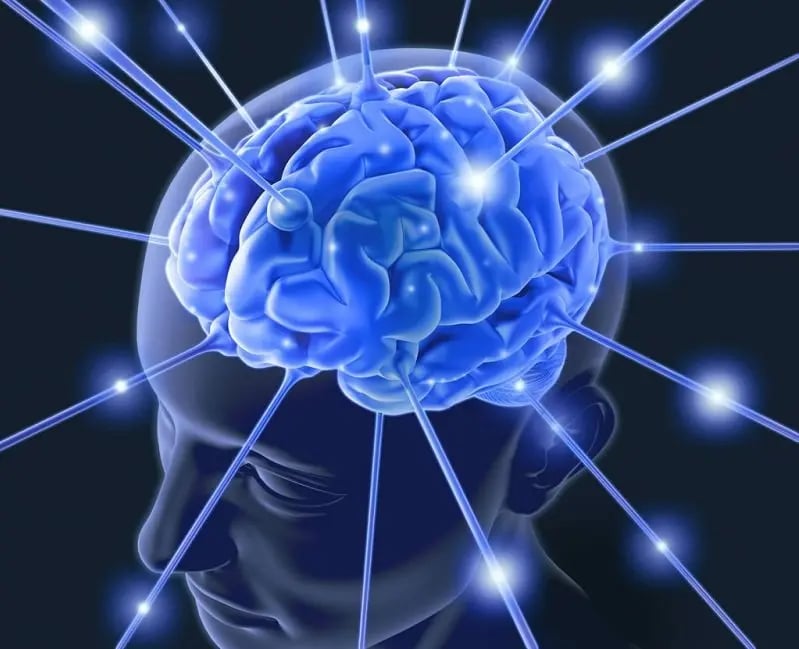
In Part 3 of this series, The Mind Under Pressure, we explored what happens when external forces overwhelm the mind, how stress, fear, and chaos narrow our attention, reorganize our priorities, and reshape our behavior. Pressure showed us the mind in a state of compression, revealing what breaks, what bends, and what becomes unexpectedly clear when life demands more than our mental bandwidth can hold. But pressure is only one side of the story. Even in calm moments, when there is no threat, no urgency, no crisis, the mind is still being shaped by forces we rarely notice. If pressure distorts our thinking from the outside, cognitive biases distort it from within. They operate quietly, automatically, beneath awareness, guiding our interpretations long before we believe we are “thinking.”
Part 4 begins here: with the invisible mental shortcuts that influence our choices even when we feel composed, rational, and in control. These biases determine what we notice, what we ignore, what we believe, and how we make sense of the world. They are the unseen architecture beneath every judgment, every assumption, every conclusion. Where Part 3 revealed how the mind behaves under strain, Part 4 reveals how the mind behaves all the time. This chapter is an invitation to look inward, not at the moments when life overwhelms us, but at the subtle patterns that shape our thinking in ordinary moments. It is an exploration of the mental habits we inherit, the shortcuts we rely on, and the distortions we rarely question. And it is a reminder that clarity is not simply the absence of pressure; it is the ability to recognize the invisible forces that guide us even in stillness.
Cognitive science shows that most of what we call “thinking” happens beneath awareness. Research estimates that up to 95% of cognitive activity is unconscious, and the brain filters 11 million bits of information per second while consciously processing only about 40. With humans making roughly 35,000 decisions a day, it becomes clear why the mind relies on shortcuts and why cognitive biases are so deeply woven into everyday life. Confirmation bias is one of the strongest examples of this hidden architecture. Studies show people are twice as likely to seek information that supports their existing beliefs, and in political contexts, 70% of individuals consume news that aligns with their views. Even when accuracy is rewarded, participants ignore contradictory evidence 65% of the time. This bias doesn’t just shape opinions, it shapes entire realities. Availability bias further distorts judgment by making vivid or emotional events feel more significant than they are. After major plane crashes, fear of flying rises 20–30%, despite no change in actual risk. People overestimate dramatic causes of death by up to 100 times, while underestimating common causes by up to 10 times. Media exposure alone can inflate perceived danger by 150%, showing how easily emotion overrides logic.
Anchoring bias demonstrates how the first piece of information we encounter becomes the reference point for all later decisions. Even when anchors are random, they influence outcomes. People adjust only 30–35% away from an initial anchor, and real estate agents, trained professionals, were swayed by listing prices by up to 40%. First impressions are not just psychological; they are measurable forces.
Memory and identity are equally vulnerable to distortion. Research shows that 50% of people remember events inaccurately after one year, and 25% confidently recall events that never happened. Under emotional pressure, memory accuracy can drop by 60%. These distortions shape how we understand ourselves, reinforcing narratives that feel true but may not be grounded in reality. Across fields, medicine, finance, hiring, and relationships, cognitive biases consistently influence outcomes. Doctors exposed to anchoring bias make diagnostic errors 36% more often. Investors’ mistakes are driven 80% by behavioral biases rather than market conditions. People form social judgments in 1/10th of a second, and 75% believe they are less biased than others. The data is unmistakable: cognitive biases are not occasional glitches. They are the invisible forces behind our choices, shaping our lives far more than we realize.
Cognitive biases operate beneath awareness. They are not flaws in the mind but features of its design, automatic, efficient, and deeply embedded in the neural architecture that keeps us functioning in a world far too complex to process consciously. Their purpose is not to deceive us but to protect us from cognitive overload. Every second, the brain is bombarded with more information than it could ever hope to analyze in full. Without shortcuts, we would be paralyzed by the sheer volume of data demanding our attention. These biases act as the mind’s internal filtration system. They help us navigate complexity with minimal effort by deciding, in milliseconds, what deserves focus and what can be safely ignored. They simplify the world into patterns we can understand, even when those patterns are incomplete. They prioritize familiarity over novelty, speed over precision, and emotional relevance over objective accuracy. In doing so, they allow us to move through life without stopping to consciously evaluate every detail.
In a world overflowing with information, this filtration is not optional; it is essential. The mind must constantly reduce, compress, and reorganize reality into something manageable. It cannot weigh every possibility, analyze every variable, or question every assumption. Instead, it relies on mental shortcuts that have been shaped by evolution, experience, and memory. These shortcuts allow us to make rapid judgments, form impressions, and respond to our environment without expending enormous cognitive energy. But the same mechanisms that make thinking efficient also make it vulnerable. When the mind filters, it inevitably distorts. When it simplifies, it inevitably omits. When it prioritizes speed, it inevitably sacrifices accuracy. Biases help us survive the complexity of the world, but they also shape our perceptions in ways we rarely recognize. They influence what we see as important, what we dismiss as irrelevant, and what we interpret as truth.
This is why two people can experience the same event and walk away with entirely different interpretations. It is why we cling to certain beliefs even when evidence contradicts them. It is why we trust our instincts even when they are shaped by patterns we did not choose. Biases are not just tools the mind uses; they are the invisible architecture beneath our thinking, guiding our judgments long before conscious thought begins. Understanding this architecture is not about eliminating bias — that is impossible. It is about learning to see the patterns that shape our perceptions, so we can think with greater clarity, intention, and self‑awareness. When we recognize the shortcuts the mind relies on, we gain the ability to question them. And in that questioning, we reclaim a measure of freedom over how we think, decide, and live.
Cognitive biases shape what we notice and what we ignore. They influence how we interpret events, how we judge people, and how we make decisions. They filter our experiences through pre‑existing assumptions, reinforcing what we already believe. They guide our emotional responses, shaping our sense of safety, threat, opportunity, and meaning. These biases affect every domain of life. They influence our relationships, careers, financial choices, and daily habits. They shape our beliefs about ourselves and others. They determine how we respond to feedback, how we evaluate risks, and how we imagine the future. And because they operate silently, we rarely question the conclusions they produce. One of the most powerful biases is confirmation bias, the tendency to seek information that supports our existing beliefs while dismissing anything that challenges them. This creates mental echo chambers where our assumptions feel like facts simply because they go unchallenged. It is one of the primary reasons people can look at the same situation and see entirely different realities.
Another is availability bias, which makes vivid or recent events feel more important than they truly are. A dramatic news story can distort our sense of probability. A painful memory can overshadow years of positive experiences. The mind mistakes emotional intensity for statistical significance. Anchoring bias is equally influential. It causes us to rely heavily on the first piece of information we encounter, even when it is irrelevant. A first impression, a number mentioned in passing, or an initial assumption can shape all subsequent judgments. The anchor becomes the reference point, and everything else is interpreted in relation to it. These biases do not operate in isolation. They interact, overlap, and reinforce one another, creating complex patterns of distorted thinking. Because they feel like intuition, we trust them without question. We assume our conclusions are objective and rational, even when invisible mental habits shape them.
Cognitive biases also influence how we interpret other people’s behavior. They can lead to misunderstandings, misjudgments, and unnecessary conflict. We may attribute someone’s actions to their character rather than their circumstances. We may assume intention where there is none. We may project our fears or expectations onto others without realizing it. These biases shape how we evaluate opportunities. They can cause us to overlook possibilities that fall outside our mental templates. They can make us cling to familiar paths even when better options exist. They can limit our vision of what is possible. They also affect how we perceive threats. The mind is not an objective risk‑assessment machine; it is a meaning‑making system that prioritizes emotion, memory, and survival over statistical accuracy. When something feels vivid, personal, or emotionally charged, the brain amplifies its importance. When something feels distant, abstract, or unfamiliar, the brain minimizes it, even if the actual risk is far greater.
This is why a single dramatic event can overshadow years of safety. It’s why people fear flying after seeing a plane crash on the news, even though the statistical risk hasn’t changed. It’s why we worry intensely about rare dangers while ignoring the slow, silent risks that shape our lives every day. The mind responds to emotional intensity, not mathematical probability. This distortion creates an uneven landscape of fear. Some threats become magnified until they dominate our thinking, pushing us into overreaction, avoidance, or hypervigilance. Other threats become invisible, dismissed as “not a big deal,” even when they quietly shape our health, finances, relationships, or long‑term wellbeing. The mind’s threat system is powerful, but it is not precise.
Cognitive biases sit at the center of this imbalance. Availability bias makes recent or dramatic events feel more dangerous than they are. Anchoring bias locks us onto the first alarming detail we hear. Confirmation bias pushes us to seek information that reinforces our fears while ignoring evidence that contradicts it. Together, these biases create a psychological echo chamber where fear feels like fact. This is how people end up preparing intensely for the wrong dangers while remaining unprepared for the real ones. It’s how organizations misjudge risk, how leaders make reactive decisions, and how individuals become trapped in cycles of worry or denial. The mind is trying to protect us, but without awareness, it often protects us in the wrong direction.
Understanding this pattern is not about eliminating fear. It’s about learning to recognize when fear is being shaped by emotion rather than reality. It’s about noticing when the mind is exaggerating a threat or minimizing one. And it’s about reclaiming the ability to respond with clarity instead of instinct, to see danger as it is, not as the mind imagines it. Cognitive biases shape our sense of identity. They reinforce narratives about who we are, what we can do, and what we deserve. They influence how we remember the past, often rewriting events to fit our current beliefs or emotional needs. They shape how we imagine the future, sometimes limiting our aspirations to what feels safe or familiar.
These biases also affect how we interpret data. We are more likely to accept information that aligns with our worldview and more likely to question information that contradicts it. This selective processing creates the illusion of objectivity while reinforcing our existing beliefs. They influence how we respond to feedback. Instead of examining criticism, we may defend our beliefs. Instead of considering new perspectives, we may retreat into familiar patterns. Biases protect our sense of certainty, even when that certainty is misplaced. Yet cognitive biases are not signs of weakness. They are features of the mind’s design, efficient, adaptive, and deeply human. They help us navigate a world that is too complex to process consciously. The challenge is not to eliminate them, but to recognize their influence.
Awareness creates space. It allows us to slow down, question our assumptions, and choose responses that align with our values rather than our impulses. It helps us distinguish between intuition and bias, between clarity and distortion. Understanding cognitive biases gives us insight into the architecture of our own minds. It reveals the hidden forces behind our choices. It helps us see how our thinking is shaped by patterns we did not choose but can learn to navigate. This awareness empowers us. It allows us to make decisions with greater clarity, intention, and self‑awareness. It helps us build relationships grounded in understanding rather than projection. It strengthens our ability to think critically, act deliberately, and grow meaningfully.
Part 4 of the Human Mind Series shows that true mental freedom does not come from thinking harder. It comes from understanding the invisible patterns that shape how we think in the first place. When we learn to see these patterns, we reclaim agency over our choices and over the direction of our lives. True mental freedom has never been about thinking harder. It has never been about forcing clarity, overpowering confusion, or wrestling the mind into submission. Part 4 reveals a deeper truth: freedom begins the moment we learn to see the invisible patterns shaping how we think in the first place. The moment we recognize these biases, they lose their power. The moment we name them, they loosen their grip. Awareness becomes the doorway through which agency returns. When we learn to see these patterns, we reclaim authorship over our choices. We begin to understand why we react the way we do, why certain beliefs feel immovable, and why some decisions repeat themselves across seasons of life. We start to separate the voice of bias from the voice of intention. And in that separation, something remarkable happens: the mind becomes spacious again. Possibly enters the room.
This is the quiet revolution. Part 4 invites: not the elimination of bias, but the illumination of it. Not perfection, but awareness. Not control, but clarity. Because once we understand the architecture beneath our thinking, we are no longer passengers in our own minds. We become participants. We become designers. We become responsible for the direction of our lives in a way that is both humbling and empowering. And that is the real promise of this chapter: the return of agency. The return of choice. The return of a mind that is no longer governed by invisible forces but guided by conscious intention.
As you move forward, I invite you to pay attention to the subtle patterns shaping your thoughts. Notice what feels automatic. Notice what feels familiar. Notice what feels unquestioned. These are the places where bias lives, and where freedom begins. If this chapter opened something for you, share it with someone who is also trying to understand themselves more deeply. Leave a comment with the biases you’ve recognized in your own life.
And if you haven’t subscribed yet, join the community so you don’t miss the next part of the Human Mind Series.
Your mind is the most powerful instrument you will ever carry. Let’s learn to use it with intention, clarity, and courage, together.
Join the conversation @ https://enomaojo.substack.com
References
Bargh, J. A., & Chartrand, T. L. (1999). The unbearable automaticity of being. American Psychologist, 54(7), 462–479.
Barber, B. M., & Odean, T. (2001). Boys will be boys: Gender, overconfidence, and common stock investment. Quarterly Journal of Economics, 116(1), 261–292.
Combs, B., & Slovic, P. (1979). Newspaper coverage and the perception of risk. Journalism Quarterly, 56(4), 837–849.
Croskerry, P. (2003). The importance of cognitive errors in diagnosis and strategies to minimize them. Academic Medicine, 78(8), 775–780.
Garrett, R. K. (2009). Echo chambers online? Politically motivated selective exposure among Internet news users. Journal of Computer-Mediated Communication, 14(2), 265–285.
Gigerenzer, G. (2004). Dread risk, September 11, and fatal traffic accidents. Psychological Science, 15(4), 286–287.
Loftus, E. F. (2005). Planting misinformation in the human mind: A 30-year investigation of the malleability of memory. Learning & Memory, 12(4), 361–366.
Loftus, E. F., & Pickrell, J. E. (1995). The formation of false memories. Psychiatric Annals, 25(12), 720–725.
Lord, C. G., Ross, L., & Lepper, M. R. (1979). Biased assimilation and attitude polarization: The effects of prior theories on subsequently considered evidence. Journal of Personality and Social Psychology, 37(11), 2098–2109.
Nickerson, R. S. (1998). Confirmation bias: A ubiquitous phenomenon in many guises. Review of General Psychology, 2(2), 175–220.
Northcraft, G. B., & Neale, M. A. (1987). Experts, amateurs, and real estate: An anchoring-and-adjustment perspective on property pricing decisions. Organizational Behavior and Human Decision Processes, 39(1), 84–97.
Pronin, E., Lin, D. Y., & Ross, L. (2002). The bias blind spot: Perceptions of bias in self versus others. Personality and Social Psychology Bulletin, 28(3), 369–381.
Sahakian, B., & Labuzetta, J. N. (2013). Bad moves: How decision making goes wrong, and the ethics of smart drugs. Oxford University Press.
Slovic, P. (2000). The perception of risk. Earthscan Publications.
Tversky, A., & Kahneman, D. (1974). Judgment under uncertainty: Heuristics and biases. Science, 185(4157), 1124–1131.
Willis, J., & Todorov, A. (2006). First impressions: Making up your mind after a 100-ms exposure. Psychological Science, 17(7), 592–598.
Zimmerman, B. J. (1989). A social cognitive view of self-regulated academic learning. Journal of Educational Psychology, 81(3), 329–339.
© 2025 Inquiry & Insight by Enoma Ojo. All rights reserved.