
Beyond Income: Understanding the True Nature of Multidimensional Poverty
Most people think poverty is about income, a number, a threshold, a paycheck. But real poverty is far more complex. This article breaks down the true nature of multidimensional poverty, revealing how millions are held back not just by low earnings, but by limited access to education, healthcare, safety, opportunity, and dignity. If you want to understand why traditional poverty measures fail, and what it really takes to build a just society, this piece offers the clarity and perspective the conversation has been missing.
Enoma Ojo (2024)
1/11/20264 min read
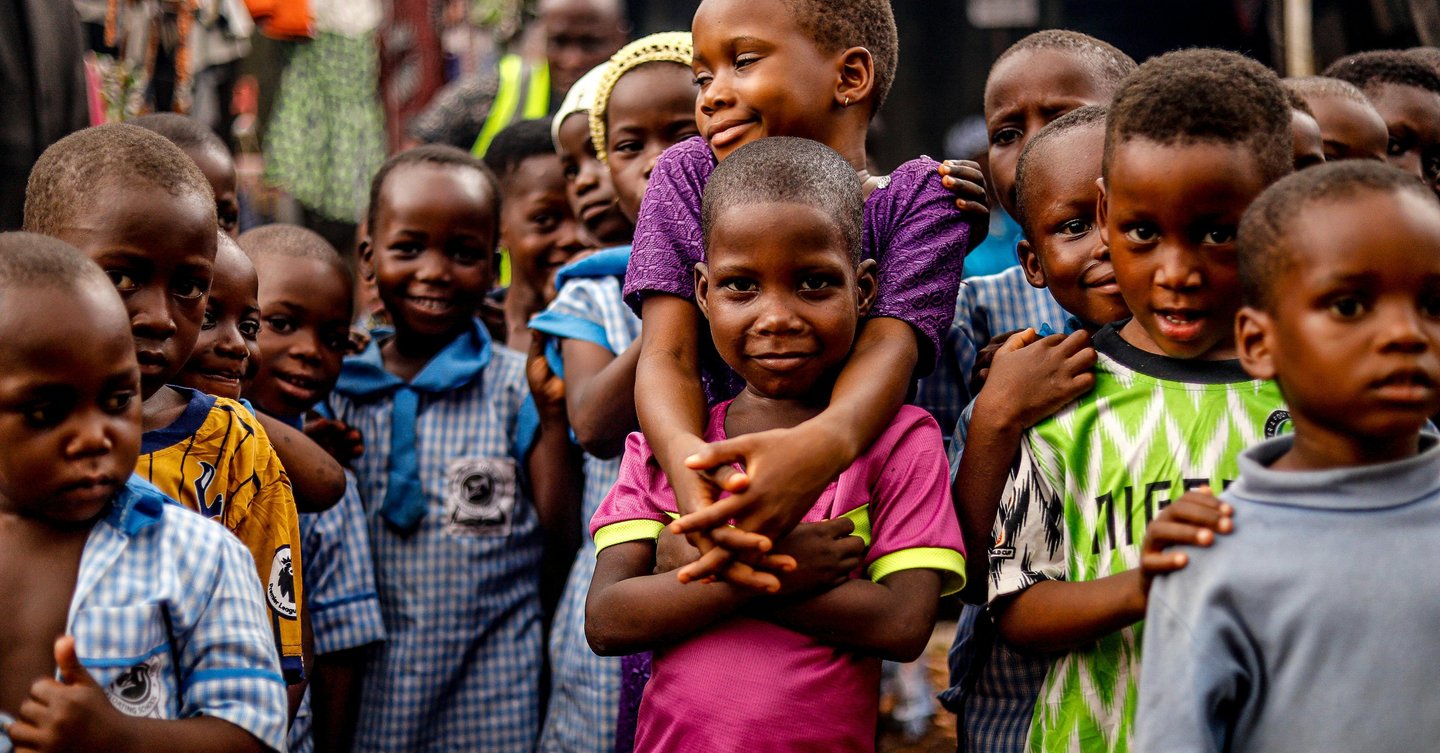
When most people hear the word “poverty,” they think of income, a number on a paycheck, a threshold set by governments, a line that separates the “poor” from the “not poor.” But income alone has never captured the full reality of human deprivation. Poverty is not just about what people earn; it’s about what people lack. And when we look beyond income, a deeper, more complex picture emerges, one that reveals how millions are trapped not by money alone, but by the absence of opportunity, dignity, and access. Multidimensional poverty recognizes that human well‑being is shaped by far more than financial resources. It includes health, education, housing, safety, social belonging, and the ability to participate meaningfully in society. A person may earn enough to survive, yet still live in conditions that limit their potential. Another may have a job, yet lack clean water, stable housing, or access to healthcare. Income is only one thread in a much larger fabric. This is why global development experts increasingly rely on the Multidimensional Poverty Index (MPI), which measures deprivation across several categories: nutrition, schooling, sanitation, electricity, housing quality, and more. The MPI exposes what income statistics often hide, that millions who appear “above the poverty line” are still living without the basic conditions needed to thrive. Poverty, in this sense, is not a number; it is an experience.
Consider a child who attends school but learns nothing because the classroom is overcrowded, the teacher is undertrained, and the textbooks are outdated. Or a family with a steady income but no access to healthcare, forcing them to choose between medicine and food. Or a community with jobs but no clean water, no safe housing, and no transportation. These are not income problems, they are structural, environmental, and systemic barriers that shape the trajectory of entire lives. Multidimensional poverty also reveals the emotional and psychological dimensions of deprivation. Living without safety, stability, or opportunity erodes confidence, limits imagination, and narrows the sense of what is possible. Poverty is not only about lacking resources; it is about lacking the freedom to dream, to plan, and to participate fully in society. It is a form of emotional and cognitive scarcity that shapes identity as much as circumstance. This broader understanding also exposes the hidden poverty within wealthy nations. A person may have a job and a home, yet live in a neighborhood without quality schools, safe streets, or mental‑health support. They may be one medical bill away from crisis. They may lack social networks, mobility, or access to opportunity. In this sense, poverty is not just a condition of the developing world, it is a quiet, persistent reality in every society. Nearly three‑quarters of people in extreme poverty live in rural areas. Despite decades of progress, poverty remains a defining reality across the developing world. The World Bank estimates that 831 million people still live in extreme poverty, with 71% concentrated in Sub‑Saharan Africa. The UNDP’s Multidimensional Poverty Index reveals an even deeper crisis: 1.1 billion people across 110 developing countries experience overlapping deprivations in health, education, and living standards. More than half a billion of them are children. These numbers show that poverty is not only widespread, it is multidimensional, structural, and deeply rooted in the conditions that shape daily life.
Multidimensional poverty also helps explain why economic growth alone does not eliminate deprivation. A rising GDP does not guarantee that people have clean water, safe housing, or access to education. It does not ensure that children are nourished, that communities are safe, or that people have the skills needed to participate in the modern economy. Growth without equity simply widens the gap between those who benefit and those who are left behind. Understanding poverty in this deeper way forces us to rethink solutions. Cash transfers help, but they are not enough. True poverty reduction requires investments in education, healthcare, infrastructure, safety, and social protection. It requires policies that expand opportunity, not just income. It requires systems that give people the tools to build stable, dignified lives, not just survive from one paycheck to the next. It also requires us to confront the uncomfortable truth that poverty is often produced, not accidental. It is shaped by policy choices, historical inequities, and social structures that determine who has access to opportunity and who does not. When we understand poverty as multidimensional, we see that it is not simply a lack of money; it is a lack of justice. Beyond income lies the real story of human deprivation, a story of limited choices, constrained futures, and invisible barriers. But it is also a story that can be rewritten. When we measure poverty in all its dimensions, we gain the clarity needed to design solutions that restore dignity, expand opportunity, and unlock human potential. Poverty is not just an economic issue; it is a human one. And understanding its true nature is the first step toward ending it.
Poverty is not a single number; it is a system of barriers that limit human potential. If we want real change, we must be willing to look beyond income and confront the deeper dimensions of deprivation that shape people’s lives. This moment calls for leaders, thinkers, and citizens who refuse to accept shallow definitions and incomplete solutions. It calls for people who are willing to challenge policy, expand opportunity, and restore dignity where it has been denied. The future will not be transformed by sympathy alone, but by informed action. Start by questioning the assumptions you’ve inherited, amplifying the voices that go unheard, and supporting efforts that address poverty in all its forms. Change begins when we choose to see the whole picture — and decide to do something about it.
© 2024 Enoma Ojo Inquiry & Insight. All rights reserved.